Top 5 Castles to Visit in Lincolnshire
· Updated
Lincolnshire packs an unusual amount of castle into one county. Lincoln Castle is one of only two castles in England to have two mottes, it holds an original 1215 copy of Magna Carta, and it puts a Victorian prison and a full medieval wall walk inside the same walls. Add Tattershall, Bolingbroke, Gainsborough Old Hall and, just over the border, Belvoir, and you have five very different days out within easy reach of a tent.
These are the five castles worth building a trip around, what makes each one different, and where they sit for a weekend of history and camping in the Lincolnshire Wolds and around the cathedral city of Lincoln. It is part of our wider guide to camping near Britain's castles, so you can pair the visits with a pitch nearby.
We are Camping Sites in Britain, where you can find and compare campsites, caravan parks and glamping across the UK, including plenty within a short drive of every castle on this page.
The five castles at a glance
Four of the five are proper fortresses or medieval buildings you can walk into, and the fifth is a Regency house on a castle site. Here is how they compare before you plan.
| Castle | Custodian | Best for | Nearest town |
|---|---|---|---|
| Lincoln Castle | Lincolnshire County Council | Magna Carta, wall walk, Victorian prison | Lincoln |
| Tattershall Castle | National Trust | A great red-brick tower keep of the 1440s | Tattershall |
| Bolingbroke Castle | English Heritage | A free ruin, birthplace of Henry IV | Spilsby |
| Gainsborough Old Hall | English Heritage | One of the best-preserved medieval manor houses | Gainsborough |
| Belvoir Castle | Privately owned (Rutland family) | Regency Gothic house, grand interiors and gardens | Grantham |
1. Lincoln Castle
Lincoln Castle is the county's headline act, and it earns it. William the Conqueror began it in 1068 on the site of the Roman fortress, and it is one of only two castles in England built with two mottes, the other being at Lewes in Sussex. You can walk the entire medieval curtain wall on a raised wall walk that gives you views over the city, the Roman remains and the cathedral opposite.
The reason most people come is the Magna Carta. Lincoln holds one of only four surviving original 1215 copies, displayed alongside the 1217 Charter of the Forest in a purpose-built underground vault. The other draw is the Victorian prison, where the restored chapel with its individual standing pews is one of the strangest and most memorable rooms in any English castle.
Check current opening times and ticket prices on the English Heritage and official Lincoln Castle sites before you travel, as the Magna Carta vault and prison can have separate access arrangements. The castle sits in the heart of the historic quarter, a couple of minutes' walk from Lincoln Cathedral, so you can do both in a day.
2. Tattershall Castle
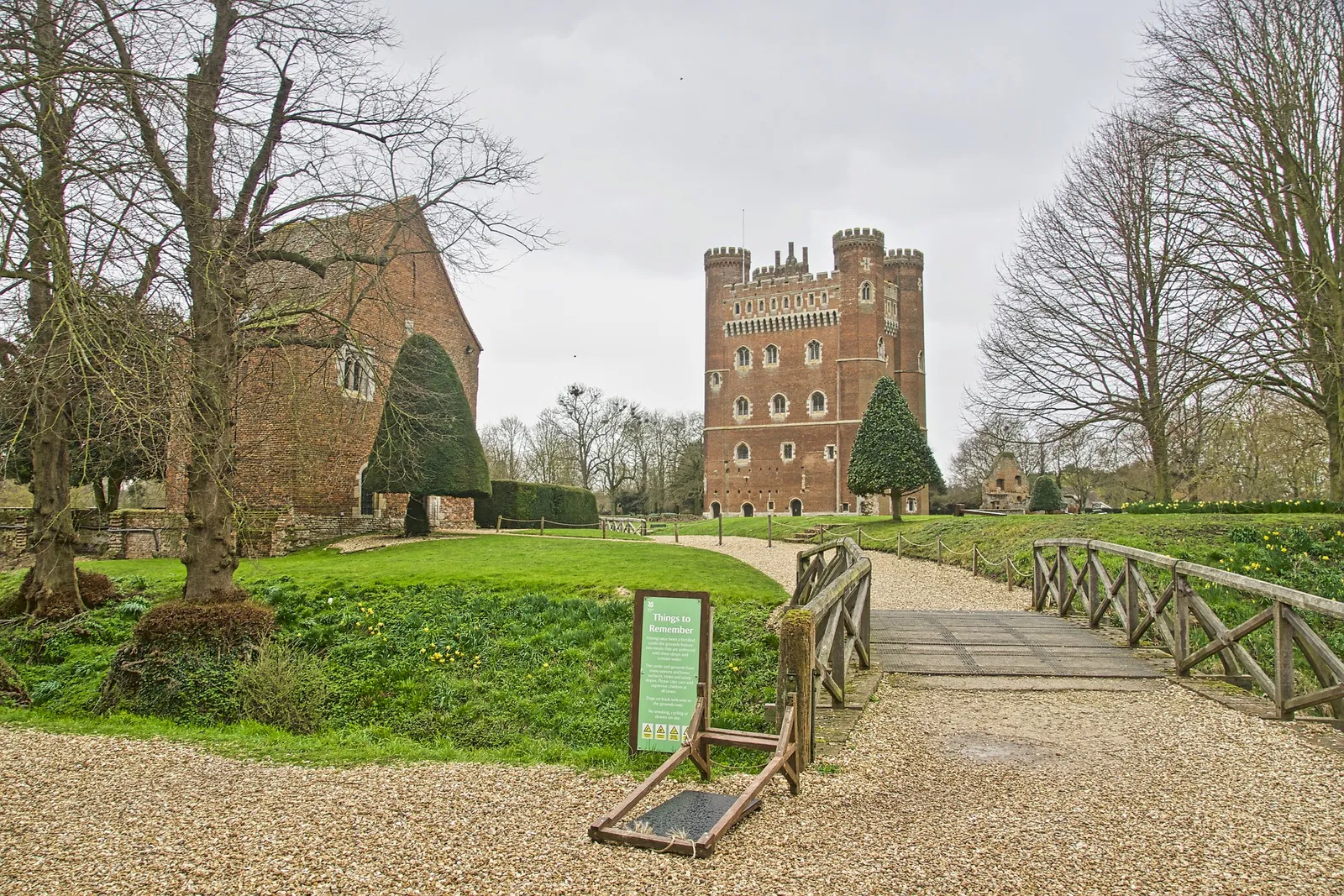
Tattershall Castle is a great red-brick tower keep, and one of the earliest and finest surviving brick buildings in the country. Ralph Cromwell, Treasurer of England to Henry VI, built it in the 1440s, and it climbs six storeys to battlements with sweeping views across the flat Lincolnshire countryside and its moats. It is cared for by the National Trust.
Inside there is not much furniture, which is the point: you get the raw architecture, four vast rooms stacked one above the other, huge Gothic fireplaces, and brick vaulting in the corner turrets. The climb to the roof is the highlight, and on a clear day you can pick out Boston Stump and Lincoln Cathedral from the top.
Confirm opening days and admission on the National Trust website, as the castle usually closes over winter. The village of Tattershall sits between Lincoln and the coast, which makes it an easy stop on the way to or from a Wolds camping trip.
3. Bolingbroke Castle
Bolingbroke Castle is a free-to-visit ruin with a serious claim to fame: it is the birthplace of Henry IV, born here in 1367 as Henry of Bolingbroke. Built in the 1220s by Ranulf, Earl of Chester, it was a hexagonal fortress with round towers, and it was slighted after a Parliamentarian siege during the Civil War in 1643. Today the low walls and grassy foundations are managed by English Heritage.
There is no keep to climb and no ticket desk, just the outline of a once-powerful castle in a quiet setting at Old Bolingbroke, near Spilsby, on the southern edge of the Lincolnshire Wolds. It is an excellent short stop for a picnic and a wander, and it works well combined with a walk in the surrounding Wolds, which are a designated Area of Outstanding Natural Beauty.
Access details are on the English Heritage site, though as a free open ruin it asks little more of you than turning up in daylight.
4. Gainsborough Old Hall
Gainsborough Old Hall is one of the best-preserved medieval manor houses in England, and it is a genuine surprise tucked into an ordinary market town on the River Trent. Built by Sir Thomas Burgh from around 1460, it has a striking timber-framed great hall, a working medieval kitchen, and a brick tower you can climb. Richard III and Henry VIII both stayed here.
It is managed by English Heritage, and the interiors do the work that Tattershall's do not, showing you how a great household actually lived, cooked and entertained in the late fifteenth century. The kitchen, with its two enormous fireplaces, is one of the most complete of its date anywhere in the country.
Opening times and prices are on the English Heritage website. Gainsborough sits in the west of the county, a natural pairing with Lincoln itself for a two-castle weekend.
5. Belvoir Castle
Belvoir Castle is the grand finale, though strictly it sits just over the border in Leicestershire, which is why it is so often grouped with a Lincolnshire trip from Grantham. The name means "beautiful view", and the current building is a Regency Gothic mansion, the fourth castle on the site, remodelled in the early nineteenth century by James Wyatt for the Dukes of Rutland, whose family still lives there.
This is a stately home rather than a ruin: lavish state rooms, fine paintings, tapestries and porcelain, and formal gardens and parkland laid out below the hilltop. It is a full day out with plenty for families, and the setting on its ridge above the Vale of Belvoir gives it the drama the name promises.
Belvoir is privately run, so check the estate's own website for opening dates, events and admission, as it opens seasonally and hosts weddings and filming that can close parts of it.
Where to camp for a Lincolnshire castle trip
Base yourself in or near the Lincolnshire Wolds and you are within an hour of every castle on this list. The Wolds sit between Lincoln and the coast and put you close to Bolingbroke, Tattershall and, with a slightly longer run, Lincoln itself and Gainsborough to the west.
You can browse and compare sites across the county on our Lincolnshire campsites listings, from quiet Wolds farm pitches to larger family parks. Pick a pitch central to the two or three castles you most want to see, rather than trying to reach all five from one field, and you will spend the weekend visiting rather than driving.
More castle trips worth planning
If Lincolnshire gives you the taste for it, several neighbouring counties do castles just as well. For a family-focused break to the north, see our guide to Yorkshire's historic castles. Heading east, Norfolk's top five castles pair Norman keeps with the coast. And for a border county thick with fortresses, our round-up of nine must-visit castles in Shropshire is a proper itinerary in itself.
Frequently asked questions
Which is the best castle to visit in Lincolnshire?
Lincoln Castle, for most visitors. It combines an original 1215 Magna Carta, a full medieval wall walk with two mottes, and a Victorian prison in one site, right next to Lincoln Cathedral. Tattershall's red-brick tower is the best pure castle experience.
Can you see Magna Carta in Lincolnshire?
Yes. Lincoln Castle holds one of only four surviving original 1215 copies of Magna Carta, displayed in a dedicated underground vault alongside the 1217 Charter of the Forest. Check current vault opening times and ticket options before you visit.
Are any Lincolnshire castles free to visit?
Bolingbroke Castle, near Spilsby, is a free open ruin managed by English Heritage and the birthplace of Henry IV. The others, including Lincoln, Tattershall, Gainsborough Old Hall and Belvoir, charge admission, so confirm prices with each custodian.
Where was Henry IV born?
At Bolingbroke Castle in Lincolnshire, in 1367, which is why he is known as Henry of Bolingbroke. The castle is now a ruin at Old Bolingbroke on the southern edge of the Lincolnshire Wolds, near Spilsby.
Is Belvoir Castle in Lincolnshire?
No, Belvoir Castle sits just over the border in Leicestershire, near Grantham. It is grouped with Lincolnshire trips because it is so close, and it is a Regency Gothic house rather than a medieval castle, home to the Dukes of Rutland.
How many castles can you visit in a weekend in Lincolnshire?
Two or three comfortably. Lincoln Castle deserves the best part of a day on its own, and Tattershall, Bolingbroke and Gainsborough Old Hall each make a good half-day. Base yourself centrally in the Wolds to keep the driving short.
The short version
Lincoln Castle for Magna Carta and the wall walk, Tattershall for the great brick tower, Bolingbroke for a free ruin with royal history, Gainsborough Old Hall for medieval interiors, and Belvoir for Regency grandeur. Pick two or three, base yourself in the Wolds, and you have a brilliant weekend.
Find your pitch on our Lincolnshire campsites listings, or plan further afield with our guide to camping near Britain's castles.