Best Beaches in Dorset for Campers: The Complete Jurassic Coast Guide
· Updated
The best beaches in Dorset for campers are Studland, Bournemouth and Boscombe, Weymouth, Durdle Door and Lulworth Cove, Chesil Beach, West Bay, Swanage, Sandbanks and Kimmeridge Bay. Between them you get seven miles of blue flag sand, a UNESCO World Heritage coastline, a snorkelling trail and calm family bays, all within an easy drive of a pitch.
Dorset packs roughly half of England's only natural World Heritage Site into one county, so the county is a rare thing: a beach holiday and a geology field trip in the same afternoon. This guide is part of our guide to coastal camping in the UK, and it names the beaches worth your time, tells you which are safe to swim, and points you to nearby camping. For pitches across the county, we list them at Camping Sites in Britain.
The best beaches in Dorset at a glance
Here is the quick comparison, sorted west to east along the coast. Blue flag status is awarded annually by Keep Britain Tidy, so always check the current year before you rely on it for water quality.
| Beach | Type | Best for | Blue flag |
|---|---|---|---|
| West Bay | Shingle and sand under cliffs | Photography, fishing, Broadchurch fans | No |
| Chesil Beach | 18-mile shingle barrier | Walks, wildlife, fishing | No |
| Weymouth | Classic sandy bay | Families, traditional seaside | Check current year |
| Durdle Door | Shingle cove with limestone arch | Views, strong swimmers | No |
| Lulworth Cove | Sheltered horseshoe cove | Calm swimming, geology | No |
| Kimmeridge Bay | Rocky ledges and pools | Snorkelling, rock pooling | No |
| Swanage | Sheltered sandy bay | Families, Victorian pier | Yes |
| Studland | Three miles of sand | Families, walks to Old Harry | Yes |
| Sandbanks | Golden sand spit | Watersports, calm water | Yes |
| Bournemouth and Boscombe | Seven miles of sand | Everything, surf reef | Yes |
Bournemouth and Boscombe: seven miles of blue flag sand
Bournemouth and Boscombe give you the biggest, busiest, best-serviced sand in Dorset, with several stretches holding blue flag awards each year. The beach runs for roughly seven miles of golden sand from Southbourne through to Alum Chine, backed by promenade, cafes, lifeguards in season and beach huts by the hundred.
Boscombe has the added draw of an artificial surf reef offshore and a pier that splits the calmer swimming water. It is the obvious choice if you want a proper resort day with the kids: deckchairs, ice cream, RNLI lifeguard cover and a train ride back to the campsite. Parking fills fast on hot weekends, so arrive before 10am or use the park and ride.
Sandbanks: calm water on one of Britain's priciest spits
Sandbanks offers some of the calmest, cleanest swimming water in the county on a sand spit famous for having some of the most expensive real estate in the UK. The blue flag beach faces Poole Bay on one side and the sheltered harbour on the other, which makes it a favourite for paddleboarding, windsurfing and swimming with small children.
You do not need a millionaire's budget to enjoy it. The sand is public, the water is shallow and warm by British standards, and the chain ferry from the end of the spit carries you across to Studland in a few minutes for £1.50 on foot at the time of writing. Check the current toll before you travel.
Studland: three miles of National Trust sand to Old Harry Rocks
Studland is the finest natural beach in Dorset, a three-mile arc of soft sand looked after by the National Trust with views across to Old Harry Rocks. Knoll Beach sits in the middle with a cafe, shop, toilets and the main car park, and it works brilliantly as a family base with gently shelving, lifeguarded water in summer.
Studland also holds Britain's oldest and best known naturist beach, a marked one-mile stretch north of Knoll towards Shell Bay. The National Trust signs it clearly, so you will not wander in by accident and clothed visitors can walk the full length without issue. From the southern end you can hike out to the chalk stacks of Old Harry Rocks, the official eastern end of the Jurassic Coast. Full details are on the National Trust Studland Bay page.
Weymouth and Swanage: classic family bays
Weymouth and Swanage are the two beaches to head for if you want a traditional, safe, bucket-and-spade day. Weymouth is a wide, flat, sandy bay curving around a Georgian seafront, with donkey rides, pedalos and water so shallow you can wade a long way out. Its blue flag has come under pressure over water quality in recent years, so check the current status before you swim.
Swanage sits at the eastern tip of the Isle of Purbeck, a sheltered blue flag bay with a Victorian pier, calm water and steam trains on the Swanage Railway. Both towns are compact, dog-friendly out of the peak restrictions, and ringed with campsites and caravan parks, which makes either a strong choice for a first family camping trip to the coast.
Durdle Door and Lulworth Cove: the Jurassic Coast icons
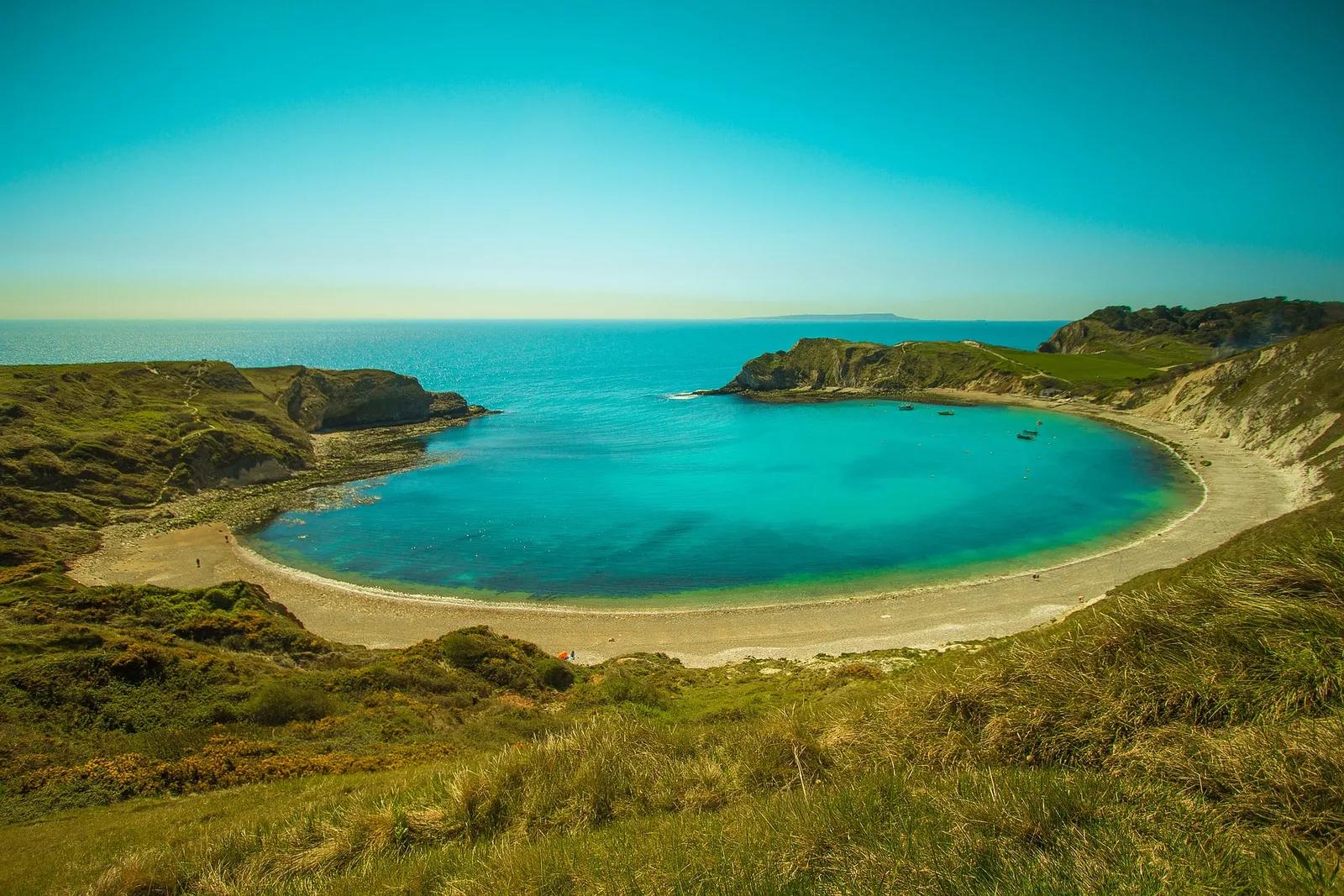
Durdle Door and Lulworth Cove are the two most photographed spots on the entire Jurassic Coast, and they sit less than a mile apart. Durdle Door is a natural limestone arch standing in the sea, reached by a steep path and a long flight of steps down to a shingle beach. Lulworth Cove is an almost perfect horseshoe bay scooped out of the cliffs, with calm, sheltered water that is far safer for swimming than the open beach at Durdle.
Treat these beaches with respect. People are seriously injured at Durdle Door most summers jumping from the arch and cliffs, a practice called tombstoning, and there have been deaths from cliff falls along this coast. The RNLI and Dorset Council warn against jumping every year, the water is deep and cold with hidden rocks, and the cliffs are actively eroding. Stay back from cliff edges, do not jump, and read the safety guidance from the RNLI before you go.
Chesil Beach: an 18-mile shingle wonder
Chesil Beach is one of the great geological features of Britain, an 18-mile barrier of shingle running from West Bay to the Isle of Portland. Behind it lies the Fleet, a sheltered tidal lagoon that is a haven for wildfowl and one of the most important habitats on the coast. The pebbles are famously graded by size along its length, from pea-sized in the west to fist-sized at Portland.
This is a beach for walking, fishing and watching wildlife rather than swimming. The shingle shelves steeply into deep water with a fierce undertow, and it is genuinely dangerous to swim from most of its length. Come here for the scale of it, the sunsets and the birdlife, then swim somewhere gentler.
West Bay and Kimmeridge Bay: cliffs, drama and snorkelling
West Bay and Kimmeridge Bay are the two beaches for people who want more than sand. West Bay is a small resort beneath towering orange sandstone cliffs, made famous as the backdrop to the television series Broadchurch. It has a working harbour, good fish and chips and a shingle-and-sand beach, but keep well clear of the base of those cliffs because rockfalls are frequent.
Kimmeridge Bay is Dorset's snorkelling beach, a rocky bay of ledges and pools inside a marine reserve, home to the Fine Foundation Wild Seas Centre run by Dorset Wildlife Trust. A marked underwater snorkel trail runs through the shallows in summer, and the rock pools are among the richest in the county. It is also a top fossil-hunting spot, so it pairs naturally with the wider Jurassic Coast. If fossils are your thing, see our guide to the best campsites for dinosaur fossil hunting.
The Jurassic Coast: 95 miles of walking history
The Jurassic Coast is England's only natural UNESCO World Heritage Site, a 95-mile stretch of cliffs running from Orcombe Point in East Devon to Old Harry Rocks near Studland. It records 185 million years of Earth's history across the Triassic, Jurassic and Cretaceous periods, which is why fossils tumble out of the cliffs after every winter storm.
The South West Coast Path follows the clifftops the whole way, linking almost every beach in this guide into one continuous walk. Doing even a short section on foot is the best way to appreciate the coast, and it beats fighting for a car park. For route ideas, read our guide to exploring Britain's coastal pathways.
Staying safe on Dorset's beaches
Two hazards cause almost every serious incident on this coast: tides and cliffs. Learn to read both before you pitch up.
- Tides. Check the tide times for your beach and never get cut off. Several coves, including sections below Durdle Door, can trap you against the cliff as the tide rises. Free tide tables are on the UK Hydrographic Office EasyTide service.
- Cliff falls. The Jurassic Coast cliffs are eroding constantly. Stay off the beach directly beneath them, do not climb them, and do not dig into them for fossils. Rockfalls happen without warning, especially after rain.
- Swimming. Swim between the red and yellow flags where lifeguards patrol, at Bournemouth, Boscombe, Sandbanks, Swanage and Studland in season. Avoid Chesil Beach and open water off Durdle Door.
- Tombstoning. Do not jump from cliffs or the Durdle Door arch. Hidden rocks and cold water shock injure people here every year.
Where to camp near Dorset's beaches
You are never far from a pitch in Dorset, and the Isle of Purbeck around Swanage, Studland and Corfe is the sweet spot for beach access. Sites here put you within a short drive of Studland, Swanage and the Lulworth coast, with the ferry to Sandbanks on your doorstep.
For the Weymouth, Chesil and West Bay end of the county, base yourself around Weymouth or Bridport. Browse everything the county offers on our Dorset campsite listings, or start wider on the full campsite directory. If you are new to pitching by the sea, our guide on how to choose a site for beach camping covers wind, sand and facilities.
Frequently asked questions
Which is the best beach in Dorset for families?
Studland and Swanage are the best family beaches, with soft sand, gently shelving water, summer lifeguards and toilets. Weymouth is a strong third for its shallow bay and seaside amusements. All three sit close to campsites.
Can you swim at Durdle Door?
You can, but it is only for confident swimmers. The water is deep and cold with hidden rocks, and there are no lifeguards. Nearby Lulworth Cove is far safer, with sheltered, calm water. Never jump from the arch or cliffs.
Where can you snorkel in Dorset?
Kimmeridge Bay is the best snorkelling spot in Dorset, with a marked summer snorkel trail through a marine reserve and rich rock pools. The Fine Foundation Wild Seas Centre there, run by Dorset Wildlife Trust, offers guidance and equipment advice.
Are Dorset's beaches dog friendly?
Many are, but most popular beaches ban dogs on the main sand from May to September. Studland, Chesil and quieter coves keep dog-friendly stretches year round. Always check the local council signs before you let a dog off the lead.
How long is the Jurassic Coast?
The Jurassic Coast runs for 95 miles from Orcombe Point in East Devon to Old Harry Rocks near Studland in Dorset. It is England's only natural World Heritage Site and records 185 million years of geological history.
Is Chesil Beach safe to swim from?
No. Chesil Beach shelves steeply into deep water with a strong undertow, and it has no lifeguards. Treat it as a beach for walking, fishing and wildlife, and swim from a lifeguarded bay like Weymouth or Swanage instead.
The short version
For sand and facilities, head to Bournemouth, Boscombe, Sandbanks and Studland. For drama and geology, walk the coast around Durdle Door, Lulworth Cove and Chesil Beach. Always check tides, stay clear of the cliffs and swim where the lifeguards fly their flags. Plan the whole trip through our guide to coastal camping in the UK, or jump straight to Dorset campsites and get a pitch booked.