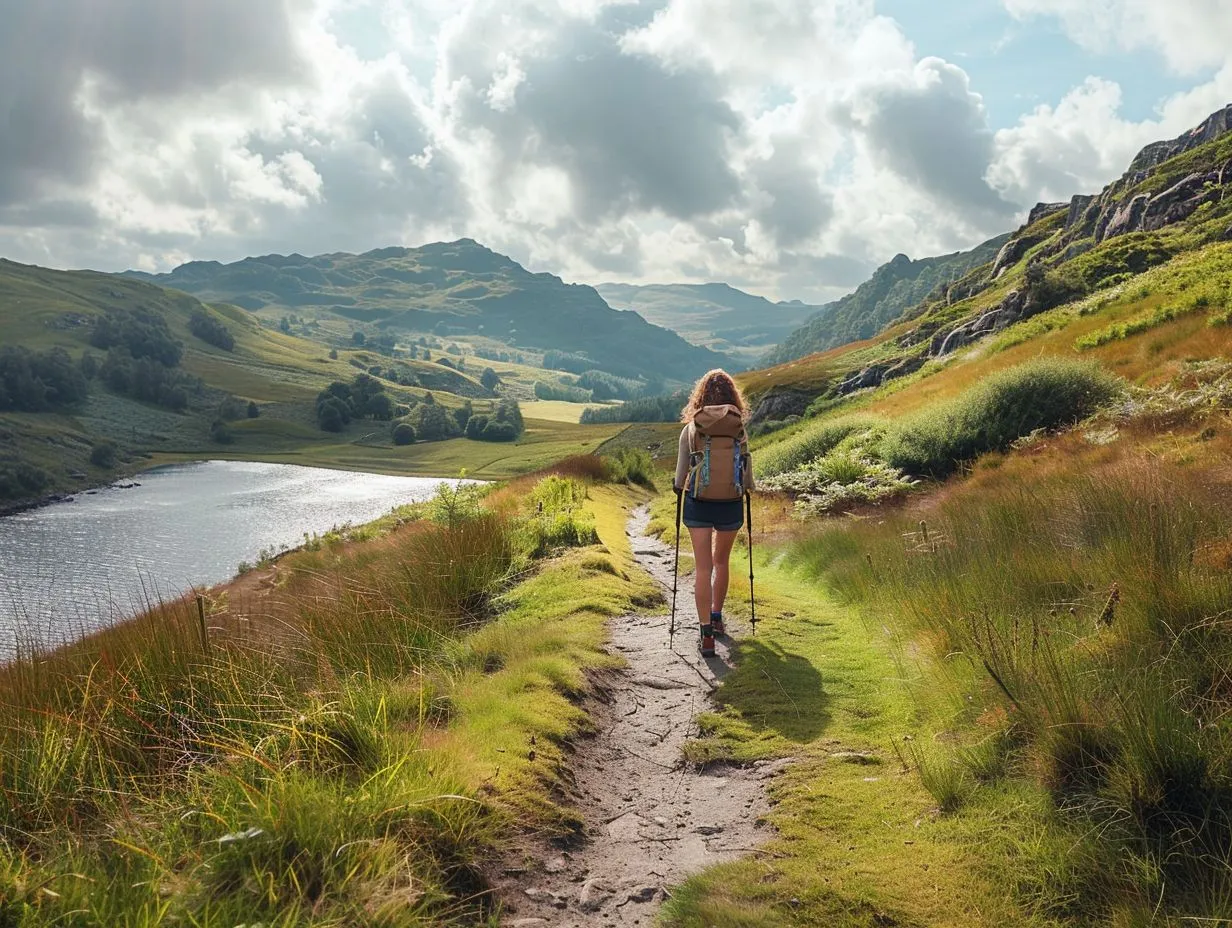
Best Coastal Walks in the UK: A Guide to Britain's Coast Paths
· Updated
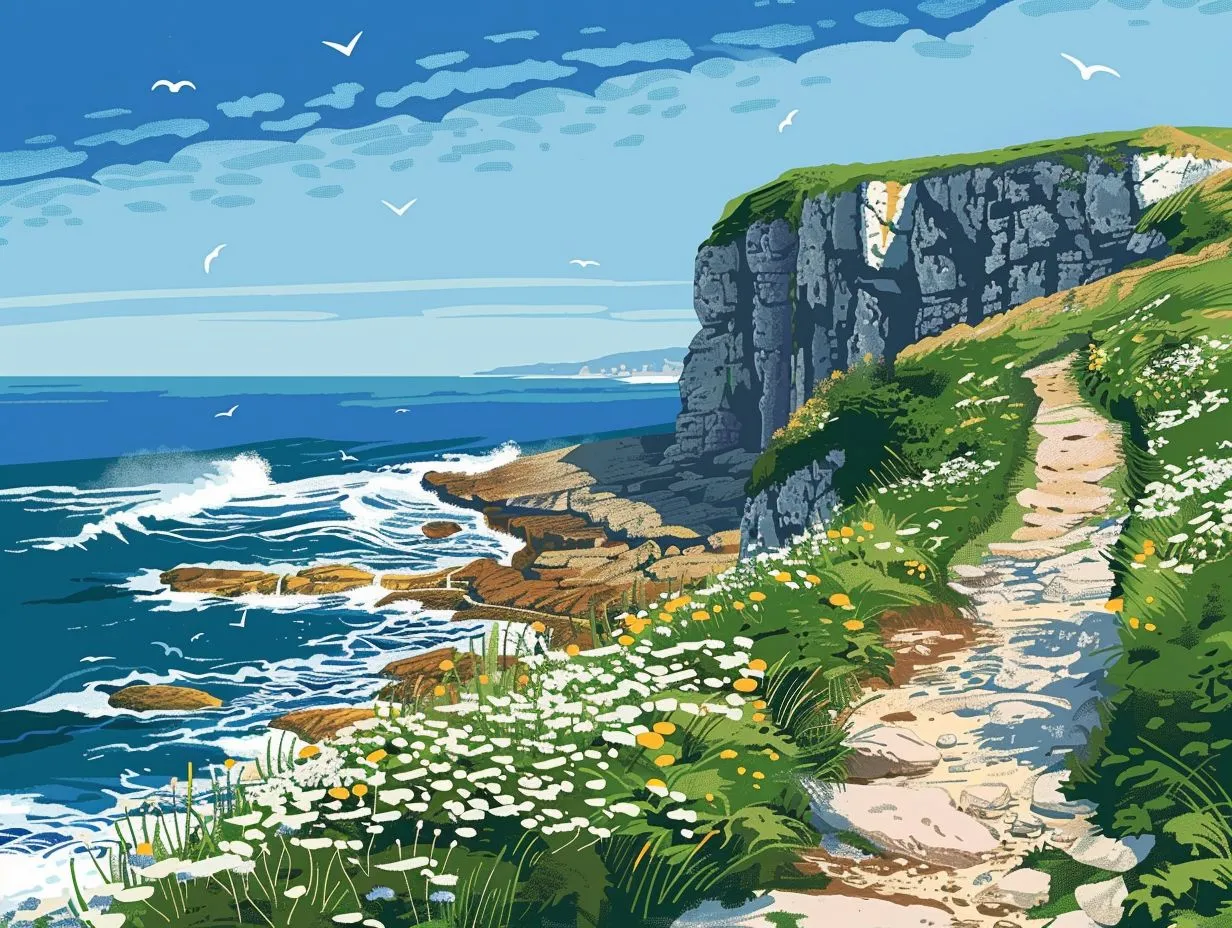
The best coastal walks in the UK run along waymarked National Trails you can join for an hour or follow for weeks. The South West Coast Path is the longest at 630 miles, the Wales Coast Path covers 870 miles of Welsh shoreline, and the King Charles III England Coast Path now circles the entire English coast. You do not have to walk them end to end. Most people pick a day section, plan around the tide, and camp within reach of the trail.
This guide names the main coast paths, gives their real distances, and explains how to walk them safely in sections. It sits within our wider guide to coastal camping in the UK, and you can find pitches near any of these routes through Camping Sites in Britain.
The main coast paths and their distances
Britain has six coast paths worth building a trip around, spread across England, Wales and Scotland. Each is waymarked, mapped and split into stages of five to 15 miles, so you can walk a single day or string several together. The table below sets out the headline figures.
| Coast path | Distance | Where it runs |
|---|---|---|
| South West Coast Path | 630 miles | Minehead (Somerset) to South Haven Point (Dorset), via Devon and Cornwall |
| Wales Coast Path | 870 miles | Chepstow to Queensferry, the whole Welsh coast |
| King Charles III England Coast Path | Around 2,700 miles | The full England coastline, opened as one route in 2026 |
| Pembrokeshire Coast Path | 186 miles | Amroth to St Dogmaels, west Wales |
| Norfolk Coast Path | Around 84 miles | Hunstanton to Hopton-on-Sea, east England |
| Fife Coastal Path | 117 miles | Kincardine to Newburgh, east Scotland |
South West Coast Path (630 miles)
The South West Coast Path is England's longest National Trail at 630 miles, running from Minehead in Somerset around the tip of the peninsula to South Haven Point near Poole. It takes in the cliffs of north Cornwall, the coves of the Lizard, and the Jurassic Coast in Dorset. The full path climbs the equivalent of nearly four times the height of Everest, so it is walked far more often in day sections than in one go. Cornwall and Devon hold the most dramatic stretches, and both are dense with campsites.
Wales Coast Path (870 miles)
The Wales Coast Path is the only route that follows an entire nation's coastline in one continuous trail, covering 870 miles from Chepstow in the south to Queensferry near Chester. It links Cardigan Bay, the Llyn Peninsula, Anglesey and the north Wales coast. The Pembrokeshire Coast Path forms one of its finest sections, so many walkers treat that 186-mile stretch as a trip in its own right.
King Charles III England Coast Path
The King Charles III England Coast Path is the newest and by far the longest of these routes, opened as a single connected trail in 2026 at around 2,700 miles. It joins up the whole English coast, absorbing older sections like the Norfolk Coast Path and running past chalk cliffs, estuaries, harbours and beaches from the Solway Firth clockwise back round. Because it is so new, some stretches are better waymarked than others, so carry a map and check access before setting out. National Trails confirmed the full launch in its announcement of the completed route.
Pembrokeshire, Norfolk and Fife
These three shorter paths are the best choices for a first coastal walking holiday. The Pembrokeshire Coast Path runs 186 miles through a national park, past puffin colonies and hidden coves, and is usually walked over 10 to 15 days. The Norfolk Coast Path covers around 84 miles of big skies, salt marsh and shingle, with gentle gradients that suit families. The Fife Coastal Path stretches 117 miles from Kincardine to Newburgh, threading the fishing villages of the East Neuk, and is one of Scotland's most accessible long routes.
How to walk a coast path in sections
Walk a coast path in day sections rather than one continuous trek, and you turn a multi-week expedition into a series of manageable trips. Each stage between villages or car parks tends to run five to 15 miles, which is a comfortable day with a pack. Plan each section around three things: distance, the climb, and how you get back to your car or campsite.
Point-to-point walking beats there-and-back on the coast, because the scenery only unfolds one way. Use local buses, a two-car shuttle, or a taxi to return to your start. Many walkers base themselves at one campsite for several nights and drive to a fresh trailhead each morning. For longer trips, our guide to Britain's coastal trails and campsites matches specific stages to places to stay.
Reading the waymarks and maps
National Trails use the acorn symbol as their waymark, so once you spot it you can follow the path with confidence. Even so, carry the relevant Ordnance Survey Explorer map or a downloaded offline map, because cliff paths reroute after landslips and coastal erosion. Phone signal drops out on remote headlands, so never rely on a live map alone.
Tides and safety on the coast
Check the tide times before every coastal walk, because a rising tide can cut off beaches, causeways and low cliff paths within minutes. Sections that cross sand or rocks below the high-water mark are only safe for part of the day. Tide tables are free from the Met Office, the National Trust for causeway crossings, and printed boards at most beaches.
The RNLI advises checking tide times before you set out and never walking alone on remote sections without telling someone your route and return time. If you get into trouble on the coast or see someone else in difficulty, call 999 and ask for the Coastguard. The RNLI sets out its full coastal safety guidance on its official safety pages.
Weather, cliffs and kit
Coastal weather turns fast, so pack for wind and rain even on a bright morning. Stay back from cliff edges, which crumble without warning, and keep to the marked path rather than short-cutting across grass that may overhang. Sturdy boots with grip, layered clothing, water, food and a charged phone in a waterproof case are the baseline for any section over a couple of miles. Our advice on choosing a beach camping site covers exposure and pitch safety in more detail.
Camping along the way
Camp at official sites near the trail rather than pitching wild, because wild camping is not a general right in England or Wales. Away from Dartmoor, where a Supreme Court ruling on 21 May 2025 confirmed a limited right to backpack camp, you need the landowner's permission everywhere in England and Wales. Scotland is different: the Land Reform (Scotland) Act 2003 and the Scottish Outdoor Access Code allow responsible wild camping across most unenclosed land.
The practical answer for the coast paths is a network of campsites, holiday parks and small farm pitches strung along the route. Book ahead in July and August, when coastal sites fill fast. You can search pitches near the main routes through our directory at Camping Sites in Britain, or jump straight to the busiest coast-path counties: Cornwall and Devon for the South West Coast Path, and Pembrokeshire for the Welsh coast.
Backpacking versus a fixed base
Decide early whether you are carrying your camp or returning to a fixed base each night. Backpacking the full South West Coast Path means booking a chain of sites in advance and carrying a light tent, stove and sleeping system. A fixed base is simpler for most trips: pitch at one campsite, walk out-and-back or shuttle sections, and keep your heavy kit off your shoulders. Families and first-timers almost always enjoy the fixed-base approach more.
Frequently asked questions
What is the longest coastal walk in the UK?
The King Charles III England Coast Path is the longest, running around 2,700 miles around the whole English coast since it opened as one route in 2026. The South West Coast Path is the longest single National Trail at 630 miles.
How long does it take to walk the South West Coast Path?
Walking all 630 miles of the South West Coast Path takes most people seven to eight weeks. Far more walkers tackle it as day or weekend sections over months or years, using campsites in Cornwall, Devon, Somerset and Dorset as bases.
Do I need to check tides for a coastal walk?
Yes. Rising tides can cut off beaches, causeways and low sections of cliff path within minutes. Check tide times before you set out, use printed beach boards or the Met Office, and turn back early if in doubt.
Can I wild camp along Britain's coast paths?
Only in Scotland, under the Scottish Outdoor Access Code, and on Dartmoor where a 2025 Supreme Court ruling confirmed a limited right. Everywhere else in England and Wales you need the landowner's permission, so use official campsites near the trail.
Which coast path is best for beginners?
The Norfolk Coast Path suits beginners best, with around 84 miles of gentle, well-marked walking and few steep climbs. The Fife Coastal Path and shorter stretches of the Pembrokeshire Coast Path are also friendly first choices.
Are dogs allowed on the coast paths?
Yes, dogs are welcome on all the main coast paths, but keep them on a lead near cliffs, livestock and ground-nesting birds. Some beaches have seasonal dog restrictions between May and September, so check local signs.
The short version
Britain's coast paths give you some of the best coastal walks in the world, from the 630-mile South West Coast Path to the family-friendly Norfolk and Fife routes. Walk them in sections, check the tide and weather before every outing, and book a campsite near your stage rather than pitching wild. Start planning with our guide to coastal camping in the UK, or find your pitch now at Camping Sites in Britain.