Cycling Gear for Camping Trips: A UK Bikepacking Kit List
· Updated
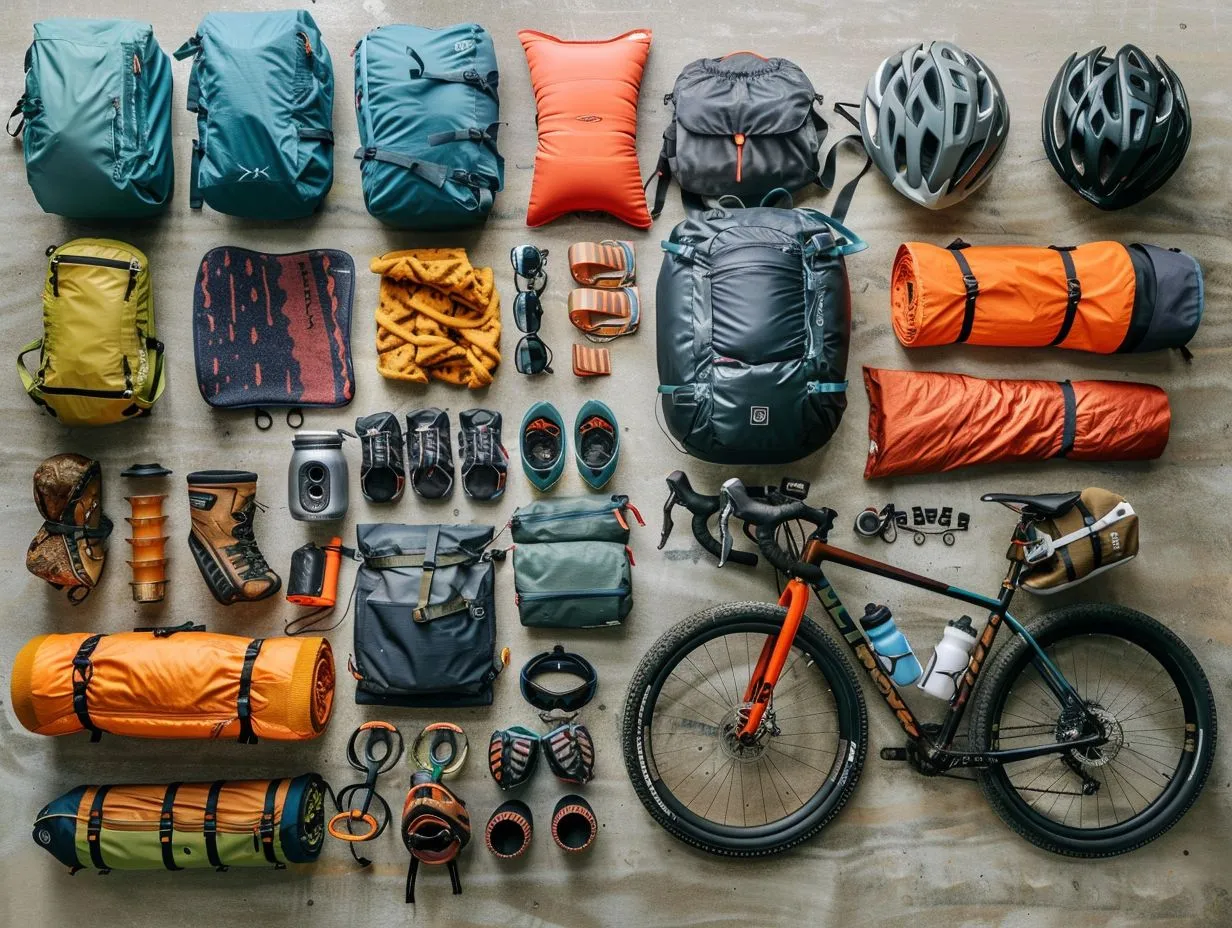
Carrying camping kit on a bike comes down to one decision: bikepacking bags strapped to the frame, or a rack and panniers. Bikepacking bags keep the weight low, central and quiet on rough ground, and suit a lighter three or four-night trip. Panniers carry far more and load in seconds, which is why long-haul tourers still swear by them. For most UK weekends on the National Cycle Network or a route like the C2C, a soft bikepacking setup with a total loaded weight of 8kg to 12kg on top of the bike is the sweet spot.
The trick is not buying the lightest of everything. It is carrying less, in the right places, so the bike still handles. A realistic camping load for a fit rider is a base weight (everything except food, water and fuel) of 6kg to 9kg. Get under 6kg and you are into genuinely fast, hilly-friendly territory.
This guide sits within the complete UK camping gear guide from Camping Sites in Britain, where you can find and compare campsites, caravan parks and glamping across the country. For the wider trip, including routes and planning, pair it with our guide to cycling and camping in the UK.
Bikepacking bags versus panniers and racks
Bikepacking bags win on weight and rough terrain; panniers win on capacity and convenience. A classic bikepacking setup is three bags: a frame bag inside the main triangle, a seat pack behind the saddle, and a handlebar roll up front. Nothing hangs off the sides, so the bike stays narrow for gates, singletrack and hedge-lined lanes.
A rack-and-pannier setup carries two to three times as much and is easier to pack and unpack, but it adds weight, needs mounting points, and the side loads catch crosswinds and snag on tight trails. Choose panniers if you want camp chairs, a big cook set and a week of food. Choose bikepacking bags if you want to move quickly and keep it simple.
| Bag | Typical capacity | Sensible weight to carry | Best for |
|---|---|---|---|
| Frame bag | 2 to 6 litres | Up to 3kg to 4kg | Heavy, dense items: tools, spares, water, food. Keeps weight low and central. |
| Seat pack | 8 to 17 litres | Up to 4kg (keep it light to stop sway) | Bulky, light kit: sleeping bag, spare clothes. |
| Handlebar roll | 5 to 15 litres | 3kg to 4kg | Tent or tarp, sleeping mat. |
| Rear rack and two panniers | 25 to 40 litres | Rack rated to about 25kg; keep it well under | Longer tours, more food, family or comfort kit. |
You can mix the two. A rear rack with a dry bag on top plus a small frame bag is a popular halfway house. A top tube bag and a stem-mounted "feed bag" add snack and phone storage without unbalancing anything. For soft luggage, a proper roll-top dry bag keeps everything genuinely waterproof; our pick of the best waterproof camping bags covers what to look for.
Going lightweight without spending a fortune
The biggest savings come from your three heaviest items: shelter, sleep system and bags, not from shaving grams off a spork. Weigh your kit on kitchen scales before you go and you will spot the offenders fast. A two-person tunnel tent at 2.8kg is the sort of thing that quietly wrecks a build.
Set a target for each big item: shelter under 1.5kg, sleeping bag or quilt under 900g, mat under 550g. Hit those three and the rest falls into place. Our guide to the best lightweight camping gear goes deeper on where the grams hide and which cuts are worth making.
Shelter: tent, bivvy or tarp
A one or two-person lightweight tent is the safest all-round choice for British weather. Look for a packed weight of 1kg to 1.5kg and a decent hydrostatic head of at least 2,000mm on the flysheet. A semi-freestanding tent pitches on hardstanding and gravel where you cannot get pegs in, which matters at busy sites.
A bivvy bag is lighter still, at 300g to 700g, and packs to nothing, but you get no sitting-up space and no shelter to cook or wait out rain under. A tarp at 200g to 500g plus pegs and guylines gives you cover and airflow for very little weight, though midges will find you in the Highlands and the west without a net. In practice, a light tent is the honest answer for most UK trips; save the tarp or bivvy for warm, dry, low-midge conditions.
Sleep system: bag or quilt, plus a mat
A three-season sleeping bag with a comfort rating of around 0C to 5C covers spring to autumn in most of Britain. Down packs smaller and weighs less, at roughly 700g to 900g for that warmth; a synthetic bag costs less and copes better with damp, but weighs and bulks more. A backpacking quilt drops you to 450g to 600g if you sleep warm and pitch a decent mat under it.
The mat is not optional. Cold ground steals more heat than cold air, so you want an insulated inflatable with an R-value of 3 or higher for three-season use, weighing 350g to 550g. A punctured mat means a miserable night, so carry the patch kit that comes with it. See the best sleeping mats for comfort for the warmth-to-weight trade-offs.
A compact stove and cookware
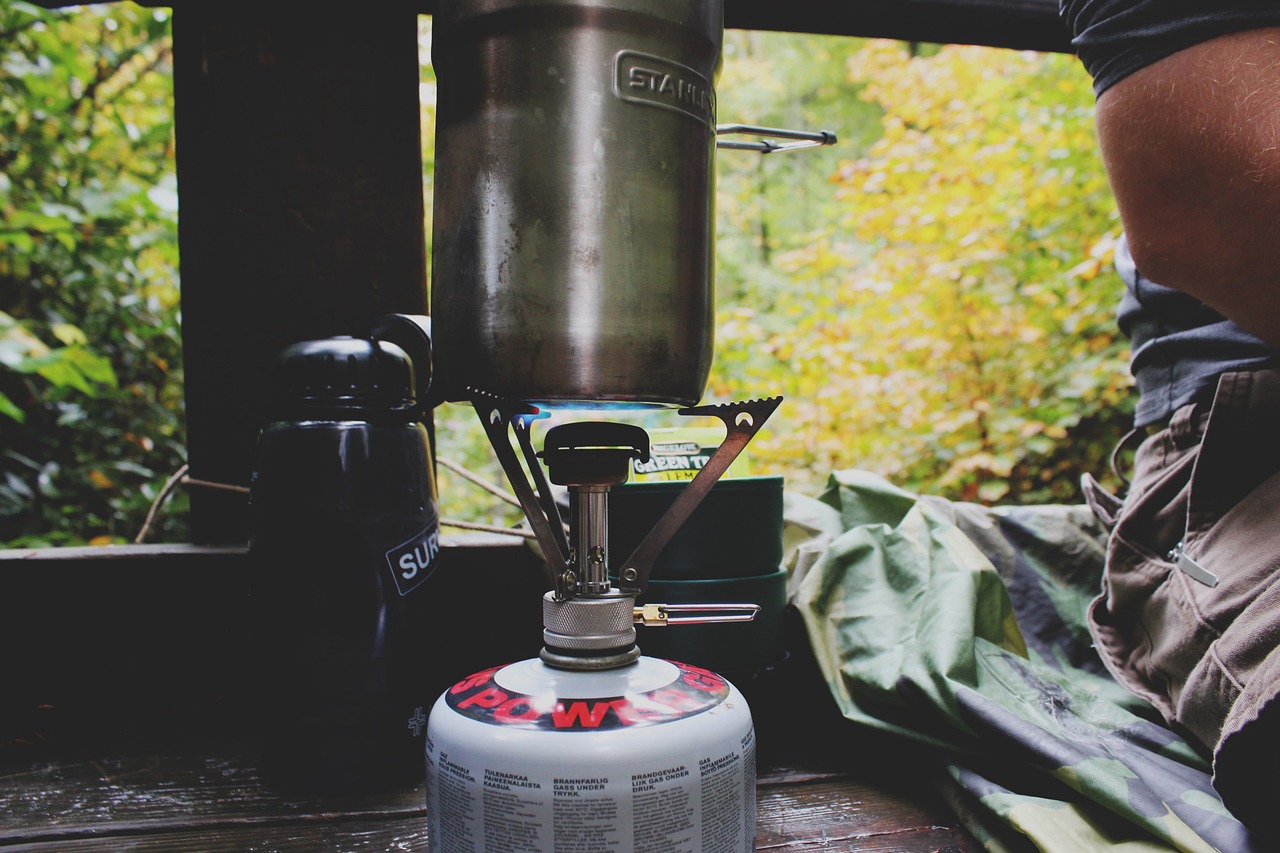
A screw-top canister stove is the simplest hot meal on a bike. A bare burner weighs 25g to 100g and threads onto a standard gas canister; a 100g canister boils water for a long weekend and slips inside your pot with the stove. An integrated system (burner and pot in one, around 350g to 450g) boils faster and shields the flame from wind, which is worth having on an exposed pitch.
Keep cookware minimal: one 750ml to 900ml titanium or hard-anodised pot, a folding spork, a lighter plus a spare, and a small dishcloth. That is enough to boil water, rehydrate a meal and make a brew. If you are cooking properly rather than just boiling, add a second pot and a windshield and accept the extra 200g to 300g. Never use a stove inside the tent porch with the inner zipped: carbon monoxide is the real danger, so cook in the open with airflow.
Tools and spares
Carry enough to fix a puncture and a snapped chain, because those are the two things that end a ride. A UK weekend kit is small and lives in the frame bag where the weight sits low.
- Two inner tubes (roughly 150g each) even if you run tubeless, plus a patch kit. Check they match your valve and wheel size.
- A mini pump (about 100g) or a CO2 inflator with two cartridges. A pump never runs out.
- A multitool (100g to 150g) with the Allen keys your bike uses, a Torx T25, and a chain-breaker.
- A quick link for your chain's speed, plus two tyre levers.
- A spare gear cable, a few zip ties and a short length of gaffer tape wrapped round the pump. These fix most roadside dramas.
Learn to use them before you leave. A quick link and a chain-breaker are useless if you have never joined a chain at the side of a lane in the rain.
Clothing: layer, do not overpack
Pack for the coldest and wettest hour you will realistically meet, then stop. A workable list is what you ride in, one warm layer, one waterproof, and one dry set for camp. British summer evenings turn cold quickly, especially at altitude in the Lake District or Snowdonia, so a warm layer earns its place even in July.
- On the bike: padded shorts, a wicking jersey or top, and a set of arm and knee warmers you can strip off.
- A waterproof jacket is non-negotiable in Britain. Prioritise breathability so you do not soak from the inside; see the best waterproof jackets for campers.
- A warm midlayer such as a light down or synthetic jacket for camp and cold descents. For colder trips, our notes on the best thermal clothing for cold-weather camping apply on the bike too.
- Dry camp kit: a base layer, warm socks and lightweight trousers to change into. Getting out of damp cycling kit is half of staying warm.
Packing to keep the bike balanced
Keep the heavy, dense items low and central, and the light, bulky ones out at the ends. Weight in the frame bag sits close to the bottom bracket, where it barely affects handling. Weight in the seat pack and handlebar roll sits high and far from centre, so anything heavy there makes the bike wallow and the steering vague.
Work to a simple rule. Tools, spares, water and food go in the frame bag. The sleeping bag or spare clothes go in the seat pack. The tent and mat go on the bars. Pack the seat pack firm and taper it towards the back so it does not sag onto the tyre, and cinch the handlebar roll tight so it cannot swing. Keep left and right roughly even if you run panniers, and check every strap after the first few miles, because everything settles once you start moving.
Ready to plan the trip itself? The CSIB campsite directory lets you filter by facilities and location, and the Lake District and Cumbria listings are a brilliant starting point for a first loaded overnighter.
Frequently asked questions
How much should a bikepacking camping setup weigh?
Aim for a base weight of 6kg to 9kg, meaning everything except food, water and fuel. Add roughly 2kg to 4kg for consumables on a weekend. Under 6kg base is genuinely light and makes hills far easier.
Do I need a special bike for bikepacking?
No. Any gravel, touring, mountain or sturdy hybrid bike works if the tyres suit the terrain and the frame has room for bags. Frame mounts help but straps let you fit soft luggage to almost anything.
Are panniers or bikepacking bags better for camping?
Bikepacking bags are lighter, narrower and better on rough trails. Panniers carry two to three times more and load faster, which suits long tours and heavier kit. For most UK weekends, soft bikepacking bags are the simpler choice.
What is the lightest shelter for cycle camping?
A tarp at 200g to 500g or a bivvy at 300g to 700g is lightest, but offers little space or midge protection. A lightweight tent at 1kg to 1.5kg is the best all-rounder for British weather.
Can I carry a stove and gas on a bike?
Yes. A canister stove and a 100g gas canister together weigh well under 250g and pack inside your pot. Always cook in the open air with good ventilation, never inside a zipped tent.
How do I stop my saddle bag swaying?
Pack it firm with light, bulky kit rather than heavy items, cinch every strap tight, and taper the load towards the rear. Keep heavy things in the frame bag instead, where they barely affect handling.
The short version
Decide between bikepacking bags and panniers, then attack your three heaviest items: shelter under 1.5kg, sleep system under 1.5kg combined, and bags that keep the load low and central. Carry the tools to fix a puncture and a broken chain, layer your clothing rather than overpacking it, and keep dense weight in the frame bag so the bike still steers.
When the kit is sorted, find your first pitch in the complete UK camping gear guide or browse the CSIB campsite directory and pick a route.