The best lightweight stoves for backpacking and hiking
· Updated
For most UK backpackers the right stove is a tiny upright canister burner that screws onto a gas cartridge, weighs under 100g and costs less than a decent pair of socks. The MSR PocketRocket 2 and the Soto Amicus are the two most recommended examples, and either will boil a mug of water in around three to four minutes. If you only ever boil water for dehydrated meals and brews, buy an integrated system like a Jetboil instead. If you cook proper food in a pan, buy a burner with wide pot supports.
The stove you want depends on one honest question: are you heating water, or are you actually cooking? Get that right and the rest is weight, fuel and cold-weather performance. This guide is part of our wider look at campfire cooking essentials, and it sits alongside the campsite listings on Camping Sites in Britain where you can find somewhere to pitch up and test your kit.
The five types of stove, compared
There are five stove types worth knowing, and the trade-off is always the same: speed and convenience on one side, weight, cost and cooking control on the other. Here is how they stack up for UK hiking.
| Type | Example | Best for | Watch out for |
|---|---|---|---|
| Upright canister | MSR PocketRocket 2, Soto Amicus | Cheap, tiny, all-round backpacking | Poor in wind, weak in the cold |
| Integrated canister system | Jetboil Flash, MSR WindBurner | Fast boiling, windy hills | Bulky, mainly boils rather than cooks |
| Remote canister or liquid fuel | MSR WhisperLite | Winter, expeditions, big groups | Heavier, needs priming and maintenance |
| Meths or alcohol | Trangia | Simple, silent, nothing to break | Slow, useless in strong wind |
| Wood-burning | Solo Stove, BioLite | Free fuel, no cartridges to carry | Messy, smoky, hopeless when wet |
Upright canister stoves
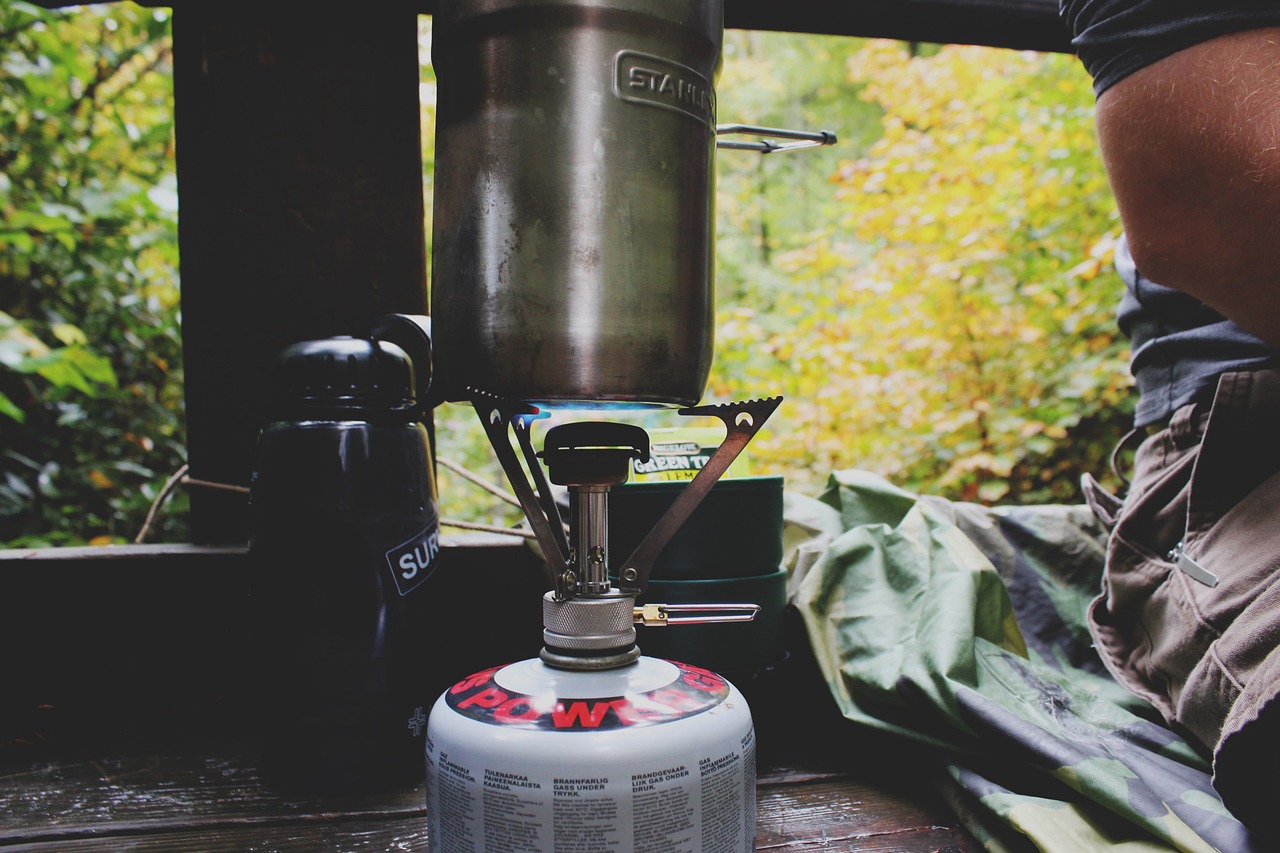
These are the default choice for UK hiking and the ones most people should buy. The burner screws directly onto the top of a threaded gas canister, folds down to the size of a matchbox, and does everything a solo walker needs. The MSR PocketRocket 2 (about 73g) and the Soto Amicus (about 81g, with a built-in igniter) are the classic picks, and the Soto handles a light breeze better than most in its class.
The pot sits on top of the canister, so the whole thing is a little tall and tippy, and the exposed burner loses a lot of heat to wind. The upside is that you get real flame control, so you can simmer a sauce rather than just blast water, and they are the cheapest way into good gas cooking. Pair one with a proper pan and lid from our guide to the best lightweight cookware and you have a full trail kitchen for well under half a kilo.
Integrated canister systems
Buy one of these if your idea of cooking is pouring boiling water into a bag. Systems like the Jetboil Flash and the MSR WindBurner combine the burner, a heat-exchanger pot and a wind-shielded design into one clip-together unit that boils half a litre in roughly two minutes and sips fuel doing it. The WindBurner in particular keeps going in wind that would blow out an upright burner.
The catch is that they are bulkier and heavier than a bare canister stove, and the tall, narrow pot is built for boiling water, not frying or simmering. They are brilliant for anyone living on brews, porridge and freeze-dried meals, and they come into their own on a cold, exposed pitch where a quick, reliable boil matters more than anything else.
Remote canister and liquid-fuel stoves
For winter, expeditions and cooking for a group, a remote stove earns its extra weight. The burner sits on the ground on its own legs, linked to the fuel by a hose, so it takes a big, stable pan and stays put. Liquid-fuel models like the MSR WhisperLite burn white gas (Coleman fuel) and can be run with the canister inverted, feeding liquid fuel to the burner so it keeps pumping out heat when the temperature drops well below freezing and ordinary gas gives up.
They are heavier, they need priming, and the WhisperLite type needs the occasional field strip and clean. In return you get the most reliable cold-weather performance there is, plus fuel you can buy almost anywhere in the world. Overkill for a summer weekend in the Peak District, exactly right for a Cairngorms trip in February.
Meths and alcohol stoves: the classic Trangia
The Trangia is the stove that never lets you down because there is almost nothing to let you down. You pour methylated spirit into a brass burner, light it, and that is it: no jets to clog, no valve to fail, no canister to run dry mid-brew. The Swedish-made Trangia set nests the burner, two pots, a pan and its own windshield into one tidy package, and the whole design is a windshield, which is why it works where bare canister stoves struggle.
The trade-offs are honest. Meths carries less energy than gas, so boil times are slower, often six to ten minutes for half a litre, and you cannot really turn a flame down for delicate cooking. It is also silent, which after a week of roaring gas jets is a genuine pleasure. Meths is sold cheaply in most UK hardware shops and garages, so resupply on a long trip is easy.
Wood-burning stoves
Wood-burners run on free fuel, which is the whole appeal. A twig stove such as a Solo Stove, or the BioLite CampStove that charges a phone off the heat, means you carry no gas and no meths at all. On a long, remote trip that saves real weight, and there is something proper about cooking on a fire you have fed with sticks.
The reality is that they are messy, they blacken your pans with soot, and they are close to useless after a wet British week when every stick on the ground is soaked. They also need constant feeding and attention. Treat one as a fun second stove rather than your only means of a hot brew, and never light one where an open fire is banned.
What to weigh up before you buy
Match the stove to your trips, not to a spec sheet. Six things decide it.
- Weight and packed size. An upright canister stove is the lightest real option at 70g to 100g. Integrated systems and remote stoves weigh more but pack their kit together.
- Boil time. Integrated systems win, at around two minutes for half a litre. Uprights sit at three to four. Meths trails at six-plus.
- Fuel availability in the UK. Screw-thread canisters (a butane and propane mix) are stocked by every outdoor shop and most petrol stations. Meths is in hardware shops and garages. White gas is harder to find, so plan ahead.
- Cold-weather performance. Plain canister gas struggles below freezing because the butane stops vaporising. A propane-heavy winter mix, an inverted remote canister, or liquid fuel all handle the cold far better.
- Wind resistance. Integrated systems and the Trangia shrug off wind. A bare upright burner needs a windshield or a sheltered spot behind a rock or your rucksack.
- Boil or cook. If you only rehydrate meals, get an integrated system. If you fry, simmer and cook real food, get a pot-supported burner with a proper flame you can turn down.
Stove safety: cook outside, never in the tent
Never run any stove inside a tent, a porch or a closed shelter, no matter how cold or wet it is. Every fuel-burning stove produces carbon monoxide, an odourless gas that has killed campers who ran a burner for warmth or cooked under a flysheet to dodge the rain. You cannot smell it or see it, and by the time you feel drowsy it is already dangerous. The British Mountaineering Council is blunt about it: cook in the open air, with ventilation, and let a hot canister or burner cool before you pack it (BMC stove safety guidance).
The other rules are simple. Light the stove on firm, level ground away from your tent and dry grass, keep a windshield clear of the canister so it cannot overheat, and never change a gas cartridge near a flame. For the full picture, read our guide to the dangers of cooking in a tent before your first trip.
Frequently asked questions
What is the best lightweight stove for a beginner?
An upright canister stove such as the MSR PocketRocket 2 or the Soto Amicus. Both are cheap, weigh under 100g, screw straight onto a gas canister, and give you flame control for real cooking. They suit almost every UK three-season trip.
Do gas canister stoves work in cold weather?
Not well below freezing. Standard butane and propane canisters lose pressure as the butane stops vaporising, so the flame weakens. Use a propane-rich winter mix, a remote stove with the canister inverted, or a liquid-fuel stove for reliable cold-weather cooking.
Can I take gas canisters on a plane?
No. Gas canisters and liquid fuel are banned from both hold and cabin baggage on UK flights. Buy your fuel at your destination. This is one reason expedition users favour liquid-fuel stoves, since the fuel is widely available worldwide.
How much fuel do I need for a weekend?
A small 100g gas canister covers roughly a weekend of brews and simple meals for one, boiling around 12 to 15 litres of water in total. Cold weather, wind and simmering all burn more, so carry a spare on longer trips.
Is a Jetboil or a normal canister stove better?
A Jetboil boils faster and resists wind, but mainly boils water. A normal upright stove is lighter, cheaper and simmers for real cooking. Choose the Jetboil if you live on freeze-dried meals, the upright if you cook in a pan.
Can I use a stove on a campsite?
Yes, on your own pitch and in the open air, though check the site rules first as some restrict open flames in dry spells. Always cook away from the tent and never inside it. You can compare sites across the UK on Camping Sites in Britain.
The short version
Boiling water for dehydrated meals, buy an integrated system. Cooking real food in a pan, buy an upright canister stove and a decent pot. Heading into a British winter or an expedition, spend the extra weight on a liquid-fuel stove. Whatever you choose, cook outside, never in the tent. For more on feeding yourself outdoors, head back to our guide to campfire cooking essentials.