The Best Lightweight Cookware for Backpacking
· Updated
For most backpackers the best lightweight cookware is a single hard-anodised aluminium pot with a folding handle, a lid that doubles as a plate, and enough room inside for your stove and a gas canister to nest. It cooks evenly, packs small, weighs little and does not cost a fortune. Titanium is lighter and tougher if you count every gram, stainless steel is cheap and near indestructible but heavy, and non-stick makes cleaning easy until the coating wears. The trick is matching the material and the format to how you actually cook on the trail.
This is part of our guide to campfire cooking essentials, the wider look at feeding yourself outdoors from Camping Sites in Britain, where you can find and compare campsites across the UK. A pot is only half the kit, so we also cover the best lightweight cook stoves that pair with it.
Which material is right for you
The material decides the weight, the price and how evenly your food cooks. There are four in common use, and each has a clear job.
| Material | Weight | Cost | Cooks evenly? | Best for |
|---|---|---|---|---|
| Titanium | Lightest | Highest | No, hot spots | Gram-counters who mostly boil water |
| Hard-anodised aluminium | Light | Mid | Yes | Most people, the all-rounder |
| Stainless steel | Heavy | Low | Fairly | Tough use, car camping, groups |
| Non-stick coating | Light | Mid | Yes | Frying and easy washing-up |
Titanium
Titanium is the lightest and strongest metal you can cook in, which is why a TOAKS Titanium 550ml or 750ml pot or an Alpkit MytiMug turns up in so many ultralight kits. The catch is that titanium is a poor conductor, so it develops hot spots that scorch anything thicker than water. It is brilliant for boiling and rehydrating, awkward for a proper fry-up, and the dearest option by a good margin.
Hard-anodised aluminium
Hard-anodised aluminium is the best all-rounder for most backpackers, and it is what we reach for first. It is light, much cheaper than titanium, and it spreads heat evenly so you can actually simmer without burning the bottom of the pan. Sets like the MSR Trail Lite and GSI Halulite range are built around it. The hard-anodised surface is far tougher than bare aluminium and resists scratches and pitting.
Stainless steel
Stainless steel is tough, cheap and almost impossible to ruin, but it is heavy, which is why you see it more at the campsite than three days into a hike. A GSI Glacier Stainless mug or pot will outlive everything else in your pack and shrug off scouring, open flames and clumsy handling. For weekends where weight is not critical it is hard to beat on value.
Non-stick coatings
Non-stick makes eggs, pancakes and anything sticky far easier to cook and clean, and it saves water because a wipe often does the job. The trade-off is lifespan: the coating wears with use and hates metal utensils and abrasive scrubbing. Options like the MSR Ceramic range last longer than older PTFE coatings, but treat any non-stick pan gently and it will repay you.
How much capacity you need
Match the pot volume to the number of people, not to the size of your appetite. A solo hiker who mostly boils water for dehydrated meals and a brew needs roughly 550 to 750ml, which is why the TOAKS 550 and 750 pots are the standard solo sizes. A pair, or anyone cooking a one-pot meal from scratch, wants 1 to 1.5 litres so the food does not boil over. Two litres and up is group and family territory, and by then the weight saving of going ultralight barely matters.
Do not go bigger than you need. A larger pot is heavier, packs worse and wastes fuel bringing more metal up to temperature. If you are still deciding what you will actually cook, our guide to the best freeze-dried meals is a good place to work out how much water you really boil in a day.
The formats worth knowing
The right format depends on your group size and how much cooking, as opposed to boiling, you plan to do.
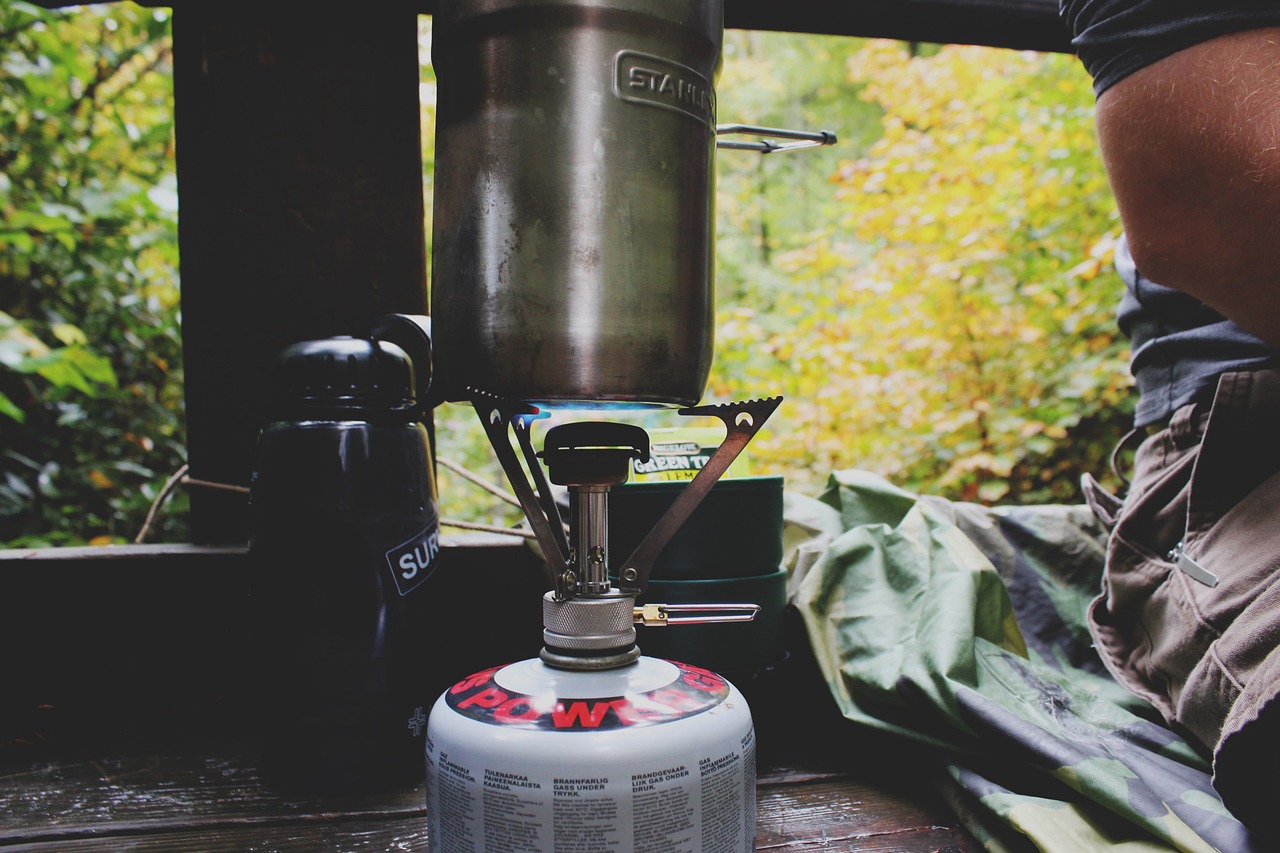
- Solo pot or mug that a canister nests inside. The classic ultralight setup: a 550 to 750ml pot big enough to swallow a small gas canister and your stove, so the whole cook kit becomes one tidy package. The Alpkit MytiMug and TOAKS pots are built for this.
- Two-pot nesting set. Two pots plus a lid or pan that stack inside each other, ideal for pairs. The Sea to Summit Alpha pot sets and the GSI Pinnacle range are good examples, giving you a main pot and a second for a sauce or a brew.
- Frying pan or lid. A shallow pan for eggs, sausages and fish, often doubling as the pot lid to save weight. Non-stick earns its place here more than anywhere else.
- Kettle. If your trip is mostly tea, coffee and dehydrated food, a dedicated titanium kettle like the MSR Titan Kettle or the Alpkit Ketul pours better than a pot and still nests a canister.
- Integrated pot-and-stove systems. Sealed systems such as the Jetboil and MSR WindBurner bolt the burner to a heat-exchanger pot, boiling water fast and sipping fuel in wind. They are heavier and less versatile than a bare pot, but for pure boiling speed nothing else comes close.
What to look for before you buy
Beyond material and size, a handful of practical features separate cookware you enjoy using from cookware you resent carrying.
- Folding handles. Handles that fold flat against the pot pack smaller and lock the lid down. A handle that stays cool or clips on separately saves burnt fingers.
- A lid that doubles as a plate. A snug lid speeds up the boil and cuts fuel use, and a lid you can eat or drink from means one less item to pack.
- Packability. The best test is simple: does the stove and a gas canister nest inside the pot? If the whole cook system becomes one unit, it drops into your pack without rattling around.
- Weight. Check the figure with the lid on, since some brands quote the pot alone. For solo use, anything under 150g in titanium or 250g in aluminium is doing well.
- Measurement marks. Volume graduations inside the pot let you measure water for a dehydrated meal without carrying a separate cup.
The small stuff that finishes the kit
A pot is only useful with a few odds and ends to go with it. A spork, ideally a long-handled titanium or tough nylon one, does the work of a knife, fork and spoon and weighs almost nothing. A mug matters more than people expect: an insulated titanium or double-wall mug keeps a brew warm on a cold morning, though many solo hikers simply drink from the pot to save weight.
For cleaning, carry a small scrap of sponge or scourer and a drop of biodegradable soap, and always wash up and tip grey water well away from streams and your pitch. Non-stick and titanium wipe clean with hot water most nights, which is half the reason they are worth the money. For the wider toolkit, from pot grips to a decent knife, see our guide to essential tools for campsite cooking.
Frequently asked questions
What is the best cookware material for backpacking?
Hard-anodised aluminium is the best all-rounder for most people: light, mid-priced and it cooks evenly. Choose titanium only if you count every gram and mostly boil water, and stainless steel if weight matters less than toughness and price.
What size pot do I need for backpacking?
A solo hiker needs roughly 550 to 750ml, enough to boil water and rehydrate a meal. A pair, or anyone cooking a full one-pot meal, wants 1 to 1.5 litres. Bigger pots are heavier and waste fuel, so avoid buying larger than you need.
Is titanium cookware worth the extra money?
Only if weight is your priority. Titanium is the lightest and strongest option, but it is the dearest and develops hot spots that scorch food, so it suits boiling far better than frying. For everyday cooking, aluminium gives better results for less.
Should I buy an integrated stove system or a separate pot and stove?
An integrated system like a Jetboil boils water fastest and copes best with wind, so it suits hikers who mainly rehydrate meals. A separate pot and stove is lighter, cheaper and more versatile for actual cooking. Pick by whether you boil or cook.
How do I clean backpacking cookware without much water?
Wipe the pot out with a scrap of sponge and hot water while it is still warm, using a drop of biodegradable soap only when needed. Non-stick and titanium clean easily this way. Tip grey water well away from streams and your pitch.
Do I need a separate mug and plate?
Not usually. A lid that doubles as a plate and a solo pot you can drink from will cover most trips. An insulated mug is a worthwhile luxury on cold mornings, and a long-handled spork replaces a knife, fork and spoon.
The short version
Buy a hard-anodised aluminium pot sized to your group, with a folding handle, a lid that works as a plate, and room for your stove and canister to nest inside. Go titanium only to save the last few grams, and add a spork, a mug and a scrap of scourer. That is a complete trail kitchen sorted.
Ready to put it to use? Find somewhere to pitch up through our UK campsite listings, and read the rest of our campfire cooking essentials before your next trip.