The Best Portable Solar Panels for Camping: How to Choose.
· Updated
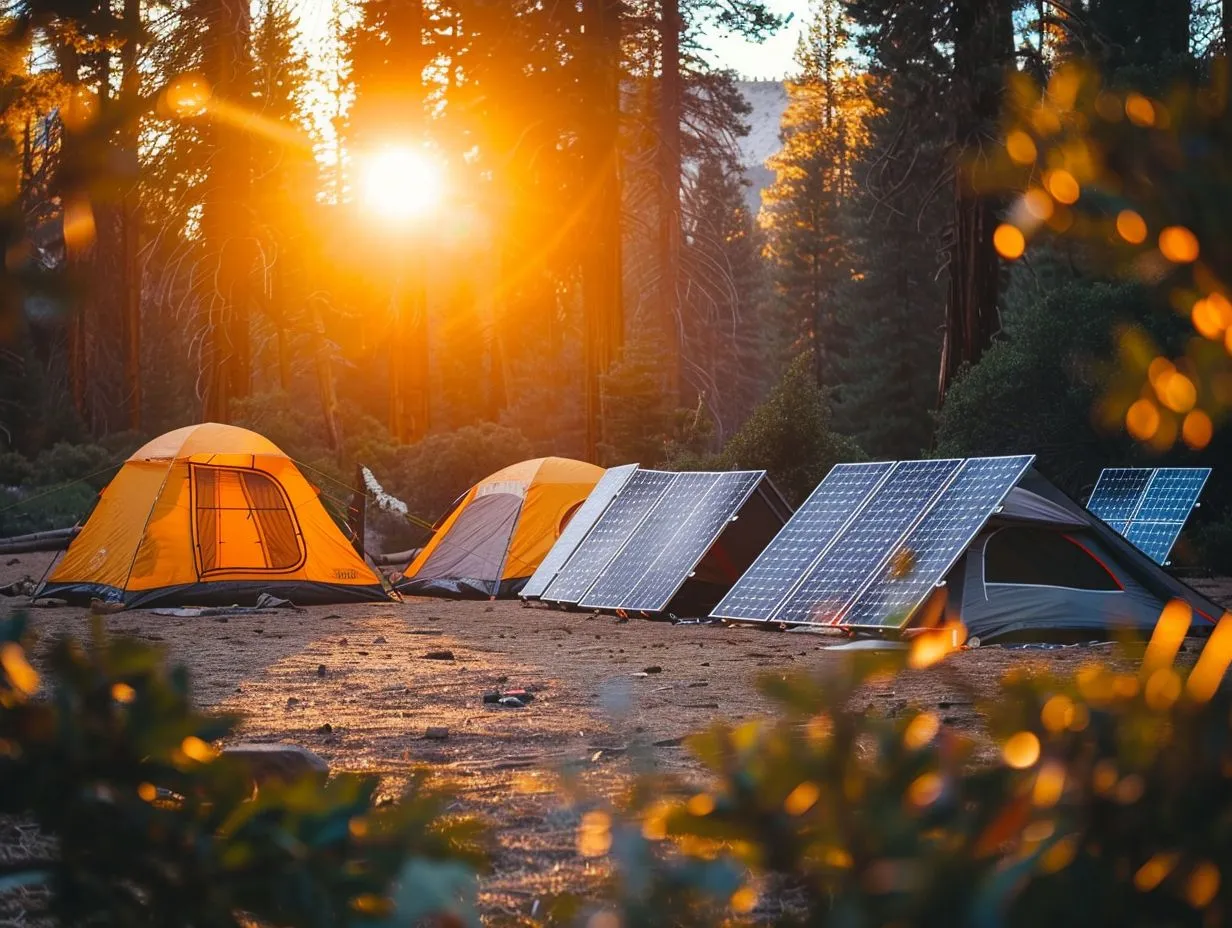
The best portable solar panel for camping is the one matched to what you are charging. A phone and a power bank need a small folding USB panel of 10 to 28W. A power station or leisure battery needs a folding or blanket panel of 60 to 200W or more. A permanent van or motorhome setup wants a rigid roof panel. Buy for the job, and size up for British weather.
That last point matters more here than almost anywhere. A panel's wattage is rated in bright, direct, midday sun, and a cloudy UK afternoon can cut real output by half or more. So the honest rule is to buy more panel than the sticker suggests you need, and to treat solar as a top-up rather than your only power source.
This is part of our guide to electric hook-up and powering your camp, and it sits in the camping equipment library at Camping Sites in Britain, where you can find and compare campsites, caravan parks and glamping across the UK.
The three types, and who each one suits
Portable solar for camping splits cleanly into three groups, and picking the right group is 90 per cent of the decision.
| Type | Typical wattage | Charges | Best for |
|---|---|---|---|
| Small folding USB panel | 10 to 28W | Phone, head torch, power bank via USB | Backpackers, tent campers, lightweight trips |
| Folding or blanket panel | 60 to 200W+ | Power station or leisure battery via DC | Weekend and car campers, families, off-grid stays |
| Rigid panel | 100 to 300W+ | Fixed leisure battery, permanently mounted | Vans, motorhomes, caravans, long-term living |
Small folding USB panels (10 to 28W)
These are for keeping a phone and a power bank alive, nothing more. They fold to the size of a paperback or a tablet, weigh a few hundred grams, and clip straight onto a rucksack so they charge while you walk. The output is USB-A or USB-C directly, so you plug your device or power bank in and go, with no separate battery to buy.
Anker and BioLite make dependable examples in this bracket, and BioLite's smaller SolarPanel models even include a built-in kickstand and a sundial so you can angle them accurately. Do not expect them to charge a laptop or run a cool box. Their job is the phone, and on a bright day they do it well.
Folding and blanket panels (60 to 200W and up)
This is the sweet spot for most car and family campers. A panel in this range folds out to a large mat, props up on an integrated kickstand, and feeds a portable power station through a DC cable rather than USB. The power station stores the energy, so you charge the battery through the day and draw on it in the evening for lights, phones, a fan or a small fridge.
Jackery's SolarSaga panels pair with its Explorer power stations, EcoFlow's portable panels match its River and Delta range, and Goal Zero and BougeRV both make strong folding and blanket panels too. Blanket-style panels roll or fold flatter and pack down smaller, which suits a tight boot. The key is that the panel and the station speak the same language, which we cover below.
Rigid panels for vans and motorhomes
Rigid panels are the answer once solar becomes permanent. Bolted or bonded to the roof of a van, motorhome or caravan and wired through a charge controller to a leisure battery, they generate quietly all day with nothing to set up. They are heavier and not portable in any real sense, but for anyone living or touring off-grid they are the most efficient use of roof space. If that is your setup, buy the panel, controller and battery as a matched system rather than piecing it together blind.
What to look for
Once you have picked a type, a handful of specifications separate a good panel from a frustrating one.
Wattage, and why you should size up
Rated wattage is measured under ideal test conditions, so treat it as a ceiling you will rarely touch in Britain. Thin cloud, haze, low winter sun and any shade all pull real output down, often sharply. A panel that reads 100W on the box might deliver 40 to 60W on a bright but hazy UK afternoon, and far less under heavy cloud. Buying a bigger panel than the maths suggests is the simplest way to avoid disappointment.
Output type and the connector
Check the output matches what you are charging before you buy. Small panels give you USB-A and USB-C for direct device charging. Larger panels output DC through a barrel or proprietary plug meant for a power station, and connectors are not universal. An EcoFlow panel and a Jackery station will not necessarily plug together without an adapter, so confirm the panel matches your station, or that a suitable cable exists, before ordering.
Monocrystalline versus polycrystalline
Monocrystalline cells are more efficient and perform better in low light, which is exactly what a cloudy UK trip demands, so most quality portable panels now use them. Polycrystalline panels are usually cheaper but less efficient per square metre, meaning a larger, heavier panel for the same output. For camping, monocrystalline is worth the small premium.
Weight, folded size, durability and a kickstand
Weight and packed size decide whether a panel actually comes with you. A backpacker counts every gram, whilst a car camper can carry a heavier blanket panel without a second thought. Look for solid IP-rated water resistance, since British weather is not optional, and for tough stitching and corner grommets on folding panels. An integrated kickstand is close to essential, because a panel angled at the sun collects far more than one lying flat on the grass.
Getting the most from solar in the UK
Good technique matters as much as good kit when the sun is weak. A few habits make a real difference to how much you actually harvest.
- Angle it at the sun, and re-aim through the day. Use the kickstand to tilt the panel square to the sun, then move it a few times as the sun tracks across the sky. This alone can lift output dramatically over a flat panel.
- Keep every cell out of shade. A single shaded cell, from a guy line, an awning or a passing branch, can throttle the whole panel. Site it in clear, open sun.
- Charge on the bright hours. Output is best from mid-morning to mid-afternoon. Cloudy days cut it sharply, so grab the sun while it is there.
- Store the energy for the evening. Pair the panel with a power bank or power station so the daytime sun powers your lights, phones and gadgets after dark. The battery does the heavy lifting; the panel just refills it.
That last habit is the whole point of a camping solar setup, and it is why the panel and the battery are best chosen together. Our guides to the best battery packs for camping and how to use solar power while camping go deeper on matching a panel to a store and running the two as a system.
Solar for lighting, and choosing your site
Not everything needs a panel and a battery. For camp lighting specifically, a self-contained solar lantern charges its own cell by day and glows all evening with no cables at all, and our roundup of the best solar lanterns for eco-friendly lighting covers the pick of them.
Solar also comes into its own on off-grid and back-to-nature pitches where there is no hook-up. If that is the trip you are planning, browse and compare pitches across the UK in our directory at Camping Sites in Britain, and check each listing for whether electric hook-up is available before you decide how much solar to pack.
Frequently asked questions
What size solar panel do I need for camping?
For a phone and a power bank, a 10 to 28W folding USB panel is enough. To charge a power station for lights and a small fridge, choose a 100 to 200W folding or blanket panel. Size up, because UK cloud cuts real output well below the rated figure.
Do portable solar panels work on cloudy days in the UK?
Yes, but with much less output. Panels still generate under cloud, often at half their rating or less, and heavy overcast reduces it further. Monocrystalline panels cope better with low light, and angling the panel at the brightest part of the sky helps recover some of the loss.
Can a solar panel charge my phone directly?
Yes. Small folding panels have USB-A and USB-C ports, so you plug the phone straight in. Charging can pause if a cloud passes and interrupts the current, so plugging into a power bank first, then charging the phone from that, gives a steadier result.
What is the difference between monocrystalline and polycrystalline panels?
Monocrystalline cells are more efficient and better in low light, so they produce more power from the same size panel, which suits cloudy UK camping. Polycrystalline cells are cheaper but less efficient, meaning a larger, heavier panel for the same output. Most quality camping panels are now monocrystalline.
Will any solar panel connect to any power station?
No. DC connectors vary between brands and are not universal, so an EcoFlow panel may not plug into a Jackery station without an adapter. Always check the panel's output matches your power station's input, or that a suitable cable exists, before you buy.
Which brands make good portable solar panels?
Anker and BioLite are strong for small USB panels, whilst Jackery, EcoFlow, Goal Zero and BougeRV make well-regarded folding and blanket panels for power stations. Panels charge best paired with the right power station, so buying panel and battery from a matched range avoids connector headaches.
The short version
Match the panel to the job: a small USB panel for your phone, a 100 to 200W folding panel for a power station, a rigid panel for a permanent van setup. Size up for British cloud, angle it at the sun, and pair it with a battery so the daytime sun still powers your camp after dark. For the full picture, read our guide to electric hook-up and powering your camp.