How to Use Solar Power While Camping: A Simple UK Guide
· Updated
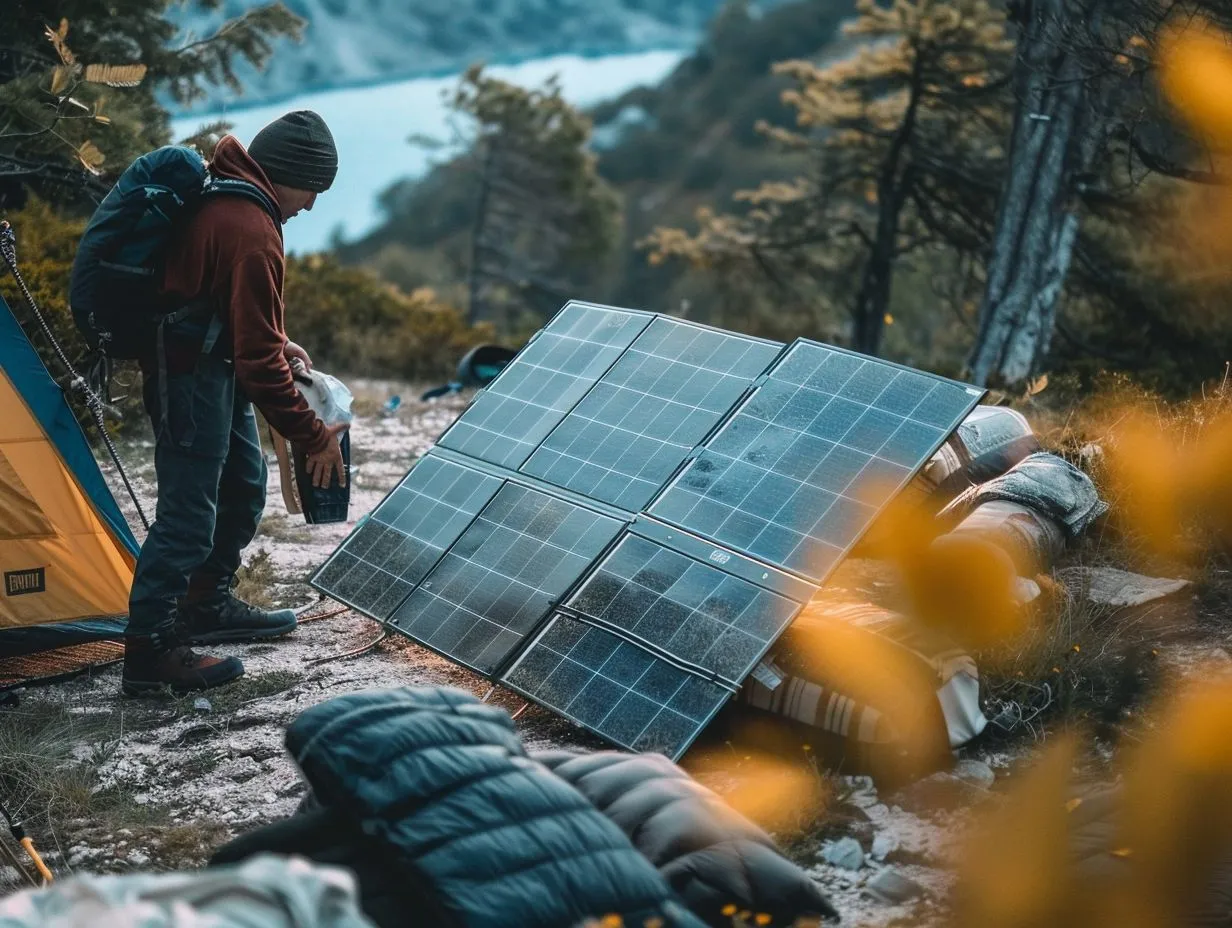
Solar power for camping works in one simple chain: a panel catches daylight, a charge controller manages the flow, a battery or power station stores it, and your devices draw from that store. Get those four parts talking to each other and you have quiet, fuel-free power on any pitch with a bit of sky above it.
For most campers it comes down to two setups. A small folding panel that tops up a phone or a power bank, or a bigger panel paired with a portable power station or leisure battery to run lights, a cool box and charge several devices at once. This guide covers both, and how much you can realistically expect from the sun in British weather.
If you would rather plug into the mains, solar is not your only option. Our guide to electric hook-up and powering your camp covers pitches with a proper power supply, and you can find and compare sites with hook-up on Camping Sites in Britain.
How a camping solar setup works
Every solar setup follows the same order: panel, charge controller, battery or power station, then your devices. The panel turns daylight into electricity, the charge controller stops the battery being overcharged, the battery holds the energy for when you need it, and your gear plugs into the battery rather than the panel itself.
You do not always need every part as a separate item. A tiny folding panel with a USB socket can charge a phone directly, no controller or battery in the box. A portable power station has the charge controller and battery built in, so you just plug the panel into one end and your devices into the other. That is why a power station is the easy, plug-and-play choice for most people.
The key idea is storage. A panel only makes power while the sun is on it, and you mostly want power in the evening. So the panel charges a store during the day, and you draw lights, charging and a cool box from that store after dark.
The two common camping solar setups
Most campers use one of two approaches, and the right one depends on what you need to power. The table sets them side by side.
| Setup | Panel size | What it runs | Best for |
|---|---|---|---|
| Folding panel and power bank | 10 to 21W | Phone, head torch, power bank, small USB gadgets | Backpackers, festivals, one or two people travelling light |
| Panel and portable power station | 60 to 200W or more | Camp lights, cool box, fan, laptop, several devices at once | Car campers, families, longer trips, campervans |
A folding panel to top up a phone
A small folding panel is the lightest way to keep a phone alive off-grid. A 10 to 21W panel folds down to the size of a paperback, clips to the back of your rucksack, and charges through a USB socket while you walk. On a bright day it will refill a phone or trickle charge a power bank, which is usually all a hiker needs.
The trick is to charge a power bank first, then charge your phone from the power bank in the evening. Phones do not like the stop-start current you get when clouds pass over a panel, but a power bank soaks that up happily. Our roundup of the best battery packs covers which ones pair well with a panel.
A larger panel and a power station
For real camp power you want a bigger panel and a portable power station. A 60 to 200W panel feeding a power station will run LED camp lights, keep a cool box going, charge a laptop and top up several phones over a day. This is the setup that makes a weekend feel properly civilised without a hook-up.
A leisure battery does the same job and suits campervans, but a power station is simpler because the controller, battery, USB and mains sockets are all in one box. You charge it from the panel during the day and unplug what you need in the evening. Have a look at the best portable solar panels for panels sized to match a power station.
Panel wattage and what it realistically charges
Wattage tells you roughly what a panel can charge, but the number on the box is a lab figure. A 10 to 21W folding panel is a phone-and-power-bank tool. A 60 to 100W panel keeps a power station and camp lights topped up. A 100 to 200W or larger panel handles a cool box and a busy family setup with devices charging all day.
The honest catch is that you rarely see the rated watts in the UK. That figure comes from strong, direct, overhead sun in test conditions. On a real British pitch, expect meaningfully less, so it pays to buy a panel a size up from what the maths suggests.
What British weather does to your output
British weather is the single biggest thing between you and a full battery, so plan around it. Panels need daylight, not sunshine, so they still produce something under cloud, but output drops sharply on a grey day and stops at dusk. In UK conditions it is sensible to expect a good deal less than the rated wattage.
You can claw a lot of that back by angling the panel at the sun rather than laying it flat, and moving it two or three times a day to follow the light. A panel propped towards the low British sun will out-earn one lying flat on the grass. Keep it out of the shade of your tent, the car or a hedge, because even a corner in shadow drags the whole panel down.
The takeaway is simple: treat sunny spells as charging windows. When the sun is out, get the panel angled and the power station charging, because you cannot count on the weather staying kind. Our notes on preparing for a rainy camping trip are worth a read if your forecast looks damp.
Storing energy for the evening
Pairing a panel with a power bank or power station is what makes solar useful, because it shifts the sun's daytime energy into your evening. Without a store, your panel is only powering things at the exact moment the sun is on it, which is never when you want the lights on.
Size the store to your trip. A 10,000 to 20,000mAh power bank covers phones and a head torch for a weekend. A power station in the 200 to 500Wh range runs lights, a fan and charging for a family, and holds enough that a cloudy day will not leave you dark. Charge the store fully before you leave home as well, so the panel is topping up rather than starting from empty.
USB versus 12V output
Match the output to the thing you are powering. USB sockets, including USB-C, handle the small stuff: phones, tablets, head torches, camera batteries and power banks. A 12V output, usually a cigarette-lighter socket or DC barrel plug, is what most cool boxes, tyre pumps and 12V camp lights want.
Most power stations give you USB, 12V and a mains socket together, so you rarely have to choose. If you plan to run a cool box, check the power station has a 12V output and enough stored capacity, since a cool box draws steadily for hours and is the hungriest thing on a typical pitch.
Practical tips for more power
A few habits get far more out of the same kit. None of them cost anything.
- Keep the panel in the sun while you walk by clipping a folding panel to your rucksack and charging a power bank as you go.
- Angle the panel at the sun and re-aim it through the day rather than leaving it flat.
- Charge a power bank or power station first, then charge phones and devices from that store.
- Start every trip with the store fully charged from home.
- Choose a power station for the easy, plug-and-play option if you are not sure where to begin.
- Add solar lighting so your panel is not spending its energy on lamps. Our pick of the best solar lanterns charge themselves and leave your power station for everything else.
Solar or electric hook-up?
Solar suits campers who want to be self-sufficient and pitch away from sockets, while electric hook-up suits anyone who wants reliable mains power regardless of the weather. Solar is silent, free to run and goes anywhere, but it depends on daylight. Hook-up gives you a steady supply for a fridge, a heater or a kettle, but ties you to a pitch with an electric point and a nightly fee.
Plenty of campers use both: solar for phones and lights on wild or off-grid trips, and a hook-up pitch when they want the fridge and the coffee machine running without a thought. For the full picture on mains power, see our guide to electric hook-up and powering your camp, then browse campsites across Britain to find pitches that suit either.
Frequently asked questions
Does solar power work for camping in the UK?
Yes. Panels run on daylight, not just direct sun, so they charge on cloudy British days, just more slowly. Expect noticeably less than the rated wattage, angle the panel at the sun, and pair it with a power bank or power station to store energy for the evening.
What size solar panel do I need for camping?
A 10 to 21W folding panel keeps a phone and a power bank topped up. A 60 to 200W panel feeding a portable power station runs camp lights, a cool box and several devices. Buy a size up from your estimate to cover weaker UK sunlight.
Can a solar panel charge my phone directly?
Yes, a folding panel with a USB socket can charge a phone directly in good sun. It is better to charge a power bank first, then charge the phone from that, because phones dislike the stop-start current when clouds pass over the panel.
What is a portable power station and do I need one?
A power station is a battery with a built-in charge controller plus USB, 12V and mains sockets. You are not required to have one, but it is the easiest plug-and-play way to store solar energy and run lights, a cool box and charging from a single box.
How long does a solar panel take to charge a power station?
It depends on panel size, the station's capacity and the weather. A 100W panel in decent sun might charge a 300Wh station in roughly four to six hours, but grey skies stretch that out. Charge the station at home first so the panel only tops it up.
Is solar power better than electric hook-up?
Neither is better outright. Solar is silent, free and goes anywhere but relies on daylight. Electric hook-up gives steady mains power for a fridge or heater but needs a pitch with a power point and a nightly fee. Many campers use both.
The short version
Solar power while camping is a panel, a charge controller, a store and your devices, and a power station rolls the middle two into one easy box. Match the panel to the job, angle it at the sun, and store the energy for the evening. If you would rather have mains power, read our guide to electric hook-up and powering your camp and find your pitch on Camping Sites in Britain.