Electric Hook Up Camping: The Complete UK Guide to Power on Site and Off-Grid
· Updated
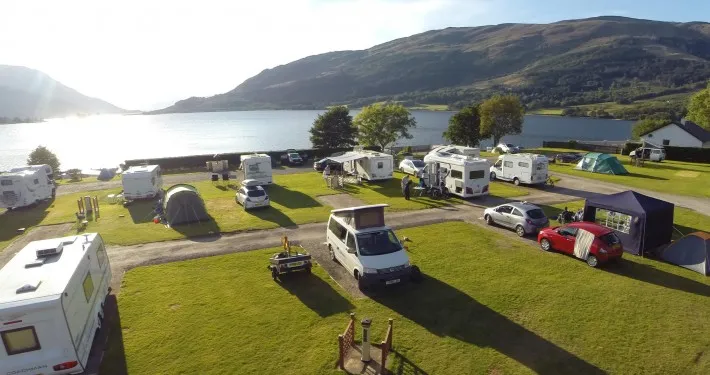
An electric hook up (EHU) is a mains socket on your pitch. You run a lead from a blue weatherproof bollard to your tent, caravan or motorhome, and you get 230 volts to charge phones, run a fridge, boil a low-wattage kettle and light the awning. The one number that governs everything is the amperage: most UK sites give you 16A, some give 10A, and a few give as little as 5A or 6A.
That amp rating decides what you can switch on at once. Push past it and the bollard trips, the whole pitch goes dark, and you walk to the warden's office in the rain. Understand it and an EHU pitch is the most comfortable way to camp in Britain. This guide covers the kit, the maths, and how to power a trip when there is no hook up at all.
It is the camping power guide from Camping Sites in Britain, where you can find and compare campsites, caravan parks and glamping across the UK.
What each amp rating actually runs
At 230 volts, every amp is worth roughly 230 watts, so a 16A pitch gives you about 3,680W and a 10A pitch about 2,300W. That total is shared across everything plugged in at the same moment, which is why a single domestic kettle can swallow a whole 10A supply on its own.
| Supply | Total power | Comfortably runs | Will trip it |
|---|---|---|---|
| 5A to 6A | 1,150W to 1,380W | Lights, phone and laptop charging, a cool box, a fan | Any kettle or heater |
| 10A | 2,300W | A 750W camping kettle, a compressor fridge, lights, chargers | A domestic 2,000W kettle plus anything else |
| 16A | 3,680W | Low-wattage kettle, a small heater, fridge and lights together | Kettle and 2kW fan heater at the same time |
The trick is not buying more power, it is buying low-wattage kit and not running two hungry appliances at once. A camping kettle rated 750W draws about 3.3A and boils happily on a 10A pitch. A domestic kettle at 2,000W draws roughly 8.7A and leaves almost nothing for anything else, even on 16A.
Understanding electric hook up on a UK campsite
Electric hook up means the site has wired weatherproof bollards across the field, each with one or more blue sockets, and your pitch fee (or a small supplement) buys you access to one. The supply is ordinary 230V mains, protected at the bollard, and metered or included depending on the site.
The socket is not a standard three-pin plug. It is a blue round connector built to the BS EN 60309-2 standard, usually called a CEE or commando connector, rated at 16A. It clips and seals to keep water out, which a domestic plug never would in a wet field. You cannot plug a normal appliance straight into it; you need a hook up lead and, for a tent, a mains unit.
What draws too much, and the low-wattage fix
Heat is the enemy. Anything that heats water or air (kettles, toasters, fan heaters, hairdryers, hobs) draws far more than anything that charges or lights. A 3,000W high-speed kettle pulls about 13A and is unusable on most pitches. Swap it for a 750W camping kettle at 3.3A, choose a 700W to 900W camping fan heater over a 2kW domestic one, and pick a lower-wattage hairdryer around 600W.
The kit you need for an EHU pitch
Three things get power from the bollard to your appliances safely: a hook up lead, an RCD-protected mains unit for tents, and equipment rated for the weather. Get these right once and you reuse them for years.
The hook up lead
A hook up lead is a bright orange cable, typically 25 metres long, with a blue CEE plug on the male end for the bollard and a blue CEE socket on the female end for your unit. Use it fully uncoiled. A tightly wound cable running near its rated load can overheat, so unroll the whole 25 metres even if the bollard is close. Buy the proper 2.5mm² arctic-grade cable, not a thin garden extension.
RCDs and staying safe
An RCD (residual current device) cuts the supply in a fraction of a second if a fault sends current where it should not go, such as through a frayed lead or a wet connection. In a caravan or motorhome the RCD is built into the consumer unit. For a tent you plug the lead into a portable mains unit that contains an RCD and a couple of standard sockets, and that unit must sit off the wet ground, raised on a box or a chair, never in a puddle. A plug-in polarity tester costs a couple of pounds and confirms the bollard is wired correctly and earthed before you trust it.
IP ratings and water resistance
Outdoor electrical kit carries an IP rating, two digits that describe how well a case keeps out solids and water. For anything living outside on a British pitch, look for IP44 or better: the 4 for water means it resists splashing from every direction, which is exactly what a rain-lashed bollard connection faces. The same water-resistance thinking applies to your fabrics and gadgets, and if you want the theory behind waterproof numbers on tents and jackets, read our explainer on hydrostatic head in outdoor gear.
What an electric pitch costs: CSIB survey data
An electric pitch usually costs only a little more than a standard one, and often nothing at all. We surveyed around 500 UK campsites on their pitch pricing, and the results were clearer than most campers expect: the average premium for an electric pitch was about £3.50 per night, and roughly 70% of sites charged no premium whatsoever, folding electricity into the standard pitch fee.
That is our first-party data from live UK site listings, and it changes the sums. If seven in ten sites include power for free, the real question is rarely "is it worth £3.50", it is "does this site offer hook up at all". Where a premium does apply it is modest, and a single night of running a fridge, charging everything and keeping the awning lit is usually worth far more than the extra few pounds. You can filter for electric pitches when you browse the CSIB campsite directory.
Power without hook up: batteries, power stations and solar
You do not need a hook up to have power. Off-grid, campers rely on three things: leisure batteries for steady low-draw power, portable power stations for plug-and-go convenience, and solar to top either of them back up. Most people end up combining two of the three.
Leisure batteries
A leisure battery is built to be discharged slowly over hours and recharged again and again, unlike a car starter battery, which hates being run flat. It powers 12V lighting, a compressor fridge and water pumps in caravans and campervans, and pairs with an inverter if you need a normal three-pin socket. Match the battery's amp-hour capacity to how long you camp between charges.
Portable power stations and battery packs
A portable power station is a leisure battery, inverter and sockets in one carry-handle box, with USB, 12V and 230V outlets ready to use. It is the simplest off-grid answer for tent campers: charge it at home, run lights and charge devices for a weekend, recharge from solar or the car. For phones and smaller kit alone, a good power bank is lighter and cheaper, and our guide to the best battery packs for camping covers the capacities worth carrying.
Solar panels and lanterns
Solar keeps everything else topped up, silently and for free, whenever the sun is out. A folding panel clipped to a power station or battery replaces the mains for a long summer trip, though British cloud means you plan for less than the rated output. For the panel itself, see the best portable solar panels for camping, and for the wiring and positioning that gets the most from them, read how to use solar power while camping. Self-charging solar lanterns handle lighting with no cables at all.
Staying connected and finding your way off-grid
Power is only half the tech story; the other half is signal and navigation, and both get harder the wilder the site. Phone coverage thins out fast in the places worth camping, so plan for patchy or absent signal rather than relying on it.
For calls, messages and weather updates from a remote pitch, our guide to staying connected while camping off-grid covers signal boosters, offline maps and where a bar of 4G actually hides. When you genuinely leave the road behind, a dedicated unit beats a phone: see the best handheld GPS devices for camping, which hold a charge for days and work where no mast reaches. That same GPS turns a rainy afternoon into a treasure hunt, and the best campsites for geocaching adventures are a brilliant way to use it with kids.
Back in range, the right apps handle booking, navigation, tides and star charts in one place. We round up the ones worth space on your phone in the best UK camping apps.
Keeping electronics alive in British weather
Rain kills more camping gadgets than anything else. A phone, GPS or power bank that meets you halfway on water resistance still needs help in a downpour, so keep the vulnerable items in a proper case. Our pick of the best waterproof cases for camping electronics keeps a phone usable and dry through a Lake District weekend.
Which should you choose: hook up or off-grid?
Pick hook up if comfort and a fridge matter more than solitude. Pick off-grid if the location matters more than the kettle. Many campers do both across a season, and the honest decision comes down to what you are running and where you want to be.
- Choose an EHU pitch if you want a fridge, a heater in shoulder season, easy charging and a low-wattage kettle, or if you are in a caravan or motorhome built around mains power. On our survey numbers it usually costs nothing extra.
- Go off-grid with a power station and solar if you want quiet, remote pitches, or you are wild camping where the Countryside Code and Scottish Outdoor Access Code apply and there is no bollard for miles.
- Carry a battery pack and solar as backup even on an EHU trip, so a tripped bollard or a full site does not leave you with a dead phone.
If you are still choosing where to go, browse electric and non-electric pitches side by side in the CSIB directory, from the Lake District to the Scottish Highlands.
Frequently asked questions
Can I use a normal kettle on a campsite electric hook up?
Only a low-wattage one. A domestic 2,000W kettle draws about 8.7A and a fast-boil 3,000W model about 13A, which trips most pitches. A 750W camping kettle draws roughly 3.3A and boils safely even on a 10A supply.
How many amps is a typical campsite hook up?
Most UK sites supply 16A, which is about 3,680W at 230 volts. Some club and smaller sites give 10A (2,300W), and a few certificated or basic sites offer only 5A or 6A. Check the site listing before you rely on running a heater.
Do I need a special lead for electric hook up camping?
Yes. You need a purpose-made hook up lead, usually 25 metres of orange 2.5mm² cable with a blue CEE plug and socket. Tents also need a portable mains unit containing an RCD. A domestic extension lead is unsafe and will not connect.
What does an RCD do and do I need one?
An RCD cuts the power in a fraction of a second if current leaks through a fault, such as a damaged lead or a wet connection, which prevents electric shock. It is essential. Caravans and motorhomes have one built in; tent campers use an RCD mains unit.
How much does an electric pitch cost in the UK?
Very little. Our survey of around 500 UK campsites found an average electric pitch premium of about £3.50 per night, and roughly 70% of sites charged no premium at all, including electricity in the standard pitch fee.
Can I camp without electric hook up?
Easily. A portable power station or leisure battery runs lights, a fridge and charging for a weekend, and a folding solar panel tops it back up. This is how off-grid and wild campers power a trip where no hook up exists.
The short version
Electric hook up gives you 230V mains through a blue weatherproof lead, and the amp rating (usually 16A, sometimes 10A) decides what you can run at once. Choose low-wattage kit, never overload the bollard, and keep the RCD unit off the wet ground. Off-grid, a power station and solar do the same job anywhere.
Whichever way you power your trip, start by finding the right site. Compare electric and off-grid pitches across the UK in the CSIB campsite directory.
Appliance loads and supply figures in this guide follow the guidance of The Camping and Caravanning Club.