The Best Battery Packs and Power Stations for Camping
· Updated
The right camping power comes down to one question: are you keeping phones alive, or running kit that used to need a mains socket? For phones, a torch and a speaker, a pocket power bank measured in mAh is all you need. For a cool box, a CPAP machine, camp lights or a laptop, you want a portable power station measured in watt-hours (Wh), with real plug sockets on the side.
Get the tier right and you will never think about it again. Get it wrong and you either lug a 10kg power station to charge a phone, or watch a 10,000mAh brick die on the first evening. This guide sorts the three tiers, tells you what to look for, and shows you how to work out the capacity you actually need.
It sits alongside our wider guide to electric hook-up and powering your camp, and it is written by the team at Camping Sites in Britain, where you can find and compare campsites, caravan parks and glamping across the UK. If your pitch has an electric hook-up you may need less of this than you think, but a battery still earns its place for the walk, the wild spots and the drive home.
The three tiers of camping power
There are three broad tiers, and the jump between them is capacity, weight and price. Pick the smallest one that covers what you need to power.
| Tier | Measured in | Typical size | Runs | Best for |
|---|---|---|---|---|
| USB power bank | mAh | 10,000 to 26,800mAh | Phones, torch, earbuds, watch, small speaker | Weekends and backpacking |
| Rugged or solar power bank | mAh | 10,000 to 25,000mAh | Same, but survives rain, drops and dust | Wild camping and rough trips |
| Portable power station | Wh | 200 to 1,000Wh and up | Cool box, CPAP, lights, laptop, small mains gear | Family trips, campervans, off-grid |
Small USB power banks (mAh)
A USB power bank is the default for most trips, and capacity is quoted in milliamp-hours (mAh). As a rough guide, a 10,000mAh bank gives a typical smartphone two to three full charges, while 20,000 to 26,800mAh comfortably covers two phones for a long weekend with charge to spare. They weigh 200g to 500g and slip into a rucksack lid.
One number matters more than the headline mAh: airline rules. Power banks must travel in your cabin bag, never in the hold, and airlines follow a Wh limit rather than mAh. Anything up to 100Wh is fine, 100 to 160Wh needs airline approval, and above 160Wh is banned from passenger flights. Most 20,000 to 26,800mAh banks sit around 74Wh to 99Wh, so they just scrape under the 100Wh line. Check the Wh figure printed on the casing before you fly, and see the UK Civil Aviation Authority guidance on batteries.
Rugged, waterproof and solar power banks
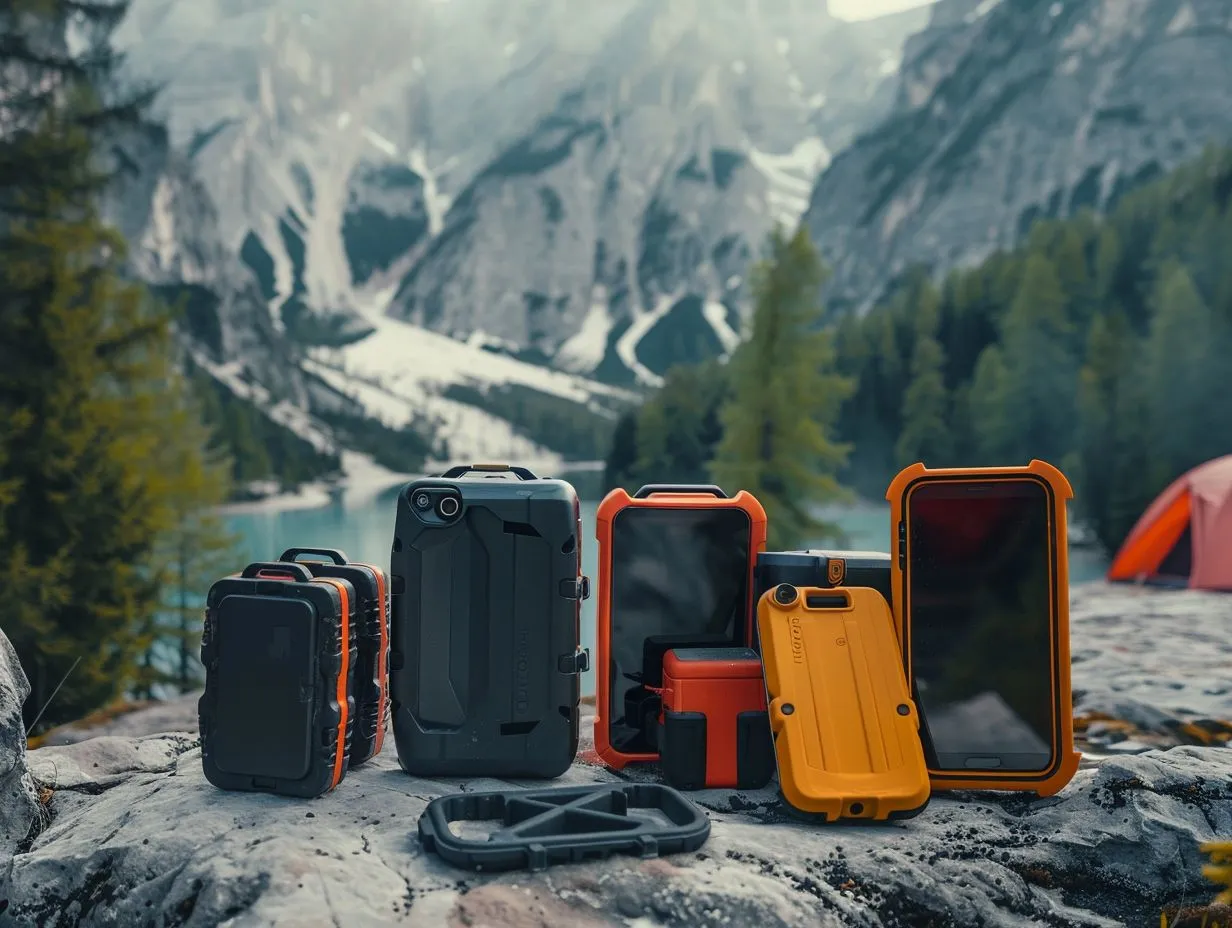
If your power bank lives outdoors, buy one built for it. Rugged banks carry an IP rating for water and dust resistance (IP67 means fully sealed and submersible for a short spell), a shockproof shell and often a built-in torch or carabiner. They are the sensible choice for wild camping, kayaking, festivals and anywhere the forecast is honest about British weather.
Some add a small solar panel to top up in daylight. Be realistic here: the panel built into a power bank is tiny and trickles rather than fills, so treat it as an emergency dribble, not your main charge. For genuine off-grid recharging you want a separate folding panel, which we cover in how to use solar power while camping and the best portable solar panels for camping.
Portable power stations (Wh)
A portable power station is a battery with real sockets, and it changes what camping can look like. Capacity is quoted in watt-hours (Wh), from around 200Wh up to 1,000Wh and beyond, and the unit gives you UK mains three-pin sockets, several USB and USB-C ports, and usually a 12V output for a cool box. That means you can run a compressor cool box overnight, power a CPAP machine, charge a laptop, run string lights, or keep a camera and drone topped up for a week.
The well-known names are the EcoFlow River series, the Jackery Explorer range, Bluetti and Anker. Smaller models around 200 to 300Wh weigh 3kg to 5kg and suit a weekend of lights and charging. Mid-size 500 to 800Wh units, the popular choice for family camping and campervans, will run a cool box overnight with charge left. Larger 1,000Wh-plus stations weigh 10kg or more and start to blur into leisure-battery territory, which is really the domain of a proper pitch with an electric hook-up.
What to look for
Beyond the headline capacity, six things decide whether a battery suits your trip. Run down them in order.
- Capacity. mAh for power banks, Wh for power stations. Match it to what you power and for how long, using the sum below.
- Output ports and wattage. Count the sockets you need at once, and check the wattage. A power station rated at 300W will not run a 600W appliance, whatever its capacity.
- Fast charging. Look for USB-C Power Delivery (PD). A 30W PD port charges a modern phone far quicker than an old 10W USB-A, and 60W to 100W PD will charge most laptops.
- Weight. The honest limiter. A 26,800mAh bank is pocketable; a 1,000Wh station is a two-handed lift. Buy the lightest unit that still does the job.
- Ruggedness. An IP rating, a solid shell and a torch matter far more for wild camping than for a serviced pitch.
- Solar input. If you camp off-grid for more than a couple of nights, choose a unit that accepts solar so you can top it up in daylight rather than driving somewhere to recharge.
How to work out the capacity you need
Add up the watt-hours your devices need in a day, then buy a battery with more. Every device draws a certain wattage, and running it for a number of hours gives you watt-hours: watts multiplied by hours. Total those and you have your daily figure.
| Device | Rough draw | A day's use | Watt-hours |
|---|---|---|---|
| Smartphone charge | 10W to 20W | One full charge | 10 to 20Wh |
| Camp lights (LED string) | 5W | 4 hours | 20Wh |
| Laptop charge | 60W | One charge | 50 to 60Wh |
| CPAP machine (no humidifier) | 30W to 60W | 8 hours | 240 to 480Wh |
| Compressor cool box | 45W (cycling on and off) | 24 hours | 200 to 300Wh |
Two quick rules make this easy. To convert a power bank's mAh to Wh, multiply by the cell voltage (3.7V) and divide by 1,000, so a 26,800mAh bank is about 99Wh. And always add roughly 15 to 20 per cent on top of your total, because no battery delivers 100 per cent of its rated capacity once you account for conversion losses and cold nights. A weekend of two phones and some lights needs barely 100Wh; a cool box plus a CPAP for two nights needs a 500Wh-plus station.
Which to pick, by trip
Match the battery to the trip and the kit, not to the biggest number on the shelf.
| Your trip | What you power | Pick this |
|---|---|---|
| Backpacking, one or two nights | Phone, head torch, watch | 10,000mAh USB-C power bank |
| Weekend, two people | Two phones, speaker, camera | 20,000 to 26,800mAh power bank |
| Wild camping, wet and rough | Phones, GPS, torch | Rugged IP67 power bank, solar optional |
| Family camping, serviced pitch | Lights, cool box, tablets | 300 to 500Wh power station |
| Off-grid or campervan, several nights | Cool box, CPAP, laptop, lights | 500 to 1,000Wh station plus a solar panel |
If you are heading somewhere with no signal as well as no sockets, plan your power and your connection together. Our guide to staying connected off-grid covers keeping a phone useful when the bars vanish, which is the other half of the same problem. When it is time to book, browse pitches and serviced sites across the country at Camping Sites in Britain.
Frequently asked questions
How many phone charges does a 10,000mAh power bank give?
Roughly two to three full charges for a typical smartphone. Conversion losses mean you never get the full rated capacity, so treat 10,000mAh as two solid charges plus a top-up. A 20,000 to 26,800mAh bank covers two phones for a long weekend.
Can I take a power bank on a plane?
Yes, but only in your cabin bag, never in checked luggage. Airlines use a watt-hour limit: up to 100Wh is fine, 100 to 160Wh needs airline approval, and above 160Wh is banned. Most 26,800mAh banks are around 99Wh and just qualify.
What size power station do I need to run a cool box camping?
A compressor cool box draws around 45W and cycles on and off, using roughly 200 to 300Wh over 24 hours. A 500Wh station will run one overnight with charge to spare, and a 1,000Wh unit covers a cool box plus lights and charging for a weekend.
What is the difference between mAh and Wh?
mAh (milliamp-hours) rates small power banks; Wh (watt-hours) rates power stations and reflects true energy. To convert, multiply mAh by the voltage (3.7V) and divide by 1,000. Wh is the fairer comparison because it accounts for voltage, so use it to match a battery to your kit.
Can I charge a power bank or power station with solar while camping?
Yes, if the unit is designed for it. The tiny panel on a solar power bank only trickles a charge, so use it as a backup. A separate folding solar panel can genuinely refill a power station off-grid, which is the practical way to camp for several nights without mains power.
Do I still need a battery if my pitch has electric hook-up?
Often, yes. A hook-up powers your pitch, but a power bank or station keeps phones and kit charged on the walk, at a wild spot, or in the car. It is also your backup if the hook-up fails or you move to an unserviced pitch mid-trip.
The short version
Charging phones and a torch? A 20,000 to 26,800mAh USB-C power bank is all you need, and it flies too. Running a cool box, a CPAP or a laptop? Step up to a 500Wh-plus portable power station, and add a folding solar panel if you are off-grid for more than a couple of nights.
Work out your daily watt-hours, add 20 per cent, and buy the lightest battery that clears it. Then find your pitch on Camping Sites in Britain and read electric hook-up and powering your camp for the full picture.