The Best Reusable Water Bottles for Camping UK
· Updated
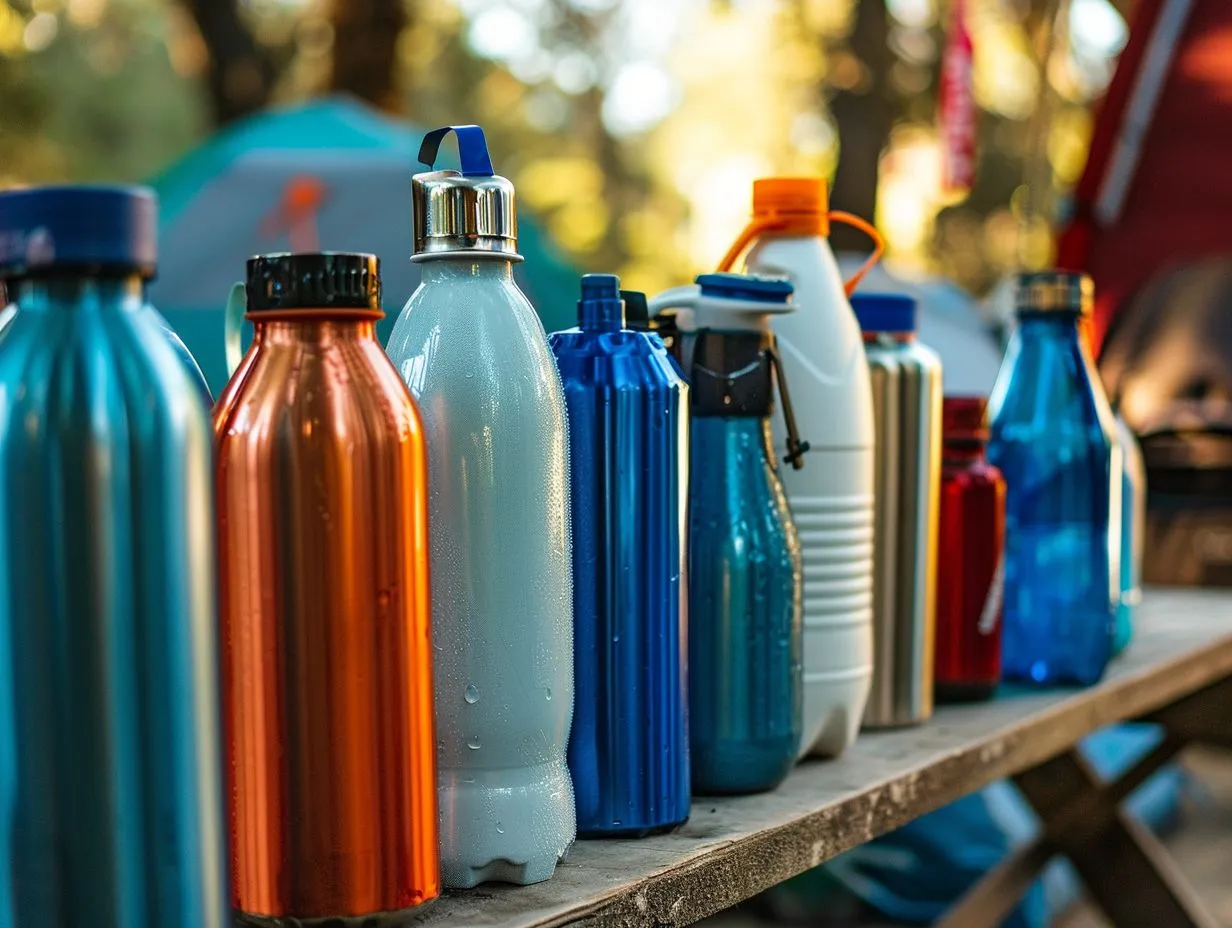
For most UK camping trips the best water bottle is a one litre stainless steel or hard BPA-free plastic bottle with a wide mouth, backed up by a collapsible flask for the walk and, if you camp in winter, one insulated bottle to keep a hot drink hot. That combination covers a family weekend on a serviced site and a long day on the hill without carrying anything you do not need.
The type you pick matters more than the brand. This guide sorts the options by what they are actually good at, so you can match the bottle to the trip rather than buying the most expensive thing on the shelf.
It is the water bottle chapter of the complete UK camping gear guide from Camping Sites in Britain, where you can find and compare campsites, caravan parks and glamping across the country.
Which bottle for which trip
Match the bottle to how you camp, not to a review score. A car camper filling up at a tap needs something different from a backpacker counting every gram.
| Trip | Best choice | Why |
|---|---|---|
| Family weekend on a serviced site | 1L wide-mouth stainless steel or Nalgene | Tough, easy to clean, refills at the tap |
| Day hike from the campsite | Collapsible soft flask, 500ml to 1L | Packs flat when empty, weighs almost nothing |
| Long or hot-weather hike | 2L to 3L hydration bladder | Drink on the move without stopping |
| Winter or cold-weather camping | Insulated vacuum bottle, 500ml to 1L | Keeps a hot drink hot for hours |
| Wild camping away from taps | Filter bottle or bottle plus treatment | Makes stream water safe to drink |
Stainless steel bottles
Stainless steel is the sensible default for camping. It shrugs off the knocks that crack plastic, it does not hold flavours or smells the way plastic can, and a single-wall steel bottle is genuinely tough for very little money. It is the bottle you can drop on a stone pitch and keep using.
The trade-off is weight and cold hands. Steel is heavier than plastic at the same capacity, and a single-wall bottle will sweat with condensation and chill your fingers on a cold morning. If that bothers you, a double-wall vacuum version fixes it, at more weight and more cost. For a one litre everyday camping bottle, single-wall steel is hard to beat.
Hard plastic bottles, including Nalgene
A hard BPA-free plastic bottle is the lightweight workhorse of British campsites. The classic is the Nalgene wide-mouth, made from Tritan, which is light, close to indestructible, marked with a volume scale and cheap enough to own several. The wide mouth takes ice, is easy to scrub out, and fits most filter and purifier fittings.
BPA-free matters because older polycarbonate bottles could leach bisphenol A, so any bottle you buy today should say BPA-free on the label. Plastic will not keep a drink cold or hot on its own, and it can pick up a faint taste of yesterday's squash if you do not wash it, but for a durable, feather-light bottle that survives a decade of trips, it is the value pick.
Collapsible and soft flasks
Collapsible bottles earn their place by disappearing when empty. A soft flask or roll-up silicone bottle holds 500ml to a litre, then packs down to almost nothing once you have drunk it, which is exactly what you want in a day pack or a tightly packed rucksack. They also cut down on single-use plastic on longer trips where you refill as you go.
They are less robust than a rigid bottle and can be awkward to stand up on a table, so treat them as a companion to a hard bottle rather than a replacement. Weight is the whole point here, and if you are trimming your load for the hills, our guide to the best lightweight camping gear covers the same logic across the rest of your kit.
Insulated vacuum bottles
An insulated bottle keeps cold water cold in summer and a hot drink hot in winter, which is the one job the other types cannot do. Double-wall vacuum construction, the design Hydro Flask and Yeti made popular, will typically hold a drink cold for around 24 hours and hot for around 12, so you can carry tea to a frosty morning summit or cold water through a July heatwave.
The cost is weight and price. A vacuum bottle is the heaviest and dearest option per litre, so most campers carry one insulated bottle for hot drinks and cold treats, and a plain bottle for everything else. If you are camping in genuinely cold conditions, keeping your drink from freezing pairs with keeping yourself warm; see the best thermal clothing for cold-weather camping.
Filter and purifier bottles for wild water
You only need a filter bottle when you are drinking from streams, lochs or rivers, not from a campsite tap. UK tap water is among the most tightly regulated in the world and is safe to drink straight from the tap, so on any serviced site a filter bottle solves a problem you do not have.
Away from taps it is a different story. Wild water can carry Giardia, Cryptosporidium and bacteria from livestock and wildlife upstream, and it needs treating before you drink it. A filter bottle with an integrated cartridge, a squeeze filter, chemical tablets or simply bringing the water to a rolling boil for one minute all work; the official position on treating water in the backcountry is set out by the Drinking Water Inspectorate. Match the method to the risk: a tap needs nothing, a Lake District beck needs treating every time.
Hydration bladders for hiking
A hydration bladder is the best way to drink steadily on a long walk without stopping. It is a soft reservoir, usually 2L to 3L, that sits in your rucksack with a hose over your shoulder, so you sip as you move and tend to drink more than you would from a bottle you have to dig out and unscrew.
The downsides are that you cannot easily see how much is left, the tube can freeze in winter, and the reservoir needs drying out properly between trips or it grows mould. Many campers carry a bladder for the walking and a hard bottle for camp, so they have a rigid container for cooking, brushing teeth and the tent at night. On a big day out the bladder is part of a wider hiking kit; sensible footwear and socks matter just as much, which our guide to the best hiking socks to prevent blisters covers.
What capacity do you need?
Plan for around two litres of drinking water per person per day, more in hot weather or on a hard walk. That does not all have to ride on your back at once, and how you split it depends on the trip.
- 750ml to 1L bottle: the everyday size for a serviced site with a tap nearby. Refill as you go.
- 1L to 2L: a sensible day-walk load, split across a bottle and a soft flask, topped up at the campsite before you set off.
- 2L to 3L bladder: long or hot days between reliable water sources, where you want to drink without stopping.
Bigger is not automatically better. Water weighs a kilogram per litre, so carrying three litres you do not need is three kilos of dead weight. Work out where you can refill and carry accordingly.
Cutting down single-use plastic
One reusable bottle replaces hundreds of single-use ones over its life, which is the quiet case for buying a good one and looking after it. A stainless steel or Tritan bottle will last years, so the cost per use drops to almost nothing and you stop buying bottled water at the site shop and the motorway services on the way.
It helps the site as much as your wallet. Fewer plastic bottles means less rubbish blowing around the field and less for the campsite to deal with, which is a small part of leaving a pitch as you found it. Keeping the rest of your gear dry and packed sensibly is the same habit; our guide to the best waterproof camping bags covers stopping leaks and spills reaching your kit.
Frequently asked questions
What is the best water bottle for camping in the UK?
A one litre wide-mouth stainless steel or hard BPA-free plastic bottle suits most trips, because it is durable, easy to clean and refills at any tap. Add a collapsible flask for walking and an insulated bottle if you camp in cold weather.
Do I need a filter water bottle for camping in Britain?
Not on a serviced campsite. UK tap water is safe to drink straight from the tap, so a filter adds nothing there. You only need one when drinking from streams or lochs while wild camping, where the water must be treated first.
How much water should I carry when camping?
Plan for around two litres of drinking water per person per day, more in hot weather or on a strenuous walk. You rarely need to carry it all at once, so refill at taps or treated sources and match your bottle capacity to the gaps between them.
Stainless steel or plastic for a camping water bottle?
Stainless steel is tougher and taste-neutral but heavier. Hard BPA-free plastic such as Nalgene Tritan is lighter and cheaper and survives years of use. Steel wins for durability and a serviced site; plastic wins when you are counting grams.
Can I use a camping water bottle for hot drinks?
Only an insulated vacuum bottle is designed for it. Single-wall steel gets too hot to hold, and most plastic bottles are not rated for boiling water and can warp. Check the bottle is marked as suitable before filling it with anything hot.
How do I keep a camping water bottle from going mouldy?
Wash it after every trip, dry it fully with the lid off, and pay attention to hydration bladders and their tubes, which are the worst offenders. A wide-mouth bottle is far easier to scrub out and dry than a narrow-necked one.
The short version
Buy one tough one litre bottle in steel or BPA-free plastic, add a collapsible flask for walks and an insulated bottle if you camp in the cold. Only bother with a filter when you are drinking wild water, because a British tap does the job for free.
Get the rest of your kit right alongside it in the complete UK camping gear guide, then find your next pitch across our UK campsite listings.