The Best Tarp Setups for Camping: Pitches, Kit and When to Use Each
· Updated
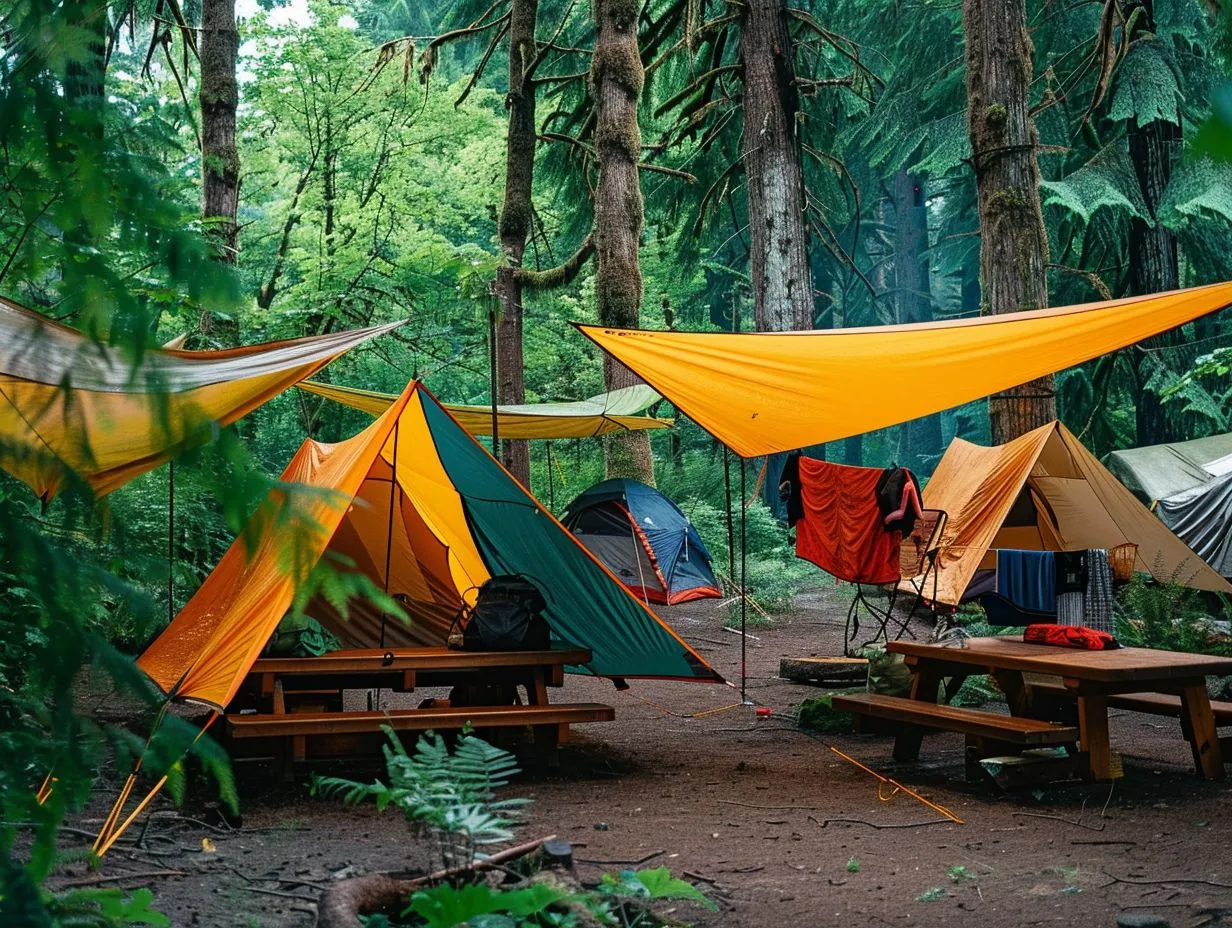
A tarp is the most versatile piece of shelter you can carry. With one flat sheet, four guylines, a handful of pegs and either a pair of trekking poles or two well spaced trees, you can rig a full weather shelter in minutes and change its shape to suit the wind, the rain and the ground. That flexibility is why tarps have a following among UK backpackers, bushcrafters and hammock campers.
The four setups worth knowing are the A-frame, the lean-to, the diamond (also called the plough point) and the tarp-over-hammock. Learn those and you can pitch sensibly in almost any British weather. This guide is part of the complete UK camping gear guide from Camping Sites in Britain, where you can find and compare campsites, caravan parks and glamping across the country.
The kit you need
A working tarp setup comes down to four things: the tarp, guylines, pegs and something to hold the ridge up. Get those right and the pitch looks after itself.
- The tarp. A flat sheet of coated fabric, usually with reinforced tie-out points along the edges and corners and often one or two in the middle of each side.
- Guylines. Thin, strong cord (1.5mm to 2mm Dyneema, or 2mm to 3mm reflective paracord) run from the tie-outs to the pegs, plus a longer ridgeline if you are pitching between trees.
- Pegs. Six to ten will cover most pitches. Match the peg to the ground: thin V or Y pegs for firm turf, wide stakes or snow pegs for soft or sandy ground. Our guide to selecting the right tent peg for the job covers which to carry.
- Uprights. Either two trekking poles (usually 120cm to 135cm) or two trees roughly 3m to 4m apart. Trees give you a hammock option; poles give you freedom to pitch on open ground.
Small extras make life easier: line tensioners or lineloc sliders for pulling everything taut, a few spare guylines, and a groundsheet or bivvy bag to keep your kit off wet British grass.
Tarp sizes and materials
For one or two people, a 3m by 3m square tarp is the best all-rounder. It pitches as an A-frame with room to spare, folds down to a diamond for one, and still shelters a cooking spot in the porch. Solo and going light, a 2.9m by 2m rectangle or a dedicated 2.9m by 3m hammock tarp is plenty. Two people who want a generous living area should look at 3.5m by 3m or larger.
| Tarp size | Best for | Typical use |
|---|---|---|
| 2.5m x 1.5m | Solo, ultralight | Low diamond or bivvy cover |
| 2.9m x 2m | Solo, all-round | A-frame or lean-to for one |
| 3m x 3m | One to two people | Every pitch in this guide |
| 3.5m x 3m and up | Two people, group shelter | Living and cooking area |
Material decides the weight and the price. Silicone-coated nylon (silnylon) and silicone-coated polyester (silpoly) are the sweet spot: a 3m by 3m silnylon tarp weighs roughly 500g to 700g and shrugs off UK rain. Dyneema Composite Fabric (DCF, once sold as cuben fibre) drops that to around 250g to 350g but costs a lot more and is easy to damage on rough ground. Cheap polyethylene (the blue-and-orange builder's tarp) is heavy, bulky and noisy in wind, but it is nearly indestructible and fine for a car-camping shelter. Whatever you choose, check the hydrostatic head is at least 1,500mm so it holds out proper rain.
The A-frame, your all-round shelter
The A-frame is the pitch to reach for when you want a proper roof over your head. You run a taut ridgeline between two poles or two trees, drape the tarp over it and peg the four corners out low on each side, making a simple ridge tent shape open at both ends.
It sheds rain well, gives you full-length cover and packs plenty of room underneath. Close one end down to the ground and you gain shelter from a headwind; leave both ends open on a still, warm night and you get airflow and a view. This is the setup to default to on a mixed British weekend when you are not sure what the weather will do.
The lean-to, for wind and a fire view
The lean-to is a single sloping wall: one edge pegged to the ground, the opposite edge lifted on a ridgeline or two poles to form an open-fronted roof. It is the setup for a windy, showery day when you want to sit under cover and still see out.
Pitch the closed, low edge into the wind and the lean-to becomes an effective windbreak as well as a rain shelter, much like the ones we cover in our guide to the best windbreaks for beach camping. The open front lets you watch a campfire from a safe distance, which is the classic bushcraft appeal. A hard safety rule applies here: never light a fire inside or directly under any closed or part-closed shelter. Fires and fuel-burning stoves give off carbon monoxide, which is invisible, has no smell and can kill in an enclosed space, so keep any flame well outside the shelter and downwind, and follow the government's fire safety outdoors guidance. Many UK campsites ban open fires outright, so check the site rules before you strike a match.
The diamond or plough point, for solo storms
The diamond pitch, sometimes called the plough point, turns a square tarp on its corner so it points into the weather like the prow of a ship. You peg the windward corner low to the ground and lift the opposite corner on a single pole or a tree, creating a tight, sloping cocoon that a storm slides straight over.
This is the solo foul-weather setup. It gives the smallest profile to the wind, sheds rain and spindrift efficiently, and needs only one upright and a few pegs. You trade living space for weatherproofing, so it suits a wild night on an exposed pitch far more than a relaxed evening in camp. It pairs naturally with wild camping, and the wider craft is covered in our guide to essential skills for wild camping.
A tarp over a hammock
A tarp over a hammock keeps you dry and off the ground, which is a real advantage on the boggy, root-strewn woodland floors you find across much of Britain. You sling the hammock between two trees, then pitch the tarp above it on a ridgeline running the same line, usually as a diamond or a stretched A-frame so the ends overhang your head and feet.
In heavy rain, pitch the tarp low and wide for maximum cover; in fair weather, raise the sides for a view and a breeze. You need sturdy, well spaced trees and tree-friendly wide webbing straps to protect the bark. For choosing the hammock itself, see our guide to the best hammocks for tree camping.
Pitch it taut, and pitch the low end into the wind
A taut tarp is a quiet, dry tarp. A slack one flaps all night, sags, and pools water until it drips through the seams or tears a tie-out. Two habits fix almost every problem.
First, tension the ridgeline hard before you touch the corners. A tight, level ridge is the backbone of the pitch, and everything hangs off it. Then peg the corners out in opposite pairs, keeping the fabric under even tension, and finish with the side tie-outs and any tensioners so there are no wrinkles left to catch the wind or hold rain.
Second, read the wind and pitch the low, closed end into it. Presenting the lowest edge to the prevailing wind means gusts slide up and over the shelter rather than lifting it from underneath, which is what rips pegs out and flattens a tarp at 2am. On an open or coastal pitch, drop the whole setup lower and add extra guylines to the windward tie-outs for insurance. The same wind-reading logic applies to any shelter you pitch, and it is worth practising before you rely on it.
Frequently asked questions
What size tarp is best for camping?
A 3m by 3m square tarp is the best all-round choice for one or two people. It pitches as a roomy A-frame, folds to a diamond for solo use, and still leaves space to shelter a cooking spot. Solo ultralight campers can drop to 2.9m by 2m.
Do I need trekking poles for a tarp?
No. Trekking poles are the most flexible option because they let you pitch on open ground, but two well spaced trees work just as well and open up a hammock setup. In a pinch, a paddle, a sturdy stick or even a rucksack propped up can hold a ridge.
Can I have a fire under a tarp?
No. Never light a fire or use a fuel-burning stove inside or directly under a closed shelter, because carbon monoxide builds up and can be fatal. Keep any flame well outside and downwind, and check whether your campsite allows open fires at all before you start.
Which tarp material is best for UK weather?
Silicone-coated nylon or polyester offers the best balance of weight, cost and waterproofing for British rain, at around 500g to 700g for a 3m square. Dyneema is lighter but pricier and more delicate. Cheap polyethylene tarps are heavy but tough and fine for car camping.
How do I stop my tarp flapping in the wind?
Pitch it taut and pitch it low. Tension the ridgeline first, peg the corners in opposite pairs under even tension, then pitch the closed low end into the prevailing wind so gusts pass over the top rather than lifting it from beneath. Add extra guylines on exposed pitches.
Is tarp camping allowed on UK campsites?
Most campsites welcome tarps, though a few pitch-marked or hardstanding sites suit tents better. Always check whether the site allows tarps between trees and whether fires are permitted. You can filter sites and read the rules on our directory before you book.
The short version
Carry a 3m square silnylon tarp, a set of guylines and pegs, and either trekking poles or the luck of two good trees, and you can shelter almost anywhere. Pitch the A-frame for all-round cover, the lean-to for wind and a fire view, the diamond for a solo storm, and a tarp over a hammock for wet woodland. Pitch it taut, pitch the low end into the wind, and you will sleep dry. When you are ready to book, browse campsites across Britain or head back to the complete UK camping gear guide.