Planning a Group Camping Trip With Friends: How to Get It Sorted
· Updated
The single thing that decides whether a group camping trip works is the site, and specifically whether it takes groups at all. Plenty of UK campsites cap the number of pitches one party can book, ask groups to phone rather than book online, or refuse all-male and all-female parties outright. Sort that first, before anyone agrees a date, because the friendliest field in the country is no use to you if it turns your eight mates away at the gate.
Once the site is confirmed, a group trip is mostly logistics: getting adjacent pitches, splitting the kit so nobody carries three tents, agreeing who buys what, and feeding everyone without four separate stoves fighting over one picnic bench. This is part of our guide to planning your first camping trip, narrowed down to the bit that changes when you bring a crowd.
You can find and filter sites that suit larger parties across the Camping Sites in Britain directory, which is the quickest way to see who has the space before you start ringing round.
Check the group policy before anything else
Most campsites have rules about groups, and they are rarely printed in large type. The common restrictions are a limit on pitches per booking, a ban on single-sex groups, an age rule requiring at least one person over 21 or 25 on the booking, and a requirement to phone ahead so the owner can place you sensibly. A few holiday parks decline groups entirely in favour of families.
None of this is meant to catch you out. It exists because one loud stag or hen party can ruin a quiet family site, so owners screen ahead rather than deal with it at 1am. The fix is simple: ring the site, say plainly how many you are, what ages, and that you are a sociable but civilised bunch, and ask directly whether they take groups your size. An honest phone call almost always gets a better answer than a silent online booking that gets cancelled later.
| Ask the site | Why it matters |
|---|---|
| Do you take groups, and is there a pitch limit per booking? | Many sites cap parties at four or six pitches |
| Do you allow all-male or all-female groups? | A common flat ban, especially at family sites |
| Can we book pitches next to each other? | Adjacency is rarely guaranteed online |
| Is there a minimum age on the lead booking? | Some require an over-21 or over-25 named booker |
| Any noise curfew or car rules? | Quiet hours and one-car-per-pitch are normal |
Pick a date everyone can actually make
Agree the date before you fall in love with a site, not after. The more people on the trip, the harder the diary gets, so propose two or three weekends, get a firm yes from everyone, and only then book. A shared poll or a single group chat message with numbered options works better than an open "when suits everyone", which never resolves.
Weekends and school holidays are when group-friendly pitches vanish first, so the earlier you commit the better your choice of site. Bank holidays are busiest and priciest of all. If your group can flex to a weekend in late spring or early autumn, you get quieter sites, easier group bookings and better odds of pitches together.
Book adjacent pitches, and book them together
Getting pitches next to each other is the part people assume will just happen, and then it does not. Online systems often assign pitches automatically, so a group booking made in six separate transactions can end up scattered across the field. Book as one party where the site allows it, or make every booking by phone in one call and ask the owner to group you.
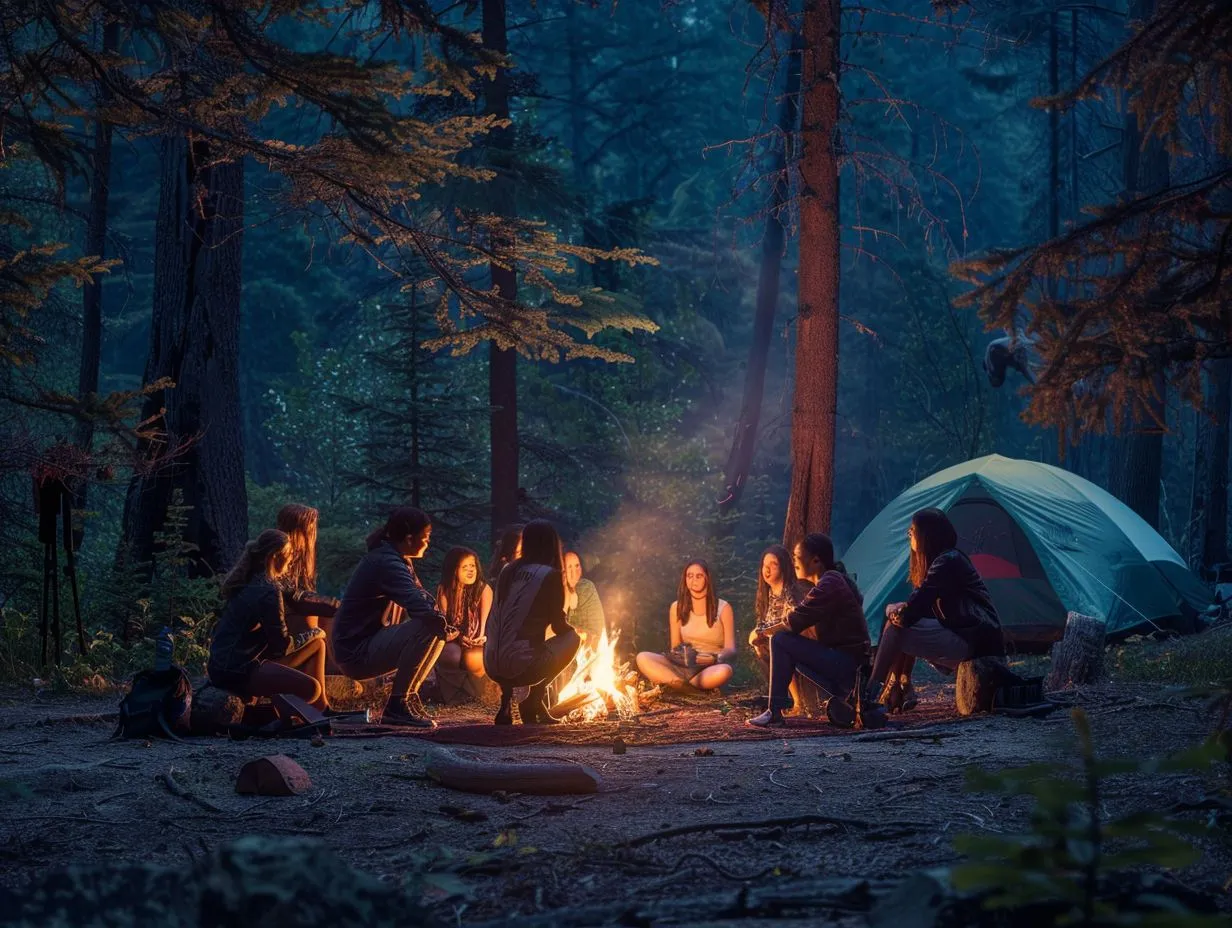
Aim for a cluster with a shared middle. A ring of tents around one communal space gives you somewhere to cook, eat and sit together while everyone still sleeps in their own porch. If the site does numbered pitches, ask which are near the toilets and which back onto a hedge for shelter, then divide those on merit rather than on who booked first.
Share the kit so nobody double-packs
The whole point of camping in a group is that you do not each need everything. One big stove, one large cool box, one first aid kit and one set of pans can serve six people, which saves money, boot space and setup time. Draw up a single master list, put a name against every item, and share it so two people do not both lug a 10-litre water carrier while nobody brings a mallet.
Split kit into shared and personal. Shared kit is the stuff the group uses together; personal kit is what each person brings for themselves. Keeping tents, sleeping bags and mats personal avoids arguments about warmth and comfort, while pooling the bulky communal gear is where the real saving sits.
- Shared, assign one owner each: stove and gas, cool box, water carrier, main pans and washing-up kit, first aid kit, mallet, tarp or gazebo, lantern, rubbish bags
- Personal, everyone brings their own: tent or a bed in a shared one, sleeping bag, sleeping mat, head torch, clothing, toiletries, camping chair, plate, mug and cutlery
If you are trying to keep loads down, our guide to packing light for a camping trip pairs well with sharing, because the two together cut what each person actually hauls. Carpooling helps too, and our tips for a successful car camping trip cover fitting a group and their gear into fewer vehicles. Run the whole lot past a pre-camping checklist the night before so nothing communal gets left in a hallway.
Sort the money up front
Money is the thing that quietly sours group trips, so settle it before you go rather than round the fire. Decide early whether you are splitting everything evenly or paying for your own, and put one person in charge of the shared pot. A single group payment app or a shared spreadsheet keeps it visible and stops the "I got the last shop" resentment building over a weekend.
The costs that are genuinely shared are the pitch fees, group food, firewood, gas and any activity everyone does together. The costs that stay personal are travel if people come separately, drinks beyond the shared crate, and anyone's own gear. Agree which bucket each cost sits in before you arrive, and one person covers the site fee in full so the booking is clean, then gets paid back their share.
Plan meals for a crowd, not for one
Cooking as a group is faster, cheaper and more fun than six people frying separate breakfasts, so plan communal meals from the start. One big one-pot dinner, a shared breakfast rota and an agreed lunch plan means one shop, one stove and far less faff. Chilli, curry, pasta and a fry-up all scale up easily and need only one pan on the go.
Nominate a cook or a pair for each meal and let them own it, rather than everyone hovering over the stove. Note any allergies, veggies and vegans before you shop, not at the table. Keep one large cool box packed strategically with the first night's meat at the bottom and the last day's at the top, and bring more water than you think, because a group gets through it fast.
| Meal | Easy group option | Why it works |
|---|---|---|
| Breakfast | Big fry-up or porridge on rotation | One pan, one cook, feeds everyone |
| Lunch | Bread, cheese, cold meats, salad | No cooking, packs down, no washing up |
| Dinner | One-pot chilli, curry or pasta | Scales to any number, cheap per head |
| Evening | Marshmallows and a shared crate | Sociable, needs only a fire or two |
Line up a couple of group activities
Have one or two shared plans and leave the rest loose. Groups do best with a loose anchor for each day, a morning walk, a swim, a pub lunch, an evening around the fire, rather than a rigid hour-by-hour timetable that half the group resents. Pick activities that work for the least able and most reluctant person, because a group moves at the pace of its slowest and grumpiest member.
Check what is on the doorstep before you go so nobody spends the trip staring at a phone. A nearby hill, beach, pub or swimming spot gives the day a shape. Bring a few low-effort options too, a pack of cards, a football, a frisbee, for the flat afternoon when the weather turns and enthusiasm dips.
Be good neighbours, and good campers to each other
A group is louder than it thinks, so mind the field around you. Most sites have quiet hours, usually from around 10pm or 11pm, and a group carries further than a couple, so keep the volume down after dark and move to the pub or a fire circle away from tents if the night runs long. Park considerately, keep the shared space tidy, and pack out everything you bring in.
The etiquette that matters most is towards each other. Agree a rough plan for washing up, rubbish and quiet time so it does not all fall on the one organised person. If someone wants an early night or a solo walk, let them, because the trips people remember fondly are the ones where nobody felt trapped. A little slack keeps the group together far better than a packed schedule does.
Frequently asked questions
Can you book a whole campsite for a group in the UK?
Yes, many sites offer sole use or a dedicated group field, and some rally fields exist specifically for large parties. Sole-use bookings usually need booking well ahead and a minimum spend. Phone the site directly, because these arrangements are almost never available through standard online booking.
Why do some campsites ban single-sex groups?
Owners restrict all-male and all-female groups to protect quieter families and couples from stag and hen behaviour. It is a blanket screen, not a judgement on you. A calm, honest phone call explaining your group often gets you in where the online form would have blocked you.
How many pitches can one group book?
It varies by site, with common caps of four or six pitches per party, and many owners wanting groups to phone rather than book online. Always ask before you assume. Some family sites take no groups at all, while dedicated group fields take dozens.
How do you split costs fairly on a group camping trip?
Put one person in charge of shared costs, pitch fees, group food, firewood and gas, and track them in a payment app or spreadsheet. Split those evenly, keep travel and personal drinks separate, and settle up before you leave rather than round the fire.
What is the best time to book a group camping trip?
Book as early as you can, because group-friendly pitches sell out first for weekends, school holidays and bank holidays. Late spring and early autumn give you quieter sites, easier group bookings and a better chance of pitches together, often at lower prices than peak summer.
How do you keep a big group from getting split across the site?
Book as one party or make every booking in one phone call, and ask the owner to place you together. Online systems assign pitches automatically, so separate bookings scatter. Confirming adjacency by phone is the only reliable way to camp as a cluster.
The short version
Confirm the site takes your group and can put you on adjacent pitches, lock the date early, share the bulky kit and the shopping, and agree the money before you go. Do that and the trip runs itself, because everything left is just cooking, walking and sitting round a fire with your mates.
Start by finding sites with room for a crowd in the Camping Sites in Britain directory, then read the wider guide to planning your first camping trip for everything that applies whatever the size of your party.