Vegetarian Camping Recipes: Breakfasts, Mains and Puddings for Camp
· Updated
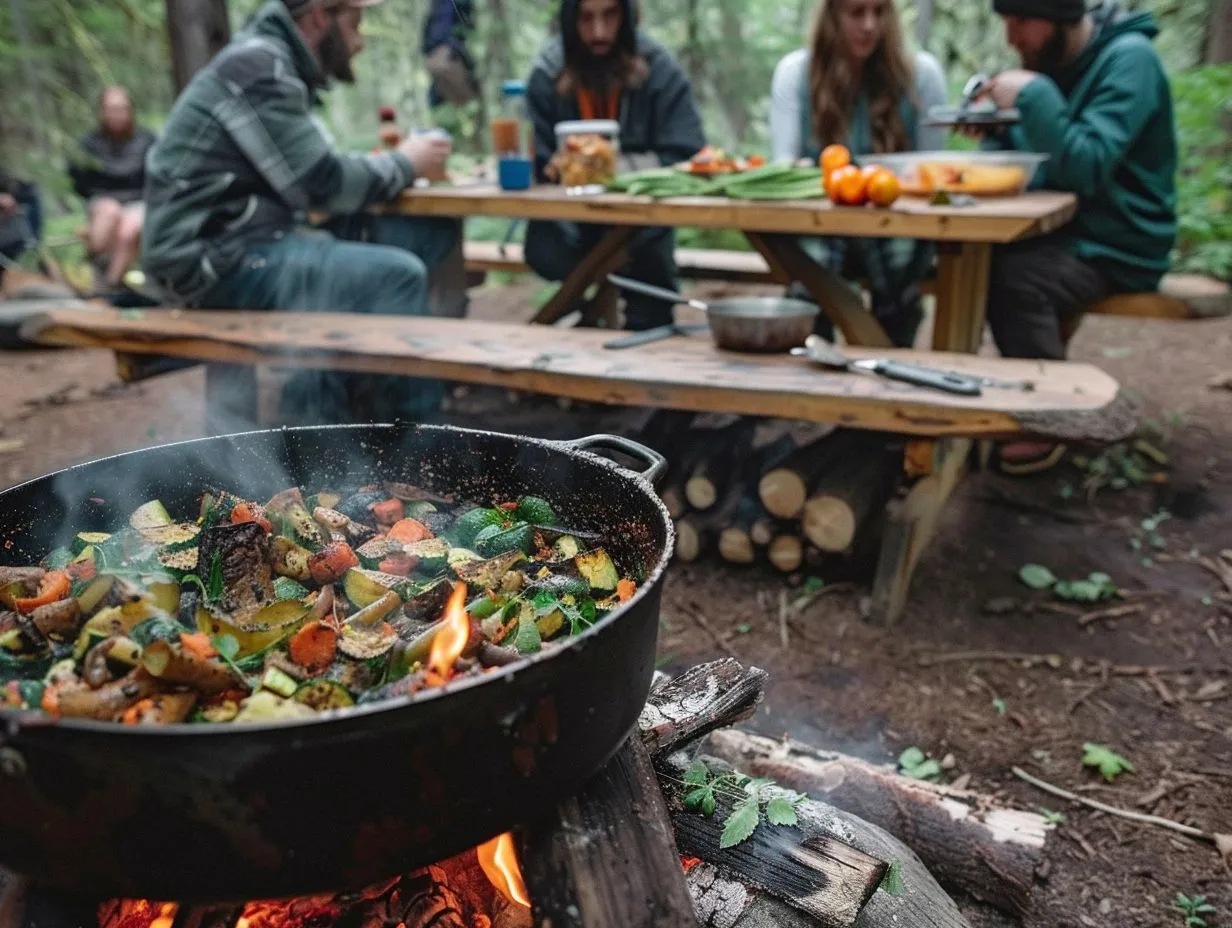
You do not need meat, a full kitchen or a Dutch oven to eat well on a campsite. A single burner, one decent pan, a fire and a roll of foil will cook every vegetarian meal on this page, from a proper fry-up to a chilli non carne to a foil-baked banana with melting chocolate. The trick is choosing recipes built for camp: few ingredients, fast cooking, and store-cupboard staples that survive a weekend in a crate.
These are real, doable recipes grouped by meal, with brief ingredients and a method you can follow with cold hands and one eye on the fire. They keep to the vegetarian lane, so eggs, cheese and dairy are all in. If you are cooking fully plant-based or dodging gluten, we have separate guides linked further down.
For the wider skills, from building a cooking fire to the kit worth packing, start with our guide to campfire cooking essentials. This recipe collection is one corner of it, brought to you by Camping Sites in Britain, where you can find and compare campsites across the UK.
Camp cook's ground rules
Get four things right and camp cooking stops being a faff. Prep at home, lean on tins, pack ingredients that travel, and season harder than you would in a kitchen.
- Chop and prep at home. Dice onions, cube halloumi, mix spice blends and portion them into freezer bags before you leave. Chopping in a field with a blunt knife is where camp cooking goes wrong.
- Tinned beans and pulses are your best friend. Kidney beans, chickpeas, black beans, lentils and chopped tomatoes need no fridge, need no soaking, and turn into a filling meal in one pan. A couple of tins per person per weekend covers you.
- Halloumi and eggs travel and cook brilliantly. Halloumi keeps for days unopened, does not melt into a puddle, and chars beautifully on a skewer or in a dry pan. Eggs handle a cool bag fine and turn up in half these recipes.
- Season generously. Wind, smoke and the great outdoors flatten flavour. Pack salt, pepper, a chilli or curry blend, stock cubes and a little oil. Taste and add more than feels normal.
Breakfasts
Breakfast is where camp cooking is easiest, because eggs, bread and a hot pan do most of the work. Here are three that scale from one burner to a full fire.
Veggie fry-up
The classic, minus the meat. In one large pan over a burner or grate, fry a knob of butter, then cook halloumi slices, mushrooms, tomato halves and a tin of baked beans pushed to one side. Add eggs to the gap and fry or scramble them. Warm the bread on the grate. Season well and serve straight from the pan.
Pack: eggs, halloumi, mushrooms, tomatoes, tinned beans, bread, butter, salt and pepper.
One-pan shakshuka
Eggs poached in a spiced tomato sauce, all in one pan. Soften a chopped onion and pepper in oil, add a teaspoon of cumin and paprika, then a tin of chopped tomatoes. Simmer for five minutes, make wells with a spoon and crack in four eggs. Cover with foil or a lid and cook until the whites set, roughly six to eight minutes. Scatter with cheese and eat with bread.
Pack: eggs, tinned tomatoes, onion, pepper, cumin, paprika, oil, feta or cheddar, bread.
Porridge with fruit
The no-fuss option for a cold morning. Tip porridge oats and a pinch of salt into a pan, add water or milk to cover by a couple of centimetres, and stir over a low heat until thick. Top with a chopped banana, a handful of berries, a spoon of jam or honey, and a scatter of nuts. Filling, cheap and ready in five minutes.
Pack: porridge oats, milk or milk powder, banana or dried fruit, honey, nuts.
One-pot and one-fire mains
The heart of camp cooking, where one pan or a sheet of foil does everything. Every main here is designed for one or two burners, a fire and limited washing up.
Halloumi and vegetable skewers
Thread cubes of halloumi with peppers, red onion, courgette and cherry tomatoes onto skewers. Brush with oil and a squeeze of lemon, then grill over the fire or in a hot dry pan for three to four minutes a side until charred. The halloumi holds together and takes a lovely colour. Serve with flatbread and a spoon of houmous.
Pack: halloumi, peppers, red onion, courgette, cherry tomatoes, oil, lemon, skewers, flatbread.
Campfire chilli non carne
A tinned-bean triumph. Soften onion, pepper and garlic in oil, stir in a tablespoon of chilli or fajita seasoning, then add a tin of chopped tomatoes, a tin of kidney beans and a tin of black beans (drained). Crumble in a stock cube and simmer for 15 to 20 minutes until thick. Serve with rice, wraps or just a hunk of bread. Even better reheated the next night.
Pack: tinned tomatoes, tinned kidney and black beans, onion, pepper, garlic, chilli seasoning, stock cube, rice or wraps.
A proper veg pasta
Pasta is the fastest hot meal on a campsite. Boil and drain your pasta, then in the same pan soften garlic and a chopped courgette in oil, add a tin of chopped tomatoes and a handful of olives, and simmer for five minutes. Return the pasta, stir in the sauce, and finish with cheese and black pepper. One pan, twelve minutes, done.
Pack: pasta, tinned tomatoes, courgette, garlic, olives, hard cheese, oil.
Quick dal
Warming, cheap and needs no fridge. Rinse a mug of red lentils, add to a pan with three mugs of water, a stock cube and two teaspoons of curry powder. Simmer for 20 minutes, stirring now and then, until soft and thick. Fry an onion separately if you can be bothered, or stir in a spoon of mango chutney at the end. Eat with rice or naan warmed on the grate.
Pack: red lentils, curry powder, stock cube, onion, rice or naan.
Camp mac and cheese
Comfort food from one pan. Boil macaroni until just done, drain off most of the water leaving a couple of splashes, then over a low heat stir in a big handful of grated cheddar and a splash of milk until it turns glossy and coats the pasta. Season hard with salt, pepper and a pinch of mustard powder if you packed it. A crowd-pleaser with children.
Pack: macaroni, cheddar, milk, mustard powder, salt and pepper.
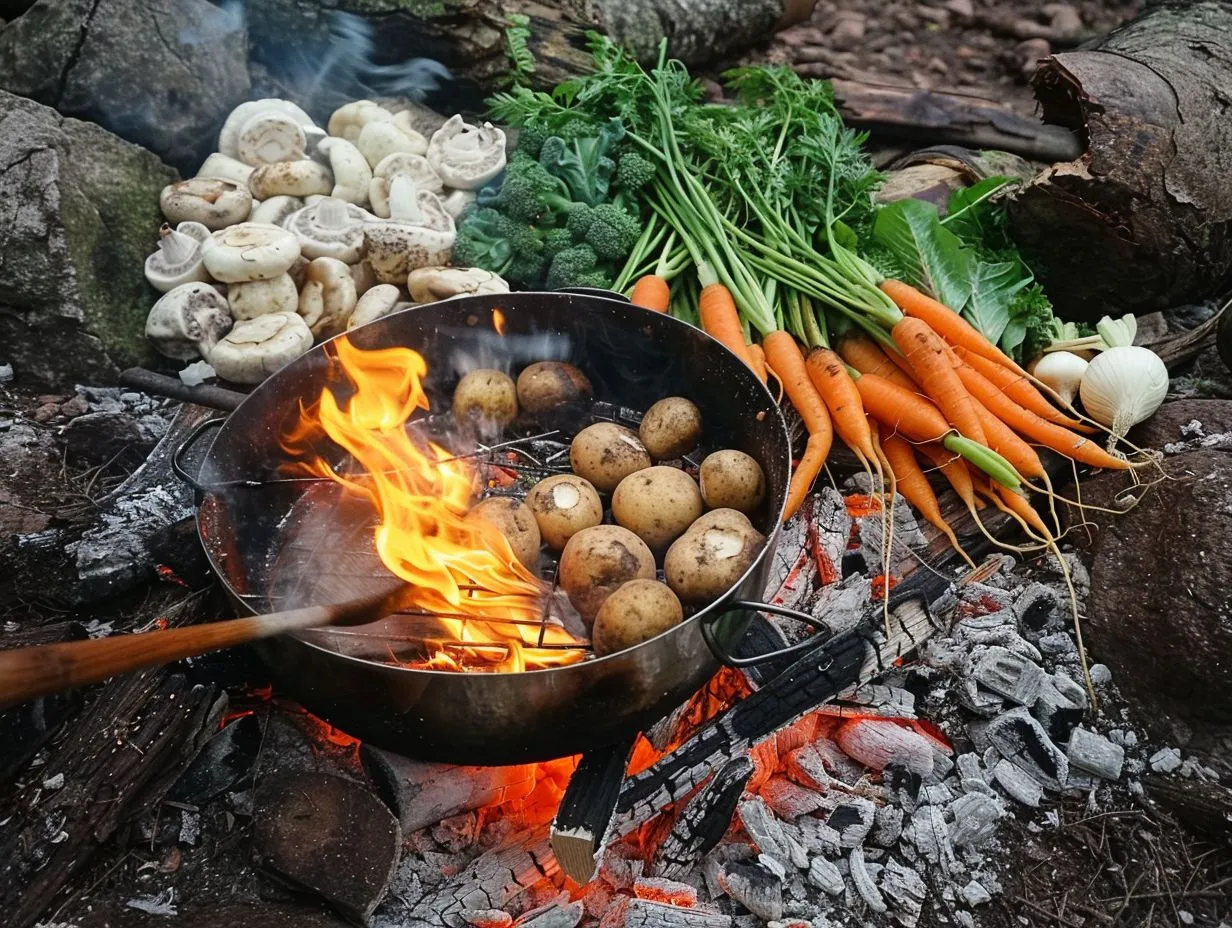
Jacket potatoes in the embers
The oldest trick in the book and still one of the best. Prick a couple of potatoes, wrap each tightly in foil, and bury them in the hot embers at the edge of the fire (not the flames). Turn every 15 minutes and give them 45 minutes to an hour, until a knife slides in easily. Split, add butter, cheese, beans or coleslaw, and season.
Pack: baking potatoes, foil, butter, cheese, tinned beans.
Foil-packet vegetable and feta bake
Almost no washing up. Pile chopped peppers, courgette, red onion, cherry tomatoes and cubed feta onto a double layer of foil. Drizzle with oil, add oregano, salt and pepper, then fold into a sealed parcel. Sit it on the grate or in the embers for 20 to 25 minutes. Open carefully, the steam is hot, and eat straight from the foil with bread.
Pack: peppers, courgette, red onion, cherry tomatoes, feta, oregano, oil, foil.
Puddings
A fire practically demands pudding, and these three need nothing more than foil, a skewer and a sweet tooth.
Foil-baked banana with chocolate
Slit a banana lengthways through the skin without cutting all the way through, push squares of chocolate into the gap, wrap in foil, and sit it in the embers for eight to ten minutes. Peel back the foil and eat the melting middle with a spoon. The easiest camp pudding there is.
Grilled peaches
Halve and stone a couple of peaches, brush the cut side with a little butter or oil, and grill face down over the fire for three to four minutes until soft and caramelised. Serve with a drizzle of honey and a spoon of yoghurt or squirty cream. Ripe nectarines work just as well.
S'mores
The campfire ritual. Toast a marshmallow on a skewer until golden and gooey, then squash it with a square of chocolate between two digestive biscuits so the chocolate melts. Messy, sweet and non-negotiable with children. Pack extra marshmallows, they vanish fast.
Plan the meals before you pack
A five-minute plan saves you money, waste and a mid-trip supermarket run. Write out each meal for each day, list the ingredients, and pack from that list rather than guessing at the shop.
The two rules that matter most: buy ingredients that earn their place in more than one meal, and cook once, eat twice. A tin of tomatoes feeds shakshuka at breakfast and chilli at night. Halloumi does skewers one evening and the fry-up the next morning. A double batch of chilli reheats into a second dinner or a jacket-potato topping. Here is a simple weekend that flows:
| Meal | Day one | Day two |
|---|---|---|
| Breakfast | Porridge with fruit | Veggie fry-up |
| Main | Campfire chilli non carne with rice | Halloumi and vegetable skewers with flatbread |
| Pudding | S'mores | Foil-baked banana with chocolate |
Prep the chilli veg and cube the halloumi at home, pack your tins in one crate and your fresh bits in a cool bag, and the actual cooking becomes the fun part. When you are ready to pick a spot with a fire pit or barbecue area, browse and compare sites in our campsite directory.
Related camp cooking guides
If your group has other diets to cook around, these sister guides keep everyone fed. For fully plant-based meals with no dairy or eggs, see our vegan camping meals. For coeliacs and gluten-avoiders, read gluten-free camping meals. And to build your own recipes and dried meal kits from scratch, try how to make your own camping meals.
Frequently asked questions
What is the easiest vegetarian meal to cook at camp?
Pasta with a tinned tomato sauce. Boil the pasta, soften garlic and a chopped vegetable in the same pan, add a tin of chopped tomatoes, stir it all back together and finish with cheese. One pan, about 12 minutes, and it uses ingredients that need no fridge.
What vegetarian food does not need a fridge when camping?
Plenty. Tinned beans, chopped tomatoes, lentils, pasta, rice, porridge oats, bread, olive oil, hard cheese and unopened halloumi all keep for a weekend without cooling. Eggs are fine in a cool bag. Buy fresh vegetables like peppers, courgettes and onions that store well without refrigeration.
Can you cook halloumi over a campfire?
Yes, and it is one of the best things to cook on one. Halloumi does not melt like other cheese, so it chars and holds its shape on a skewer, a grill grate or in a hot dry pan. Give it three to four minutes a side until golden.
How do I keep camp food safe without a fridge?
Use a cool bag with ice packs for eggs, dairy and anything opened, keep it in the shade, and eat perishables early in the trip. Lean on tinned and dried staples that need no cooling, and cook food through until piping hot. Do not reheat cooked rice more than once.
What can I cook in foil on a campfire?
Loads. Jacket potatoes buried in the embers, a vegetable and feta bake, and foil-baked banana with chocolate all cook in a sealed parcel with almost no washing up. Use a double layer of foil, seal the edges tightly, and sit the parcel on hot embers rather than open flames.
Are these recipes suitable for one camp stove?
Yes. Every breakfast and main here works on a single burner, and the puddings and foil recipes use the fire instead, so you are never fighting for the one hob. If you only have a stove and no fire, cook the foil dishes in a covered pan over a low heat.
The short version
Vegetarian camp cooking comes down to tins, halloumi, eggs and foil, prepped at home and seasoned hard. Pick one breakfast, one one-pot main and one pudding per day, cook once and eat twice, and you will eat better than most people manage with a full kitchen. For the fire-building and kit that make it all work, head back to campfire cooking essentials.