Gluten-Free Camping Meal Ideas: What to Cook and How to Stay Safe
· Updated
Camping is one of the easiest ways to eat well on a gluten-free diet, because so many camp staples are naturally gluten free to begin with. Rice, potatoes, corn, beans, eggs, fresh meat and fish, most tinned fish and pulses: none of them contain gluten, and all of them cook happily on a single stove. You do not need special shop-bought camping meals to eat properly on a trip.
The real challenge on a campsite is not the menu, it is keeping gluten out of your food when you are sharing a small kitchen with people who are not eating gluten free. For anyone with coeliac disease, cross-contamination is a genuine health risk rather than a preference, so this guide covers both the meals worth cooking and the simple habits that keep them safe.
This is part of our guide to campfire cooking essentials, from Camping Sites in Britain, where you can find and compare campsites, caravan parks and glamping across the UK.
The naturally gluten-free camp staples
Build your camp menu around foods that are gluten free by nature and you avoid most of the risk before you start cooking. These are cheap, filling, easy to pack and forgiving on a camp stove.
- Rice, plain white or brown, and quinoa, both brilliant bases for a one-pot meal
- Potatoes, whole for jackets or diced for a hash, and sweet potatoes
- Corn, on the cob, tinned sweetcorn, and plain corn tortillas or corn pasta
- Beans and pulses, tinned kidney beans, chickpeas, lentils and butter beans
- Eggs, the fastest hot meal there is
- Fresh meat and fish, plain cuts with no coating or marinade
- Most tinned fish, tuna, sardines and mackerel in oil or spring water
- Fresh fruit and vegetables, all naturally gluten free
Plain, single-ingredient foods are always the safest bet. It is the processed extras, the sauces, the coatings and the "may contain" products, that need checking.
Cross-contamination is the real risk
For coeliacs, even a trace of gluten can trigger a reaction, so the goal is to keep gluten-free food physically apart from everything else. Coeliac UK is clear that standard washing removes gluten, so you do not need a whole separate camp kitchen, but you do need to clean thoroughly and think about a few specific items.
- Cook gluten-free food first, or use a separate pan and utensils, then wash everything in hot soapy water before it touches anything with gluten
- Use a separate chopping board, or wash the shared one properly, especially if bread has been near it
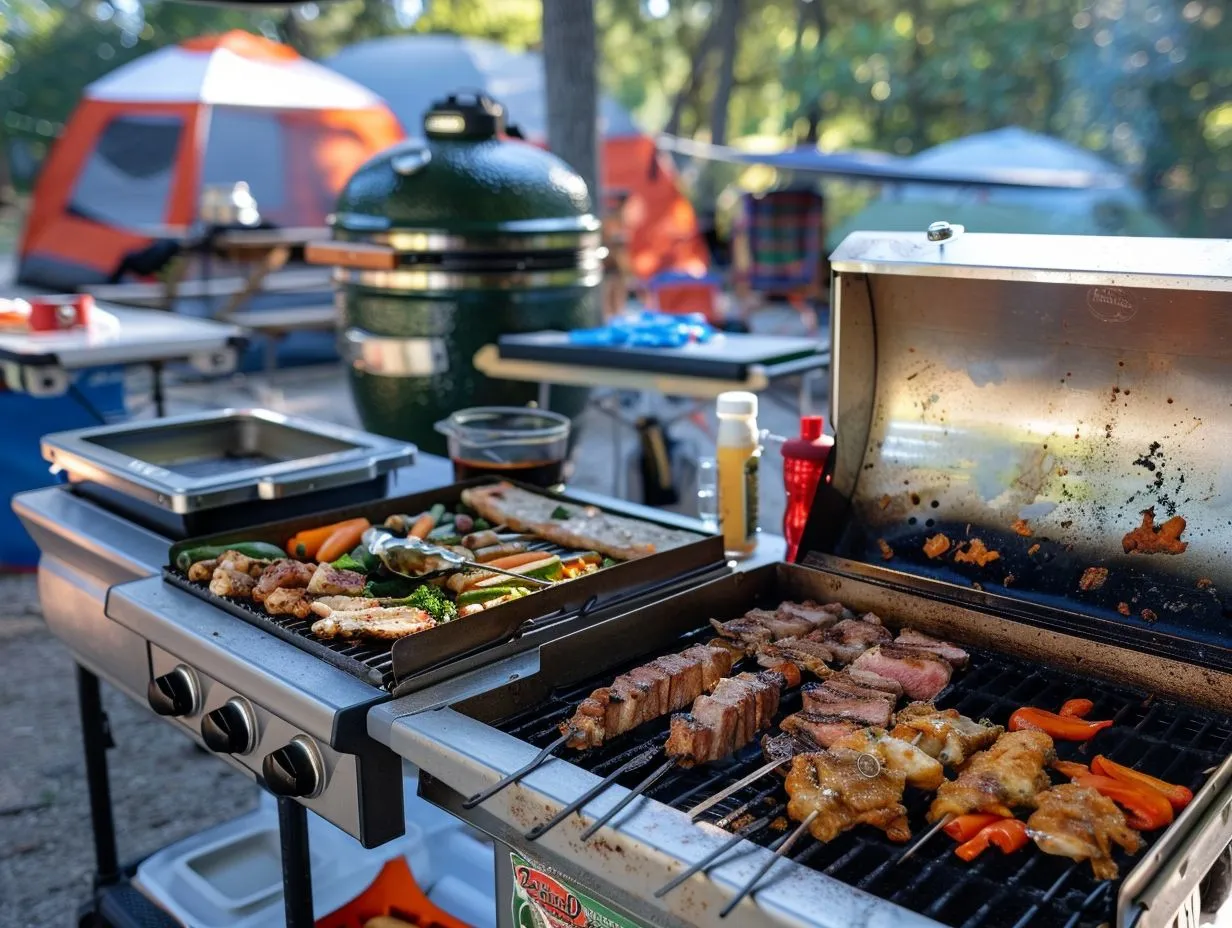
- Watch shared oil and grills. Coeliac UK advises frying gluten-free food in clean oil or a separate pan, never in oil that has cooked battered or breaded food. A communal campsite barbecue is a classic contamination trap
- Keep spreads clean. Breadcrumbs in the butter, jam or mayo are a common source of gluten, so use clean cutlery or keep separate pots
- Store gluten-free food sealed and apart in its own labelled box, above the gluten-containing food in the cool box so nothing drops onto it
Full detail is on the Coeliac UK cross-contamination page and the NHS coeliac disease treatment guidance.
Read the label on camp cupboard staples
Several everyday camping ingredients hide gluten where you would not expect it, so read the label every time even on brands you think you know. The usual culprits are worth learning by heart.
| Ingredient | Why it catches people out |
|---|---|
| Oats and porridge | Standard oats are contaminated with wheat, barley and rye in processing. Use only oats labelled gluten free |
| Stock cubes and gravy | Frequently thickened with wheat flour. Check for a gluten-free version |
| Sausages and burgers | Often bulked out with rusk or breadcrumb. Buy ones labelled gluten free |
| Soy sauce | Brewed with wheat. Swap for tamari, which is naturally gluten free |
| Sauces and condiments | Some contain barley malt or wheat starch. Read before you pack |
On oats specifically, Coeliac UK notes that most people with coeliac disease tolerate gluten-free oats well, but a small number remain sensitive, so introduce them carefully. Labels such as "pure oats" or "organic" do not mean gluten free; look for oats tested to 20 parts per million or less and labelled accordingly.
Gluten-free breakfasts
Breakfast is the easiest gluten-free meal of the trip. Keep it to eggs, fruit and certified oats and you barely have to think about it.
- Porridge with certified gluten-free oats, cooked with milk or water and topped with banana, berries or a spoon of honey
- Scrambled or fried eggs with tomatoes and mushrooms, cooked in a clean pan
- Gluten-free granola with yoghurt and fruit, no cooking needed
- Fresh fruit and nuts for a no-fuss cold start on a warm morning
Gluten-free lunches
Lunch works best kept cold and simple, built on rice, potatoes or corn rather than bread. These pack well and need little or no heat.
- Corn tortilla wraps or rice cakes with tuna, cheese, ham or hummus and salad
- Jacket potatoes baked in the campfire embers, topped with beans, cheese or tuna mayo
- Rice or quinoa salad with tinned sweetcorn, peppers, chickpeas and a squeeze of lemon
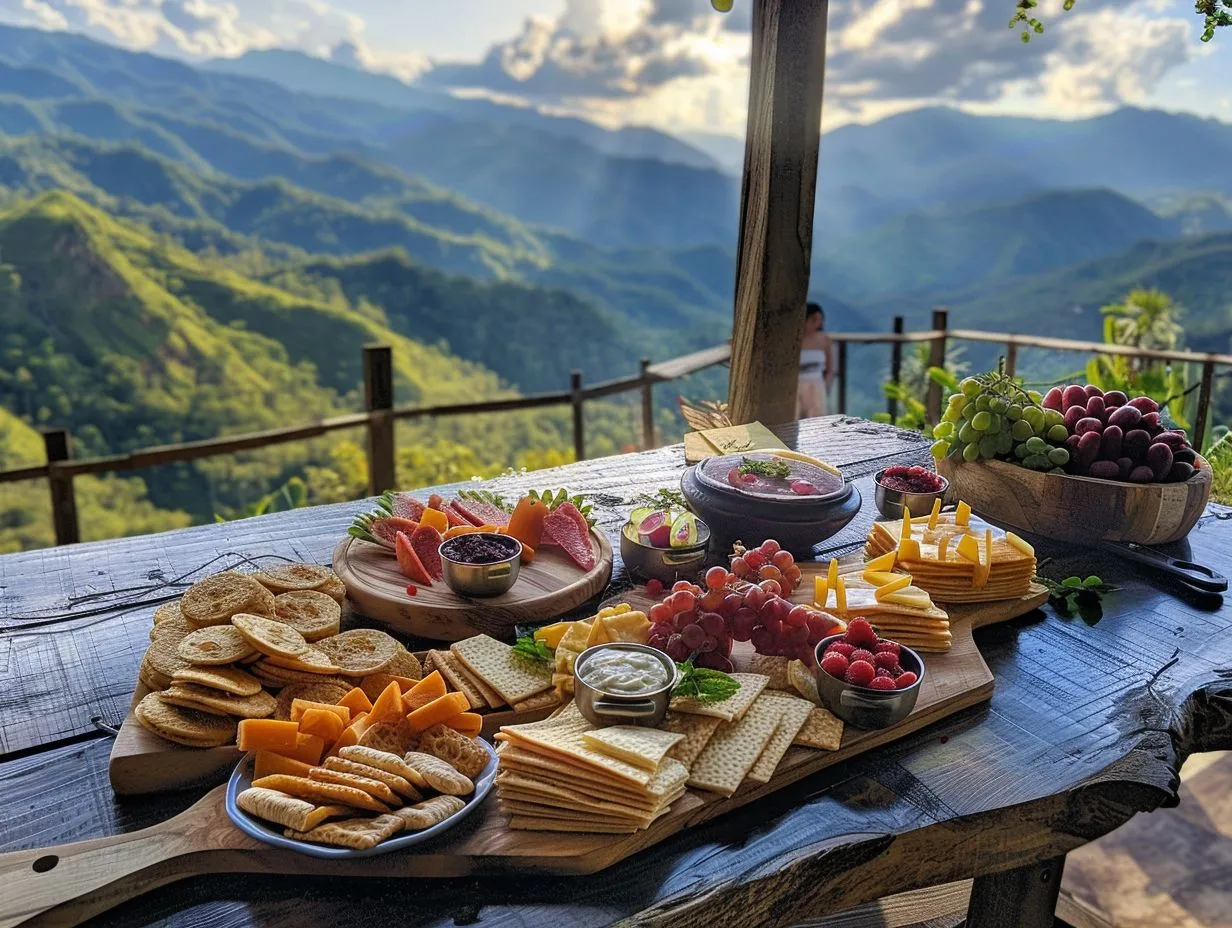
- Cold meats, cheese and crudites with gluten-free crackers, a proper picnic plate
Gluten-free dinners
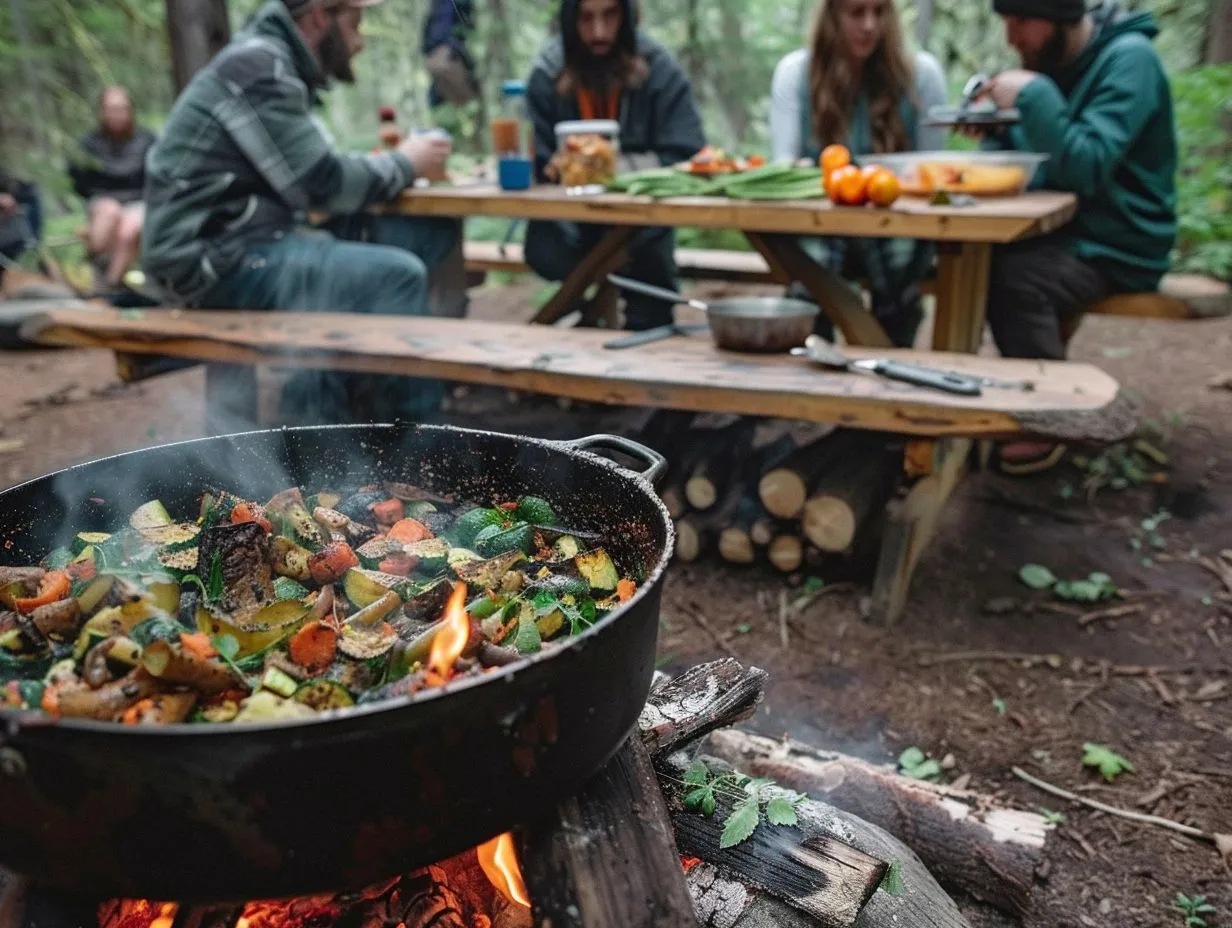
The best camp dinners are naturally gluten-free one-pots, which also happen to be the easiest to cook on a single burner. Each of these is safe as long as your stock, sauces and sausages are checked.
- Chilli con carne with beans and rice, using a gluten-free stock cube and plain tinned tomatoes
- Curry and rice, made from scratch with spices or a checked gluten-free paste
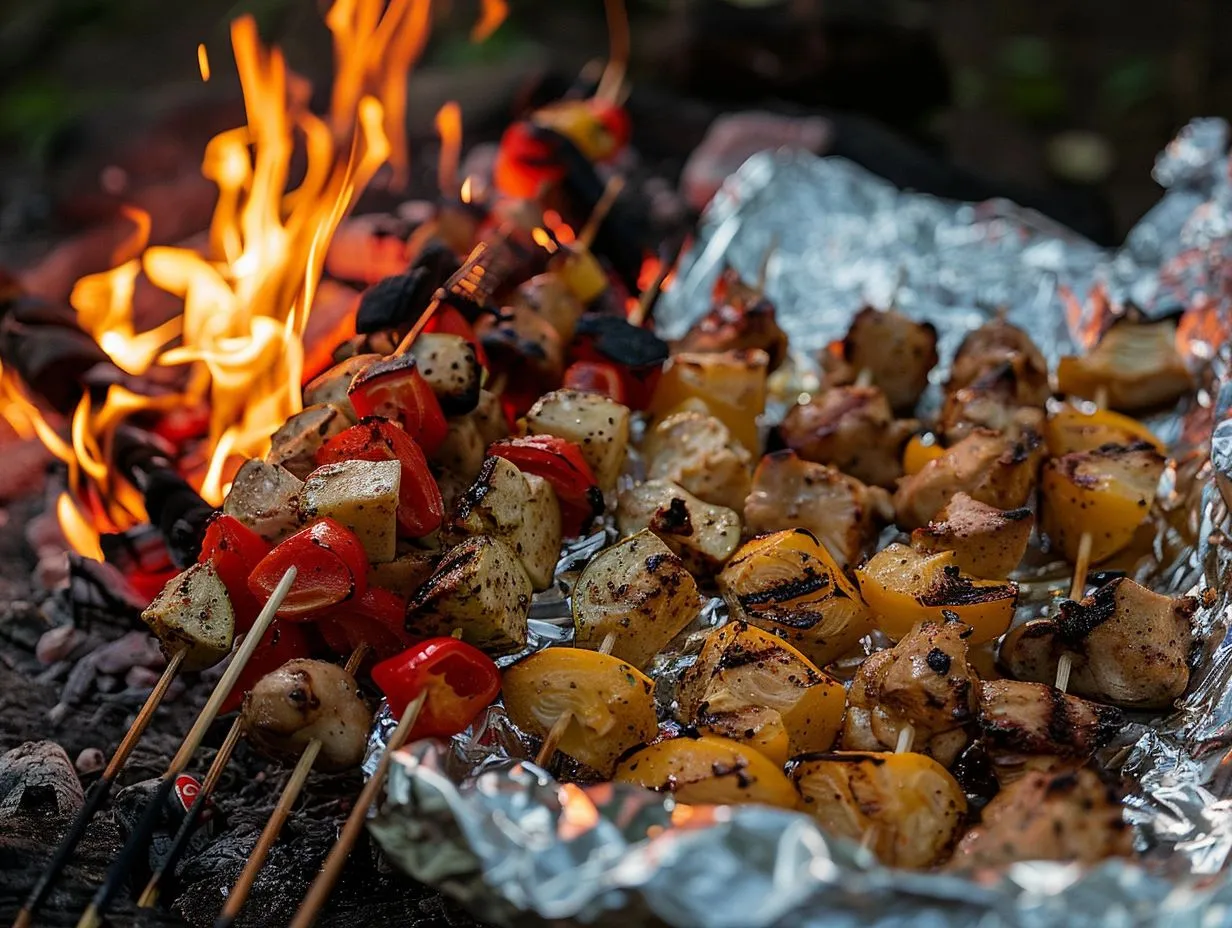
- Grilled meat or fish with vegetables, cooked over a clean grill or in a foil parcel
- Corn or rice pasta with a tomato sauce, a straight swap for wheat pasta
- A jacket potato bar, with bowls of cheese, beans, tuna and salad so everyone builds their own
If you are cooking for a mixed group, our guide to how to make your own camping meals shows how to prep components at home so everyone eats the same core dish. The same naturally gluten-free bases also suit plant-based campers, so the vegetarian campfire recipes and vegan camping meals guides are worth a look when you are feeding a crowd with different diets.
Gluten-free snacks
Snacks are where a gluten-free diet is genuinely easy, because most whole-food snacks contain no gluten at all. Stock the food box with these and nobody goes hungry between meals.
- Fresh and dried fruit, plus a homemade trail mix of nuts and seeds
- Gluten-free flapjack, made with certified oats, easy to bake ahead
- Popcorn, plain corn kernels popped in a lidded pan over the stove
- Cheese, olives and gluten-free crackers for something more substantial
Frequently asked questions
What can coeliacs eat while camping?
Plenty. Rice, potatoes, corn, beans, eggs, fresh meat and fish are all naturally gluten free and cook on a single stove. Build meals around these staples, check labels on sauces and stock, and keep gluten-free food sealed and separate.
Are oats gluten free for camping porridge?
Only if they are labelled gluten free. Standard oats are contaminated with wheat, barley and rye during processing. Coeliac UK says most coeliacs tolerate certified gluten-free oats, tested to 20 parts per million or less, but a small number stay sensitive.
How do I avoid cross-contamination at a campsite?
Cook gluten-free food first or in a separate pan, wash everything in hot soapy water, use clean oil and a clean grill, keep breadcrumbs out of shared spreads, and store gluten-free food sealed in its own labelled box above other food in the cool box.
Which camping foods secretly contain gluten?
Standard oats, stock cubes, gravy, many sausages and burgers, soy sauce and some condiments. These are the usual hidden sources. Read every label, choose gluten-free versions, and swap ordinary soy sauce for tamari.
Can I use a shared campsite barbecue if I am coeliac?
Only with care. A communal grill that has cooked burgers in buns or marinated meat carries gluten. Cook your food on clean foil or a clean section, or bring your own small grill or pan to be sure.
The short version
Gluten-free camping is straightforward because the best camp food, rice, potatoes, corn, beans, eggs and fresh meat and fish, is naturally gluten free already. Cook those, keep certified oats for breakfast, and read the label on stock, sausages and sauces.
For coeliacs the one thing that matters is contamination, so keep gluten-free food sealed and apart, use clean pans, oil and boards, and mind the shared grill. Get that right and you can eat brilliantly. Ready to book? Find your next pitch across the UK on Camping Sites in Britain.