How to make campfire coffee: methods, kit and ratios
· Updated
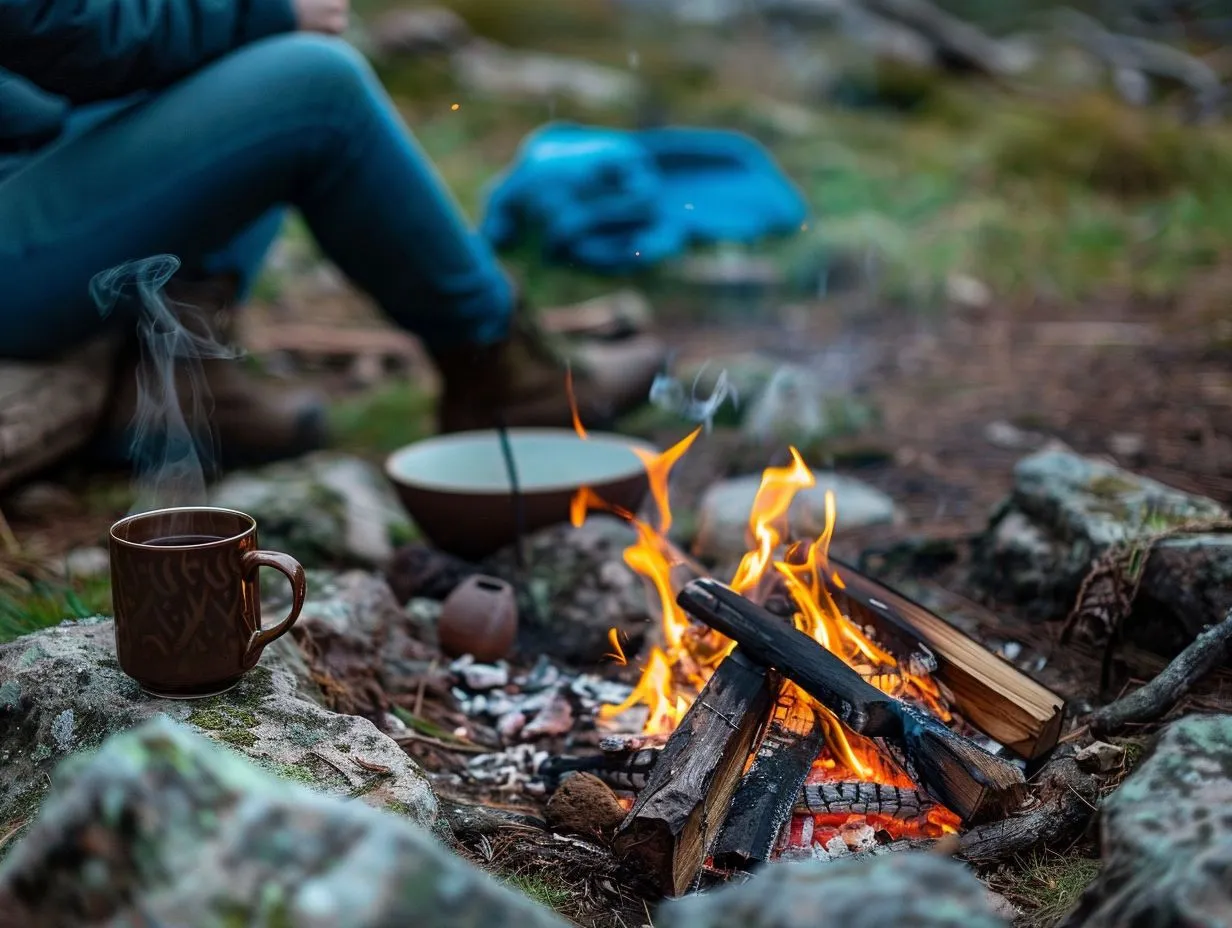
Good campfire coffee comes down to three things: the right ratio, water that is hot but not boiling, and a brewing method that suits how much faff you can be bothered with at 7am. Aim for roughly 60g of coffee per litre of water, or one to two tablespoons per mug, and pour water at 92 to 96C, just off the boil. Get those right and even a battered camping pot will turn out a proper cup.
The rest is about kit. Instant is fastest, a travel press is the easy crowd-pleaser, cowboy coffee needs nothing but a pot, and an AeroPress is the packable favourite that keeps coffee snobs happy. This guide ranks the main methods by faff and tells you exactly what to carry.
It sits within our wider guide to campfire cooking essentials, and if you are still choosing where to brew that first cup, Camping Sites in Britain lists thousands of pitches across the country.
Get the basics right first
Two numbers make or break the cup: strength and temperature. For strength, weigh if you can (60g of grounds per litre is a solid all-rounder), or measure by eye at one to two tablespoons of grounds per average mug. Go stronger for a robust dark roast, lighter for a delicate one.
For temperature, take the water off the heat just before it boils. Fully boiling water at 100C scalds the grounds and pulls out bitter, ashy flavours. You want it around 92 to 96C, which is the moment the kettle stops rumbling and settles down. No thermometer needed: lift it off the flame, count to 30, then pour.
A coarser grind is more forgiving outdoors. It filters more easily, is less likely to slip through a mesh, and is harder to over-extract. If you are grinding at home before you leave, ask for a medium-coarse grind and use it within a week or two.
The methods, ranked by faff
Every method below makes a genuinely good cup. The difference is weight, kit and effort, so pick the one that matches your trip. A comparison table follows if you want the short version.
Instant: the fastest
Instant is the quickest brew there is, and modern freeze-dried and speciality instant is far better than the bitter granules of old. Boil water, let it settle for half a minute, stir a teaspoon into your mug and you are done. There is nothing to filter and nothing to clean but the spoon.
It is the obvious choice for a fast-and-light backpacking morning or a pre-dawn start before a big walk. Carry single-serve sachets to keep it tidy, and look for speciality instant brands if standard jars leave you cold.
Travel press (cafetiere or French press): easy and good
A press gives you a rich, full-bodied cup with almost no skill required, which makes it the best all-rounder for car camping. Add coarse grounds, pour in water just off the boil, stir, wait four minutes, then push the plunger down slowly and pour.
Leave the glass cafetiere at home. A plastic or stainless steel travel press survives a rucksack and a dropped tailgate where glass shatters. Many double up as an insulated travel mug, so you brew and drink from the same vessel. The trade-off is a little more bulk than a sachet of instant, and grounds to deal with afterwards.
Cowboy coffee (the campfire pot): no kit needed
Cowboy coffee is the classic zero-equipment method: grounds go straight into the pot with the water, no filter at all. Bring water almost to the boil, take the pot off the heat, tip in your coarse grounds (about one tablespoon per mug), stir and let it steep for four minutes.
The trick is settling the grounds before you pour. Add a small splash of cold water down the side of the pot, which drops most of the grounds to the bottom, then pour slowly and steadily so the sediment stays put. A pinch of patience and a gentle hand beat any filter here. It is rough and ready, but done well it is a brilliant campfire cup with real character.
AeroPress: the camper's favourite
The AeroPress is the packable darling of campsite coffee, and for good reason: it is light, made of tough plastic that shrugs off knocks, and it makes a clean, smooth cup with next to no bitterness. Pop it on your mug, add a paper or metal filter, tip in grounds and hot water, stir, then press down with steady pressure over 20 to 30 seconds.
Clean-up is the party trick. Unscrew the cap and push the plunger the last inch, and the spent puck of grounds pops straight out into a bag or bin, leaving almost nothing to rinse. It weighs very little, so it earns its place even in a hiking pack.
Pour-over or filter: clean and precise
A pour-over makes the cleanest, brightest cup of the lot, and the kit packs flat. A collapsible silicone dripper folds down to nothing and sits on top of your mug; you just need paper filters to go with it. Add a filter, rinse it if you can, tip in medium-ground coffee, then pour the hot water slowly in circles and let it drip through.
It rewards a slow, steady pour, so it suits a relaxed morning more than a rushed one. Take enough paper filters for the trip and pack the used ones out with your grounds.
Moka pot (stovetop): proper strong coffee
A moka pot makes intense, near-espresso strength coffee on a gas stove, and it is a camping stalwart for a reason. Fill the base with water to the valve, pack the basket with fine to medium grounds without tamping, screw it together and set it on a low to medium flame. In a few minutes it gurgles as the coffee rises into the top chamber, and that is your signal to take it off.
It needs a stable stove rather than an open fire, and the aluminium gets hot, so handle it with a cloth. The reward is a small, punchy brew that stands up to milk if you are after something like a campsite flat white.
Portable espresso maker: real crema outdoors
A hand-pumped portable espresso maker delivers a genuine shot with crema wherever you pitch up, no mains power required. You add a dose of fine grounds and hot water, then pump a lever or plunger by hand to build the pressure. It is the most involved option here and the priciest, but for espresso lovers it is the closest thing to a home machine in a rucksack. We have rounded up the best models in our guide to the best portable espresso makers.
Campfire coffee methods compared
Here is how the main methods stack up on effort, kit and the kind of cup they produce.
| Method | Faff | Kit to pack | Cup you get | Best for |
|---|---|---|---|---|
| Instant | Lowest | Sachets, spoon | Quick and clean | Fast-and-light mornings |
| Travel press | Low | Plastic or steel press | Rich, full-bodied | Car camping all-rounder |
| Cowboy coffee | Low to medium | Just a pot | Rustic, characterful | Minimal kit, open fire |
| AeroPress | Medium | AeroPress, filters | Smooth, low bitterness | Backpackers and coffee fans |
| Pour-over | Medium | Collapsible dripper, papers | Clean, bright | Slow, relaxed mornings |
| Moka pot | Medium | Moka pot, gas stove | Strong, near-espresso | Strong coffee on a stove |
| Portable espresso | Highest | Hand espresso maker | Espresso with crema | Espresso diehards |
Kit and stove to carry
Beyond the brewer, a reliable heat source is the one thing you cannot skip. An open campfire works for cowboy coffee and a pot, but a gas or liquid-fuel stove gives you the control a moka pot and a careful pour-over want. If you are choosing one, our guide to the best lightweight cook stoves covers the packable options.
The short kit list for most people is a stove or fire, a kettle or pot, your chosen brewer, a heat-resistant mug and a coarse grind of coffee. A grinder is a luxury but grinding fresh does make a real difference. For the wider setup, from pots to pot-grips, see our essential tools for campsite cooking.
Clean-up and leave no trace
Used grounds are litter, so treat them like it. Never tip coffee or wet grounds into a stream, river or lake: they foul the water and the caffeine and oils are bad news for aquatic life. Keep them out of watercourses entirely.
The tidiest approach is to pack grounds out in a bag with the rest of your rubbish. If you must dispose of them on site, let them cool completely and scatter them thinly and well away from water, paths and pitches, in line with the Countryside Code and Leave No Trace. Paper filters and used AeroPress pucks go in your rubbish bag, not the fire pit, where they simply smoulder and leave a mess for the next camper.
Rinse your kit with a splash of water away from any watercourse rather than scrubbing it in a stream. A little care keeps pitches pleasant for everyone who comes after you.
Frequently asked questions
How much coffee do I use per mug?
Use one to two tablespoons of coarse grounds per average mug, or weigh it at roughly 60g per litre of water. Start with one tablespoon and add more if you like it stronger. Steeping longer also builds strength.
Should the water be boiling?
No. Fully boiling water at 100C scalds the grounds and tastes bitter. Take the kettle off the heat just before it boils, aiming for about 92 to 96C. In practice, lift it off the flame and count to 30 before pouring.
How do I make cowboy coffee without a filter?
Tip coarse grounds straight into hot water in the pot, take it off the heat and steep for four minutes. Then add a small splash of cold water down the side to settle the grounds to the bottom, and pour slowly so the sediment stays put.
What is the best coffee maker for camping?
The AeroPress is the popular all-rounder: light, near unbreakable, smooth-tasting and quick to clean. For car camping a plastic or steel travel press is hard to beat, and for the least kit of all, cowboy coffee needs nothing but a pot.
Can I make campfire coffee without a fire or stove?
Yes, make cold brew. Stir coarse grounds into cold water in a sealed jar or bottle, roughly one part coffee to eight parts water, and leave it overnight. Strain it through a filter or fine mesh in the morning for a smooth, low-acidity cup.
What grind should I use outdoors?
A medium-coarse grind is the most forgiving for presses, cowboy coffee and pour-overs, as it filters cleanly and resists over-extraction. Use a finer grind only for a moka pot or portable espresso maker, which need it to build pressure.
The short version
Aim for 60g of coffee per litre, or one to two tablespoons per mug, and pour water at 92 to 96C rather than a rolling boil. Instant is fastest, a travel press or AeroPress is the sweet spot for most campers, and cowboy coffee needs nothing but a pot and a splash of cold water to settle the grounds. Whatever you brew, pack the grounds out and keep them away from water. For the wider kitchen, head back to our guide to campfire cooking essentials, or find your next pitch in the campsite directory.