
Campsite Etiquette in the UK: The Dos and Don'ts
· Updated
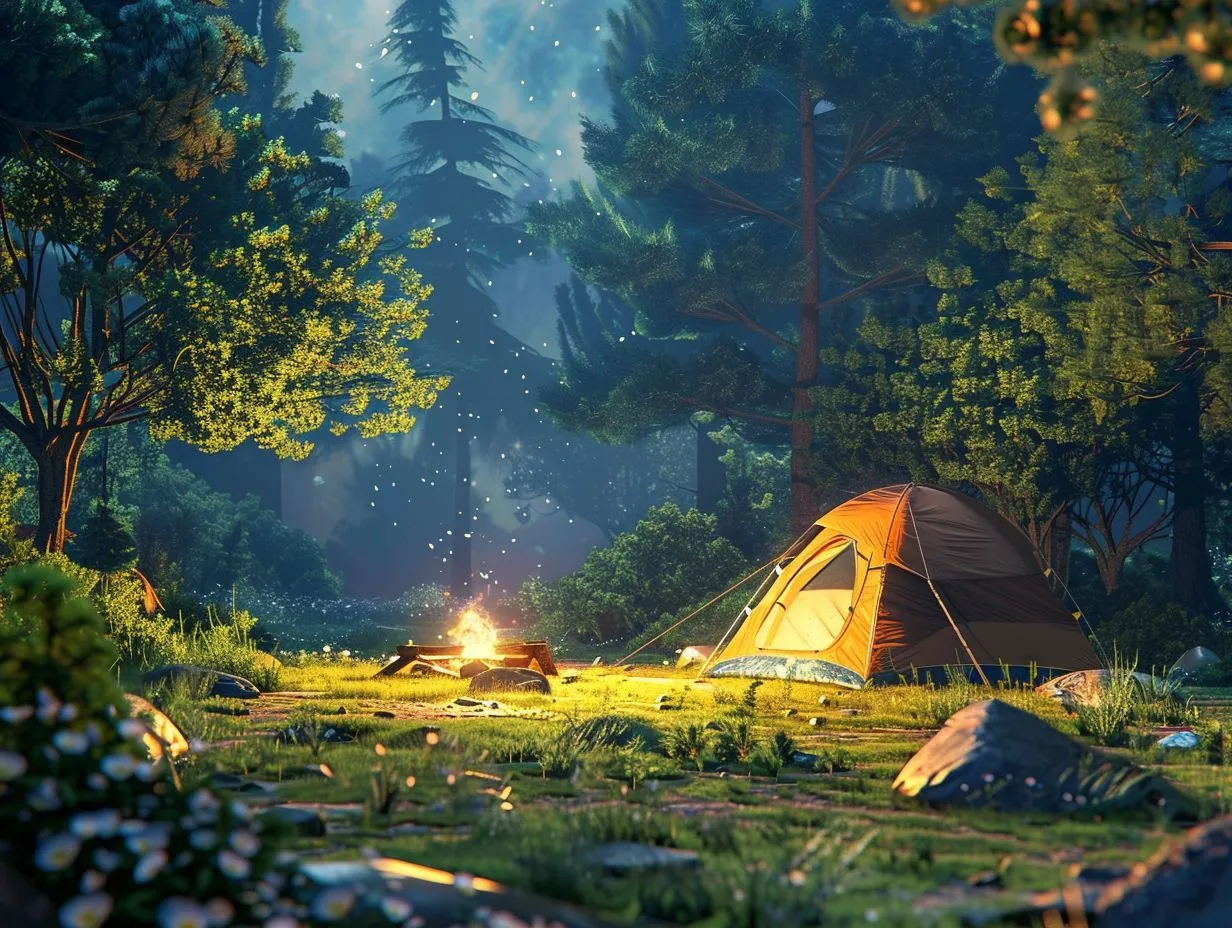
Good campsite etiquette in Britain comes down to one idea: keep your fun from becoming your neighbour's problem. Respect the quiet hours, keep noise and lights down, give every pitch its space, clean up after yourself and your dog, and never break the six-metre fire gap between units. Do that and you will be a welcome camper on any site in the country.
None of these rules are posted at the gate of every site, which is exactly why they catch newcomers out. This guide is part of our advice on planning your first camping trip, and it sits alongside the thousands of pitches you can find and compare on Camping Sites in Britain.
The dos and don'ts at a glance
Here is the whole etiquette code on one screen. Everything below explains why each line matters and how to get it right.
| Do | Don't |
|---|---|
| Keep it quiet between 10pm and 7am | Don't run a generator or play music late |
| Walk around the edge of the field | Don't cut through someone else's pitch |
| Keep your dog on a lead and bag every mess | Don't let a dog roam, bark or foul the grass |
| Leave your pitch and the shower block as you found them | Don't leave rubbish, food scraps or washing-up behind |
| Angle torches and lanterns down | Don't shine bright lights into neighbouring tents |
| Leave the full 6 metres between units | Don't squeeze in tight to fill a gap |
| Take everything home when wild camping | Don't light open fires or leave a trace |
Respect the quiet hours
Most UK sites set quiet hours from 10pm to 7am, and the rule behind them is simple: after 10pm, anyone in a neighbouring tent should be able to sleep. Sound carries a long way across an open field at night, and canvas stops none of it, so what feels like a low chat by your fire lands clearly three pitches away.
In practice that means no loud music, no generators running late, no shouting across the field, and no slamming car doors or crunching through the gravel with a trolley at midnight. If you arrive after dark, pitch quietly and save the mallet for the morning. If you are the last ones up, take the volume down well before 10pm rather than exactly on it.
Keep noise and lights down through the day too
Quiet hours are the hard line, but consideration runs from breakfast to bedtime. A Bluetooth speaker that sounds fine at your table is an imposition on everyone downwind of it, so use headphones if you want your own soundtrack and keep any shared music low and brief. Camping is one of the few places people come to for actual quiet, and most of your neighbours chose the site for that reason.
Lights matter just as much after dusk. A bright lantern or head torch swung around a dark field shines straight through the neighbouring tents, and a car left on full beam while you unpack wakes half the row. Angle lanterns downward, drop your head torch to its low setting when you are near other pitches, and kill the headlights as soon as you have parked. If you are camping in a group, our tips on planning a camping trip with friends cover keeping a larger party from turning into the loud pitch.
Do not walk through other people's pitches
A pitch is somebody's temporary home for the weekend, and walking through it is the fastest way to irritate a neighbour. Take the long way round the edge of the field to the toilets or the shop, even when a diagonal across two pitches would save you 20 seconds.
Guy ropes are the practical reason as much as the courtesy one. They are almost invisible at dusk, they are staked out precisely to hold a tent up, and a trip over one can bring a porch down or twist an ankle. Keep children and dogs to the paths and shared areas, and if you must pass close to a pitch, give the guylines a wide berth.
Give every unit its space: the six-metre rule
Leave at least 6 metres between your unit and the next one, because that gap is a fire-safety requirement rather than a suggestion. The Camping and Caravanning Club and local site licences both operate a "six metre rule", under which units, excluding their guy ropes, should sit 6 metres apart so that a fire cannot jump from one tent or caravan to the next while people get out and help arrives.
On a marked site the spacing is done for you, so the etiquette is simply not to creep over it: do not pitch a small tent in the gap between two caravans to grab a better spot, and do not park so that your car closes the distance to a neighbour. On a field with no marked pitches, pace it out yourself and keep your stove, barbecue and campfire well clear of anyone else's canvas. You can confirm the standard on the Camping and Caravanning Club certificated sites policy.
Keep dogs under control and clean up after them
Keep your dog on a lead around the pitch and the site, and bag and bin every mess the moment it happens. Not everyone on a site is comfortable around dogs, plenty of pitches have children or other dogs, and a loose dog that wanders into a neighbour's awning or barks through the evening is one of the most common causes of friction on a campsite.
Check the site's dog rules when you book, because some sites limit numbers, ban certain breeds or keep dog-free areas. Do not leave a dog alone at the pitch to bark while you head to the pub, and keep it away from other people's food and pitches. The same principle carries into the countryside beyond the site, where the Countryside Code asks you to keep dogs under control and in sight, and on a lead around livestock.
Leave the pitch and the facilities clean
Leave your pitch and the shared facilities exactly as you would want to find them. Pack out everything you brought in, including food scraps and biodegradable bits, both because litter spoils the next camper's stay and because scraps draw in wasps, gulls, mice and foxes for everyone nearby.
The shower block and washing-up area are where etiquette is most visible. Rinse the sink after washing up, clear your hair from the plughole and shower tray, do not leave toiletries hogging a cubicle, and keep your time reasonable when there is a queue. Over a longer trip, our tips on maintaining personal hygiene while camping help you stay clean without monopolising the facilities. Getting the basics packed before you leave home also helps, and our pre-camping checklist covers the bin bags, washing-up kit and dog waste bags that make tidiness easy.
Follow the Countryside Code when you wild camp
Away from a managed site, the Countryside Code and the principle of leaving no trace take over from the site rules. The Countryside Code sets out three ideas for England and Wales: respect everyone, protect the environment, and enjoy the outdoors. In practice that means taking all your litter home, keeping dogs under control, leaving gates as you find them, using a stove rather than lighting open fires, and pitching out of sight for a single night before moving on.
Remember that wild camping is not a general right across most of Britain. In England you need the landowner's permission everywhere except Dartmoor, where the right was confirmed by the Supreme Court in May 2025, while Scotland allows responsible wild camping under its access legislation. Read the full guidance on the gov.uk Countryside Code before you head off the beaten track.
Frequently asked questions
What are the quiet hours at UK campsites?
Quiet hours at most UK campsites run from 10pm to 7am. During that window you should avoid loud music, generators, raised voices and slamming car doors, so that campers in neighbouring tents can sleep. Some sites set their own times, so check on arrival.
What is the six-metre rule when camping?
The six-metre rule is a fire-safety standard requiring at least 6 metres between neighbouring units, measured excluding guy ropes. The gap stops fire spreading between tents and caravans and gives people room to escape. It is built into UK site licences and club site policies.
Is it rude to walk through someone else's pitch?
Yes. A pitch is treated as a private space for the length of the stay, so you should walk around the edge of the field rather than cut across. It is also safer, because guy ropes and pegs are easy to trip over, especially after dark.
Do I have to keep my dog on a lead at a campsite?
Most UK campsites require dogs to be kept on a lead around the site, and all expect you to bag and bin any mess immediately. Check each site's dog policy when you book, as some limit numbers or keep dog-free areas, and never leave a dog barking alone at the pitch.
Can I use a generator at a campsite?
Only where the site allows it, and never during quiet hours. Many sites ban generators outright because of the noise and fumes, so check before you rely on one. If yours is permitted, run it briefly in the daytime and keep it well away from other pitches.
How do I leave no trace when wild camping?
Take everything home, including food scraps, use a stove rather than an open fire, and pitch out of sight for one night before moving on. Bury human waste well away from water, leave gates and walls as you find them, and follow the Countryside Code throughout.
The short version
Keep quiet after 10pm, keep your lights and voices down, give every pitch its space and its full six metres, clean up after yourself and your dog, and leave the field better than you found it. Get those right and the rest of campsite etiquette follows naturally.
When you are ready to book, browse and compare sites across the country on our campsite listings, or read the rest of our guide to planning your first camping trip.