Kayaking in the Lake District: the best lakes and where to camp
· Updated
The Lake District has 16 major lakes and dozens of smaller tarns, and you can paddle a kayak or canoe on most of them. It is a UNESCO World Heritage Site in Cumbria, and the water is the whole point of the place. The best paddling for beginners is Derwentwater near Keswick, the most dramatic is Ullswater, and the quietest are Buttermere and Crummock Water, where powerboats are banned entirely.
Two things trip people up before they even launch. Bassenthwaite Lake needs a paid permit for every craft, kayaks included, and Windermere is busy with powerboats and has speed zones you should understand. Get those sorted and the rest of the national park is open water and open air.
This guide sits alongside our roundup of campsites with water sports, and it is published by Camping Sites in Britain, where you can find and compare campsites, caravan parks and glamping across the UK.
The best Lake District lakes to kayak
Each lake suits a different paddler, so pick by what you want from the day rather than which one is closest. Here is what the main ones offer and who they suit.
| Lake | Best for | Notes |
|---|---|---|
| Derwentwater | Beginners and families | Sheltered, four islands, hire near Keswick |
| Ullswater | A long, scenic paddle | Shares the water with the Ullswater Steamers |
| Coniston Water | Calm water with history | Swallows and Amazons and Donald Campbell country |
| Windermere | Big open water, hire centres | Busy with powerboats, know the speed zones |
| Buttermere and Crummock Water | Peace and quiet | No powerboats, small and calm |
| Wast Water | Remote, experienced paddlers | England's deepest lake, cold and exposed |
Derwentwater
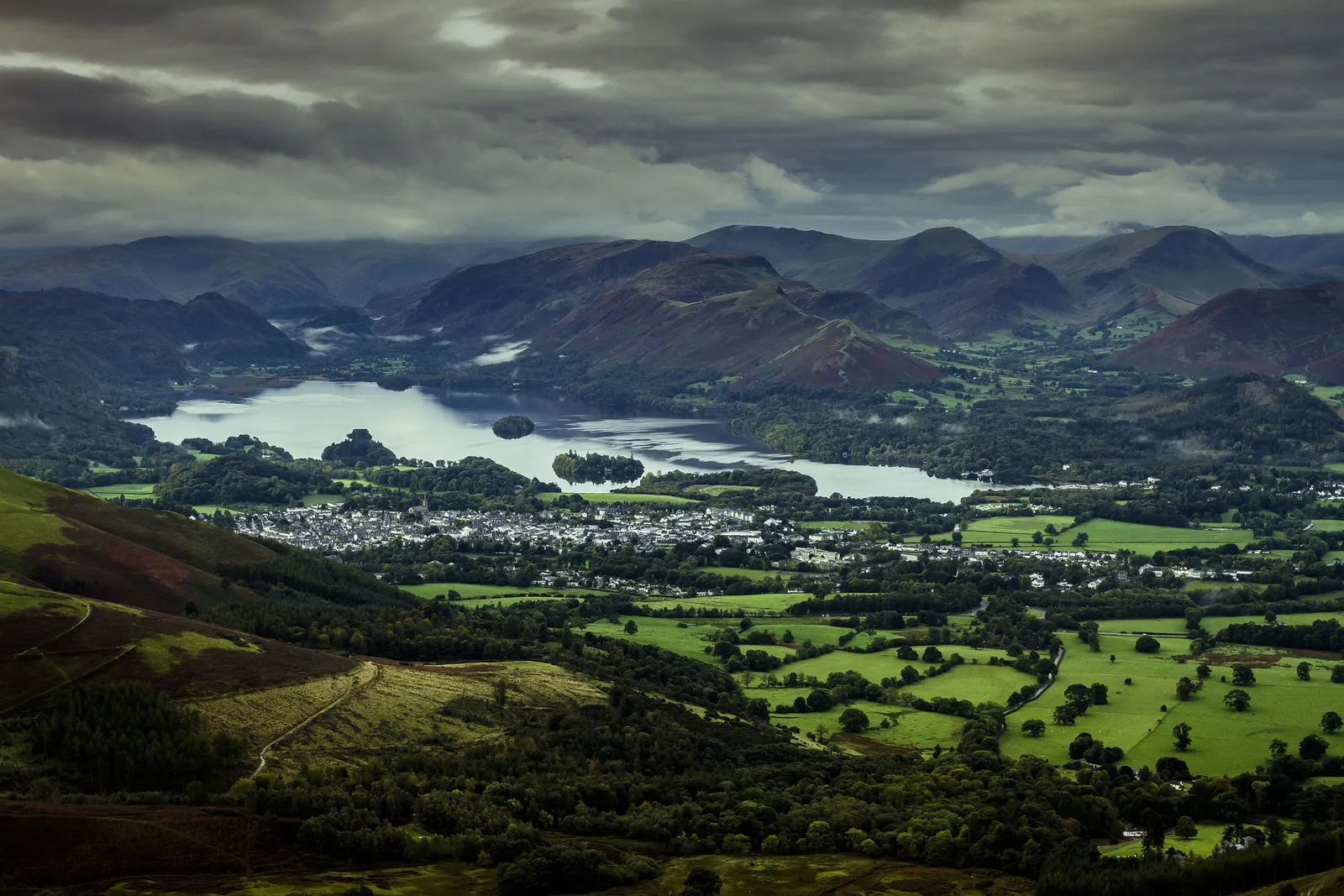
Derwentwater is the friendliest lake in the national park for a first paddle. It sits right beside Keswick, it is broad and sheltered, and it has four wooded islands to circle and land on. Paddle hire is easy to come by at the Keswick end, so you can turn up without a boat and be on the water within the hour. On a still morning it is one of the finest places to paddle in England.
Ullswater
Ullswater is long, curved and dramatic, running roughly nine miles between Pooley Bridge and Glenridding under proper mountains. It rewards a longer trip, but you share the water with the Ullswater Steamers, the historic passenger boats that run the length of the lake. Keep well clear of their route, pass behind them, and stay aware near the piers at Glenridding, Howtown and Pooley Bridge.
Coniston Water
Coniston Water is calm, straight and steeped in stories. This is the lake of Arthur Ransome's Swallows and Amazons, and it is where Donald Campbell set water speed records in Bluebird before his fatal attempt in 1967. The water is usually gentle, which makes it a good choice for a relaxed day, and the Coniston end has hire and launching.
Windermere
Windermere is England's largest lake at around 10.5 miles long, with plenty of hire centres and launch points along its shores. It is also the busiest, shared with powerboats, sailing boats and the ferries. A general speed limit of 10 knots applies to power-driven vessels across the lake, dropping to 6 knots in restricted zones at the northern and southern ends and around Bowness Bay, under the Windermere byelaws (lakedistrict.gov.uk). Kayaks do not need to register, but stay near the shore, keep out of the main channels, and be visible.
Buttermere, Crummock Water and Wast Water
For quiet water, head west. Buttermere and Crummock Water are small, calm and free of powerboats, which makes them lovely places to potter in a canoe surrounded by fells. Wast Water is a different proposition altogether: it is remote, exposed and, at around 74 metres, England's deepest lake. The water is very cold and the wind funnels down the valley, so save it for settled days and experienced paddlers.
Permits, licences and the rules that matter
There is no single paddle licence that covers the whole Lake District, because the lakes are managed separately, but two of them have specific requirements you must sort before you launch. On most other lakes you can paddle freely, though some launch points and car parks charge a small fee.
- Bassenthwaite Lake needs a permit for every unpowered craft, including kayaks, canoes and paddleboards. It costs £7 for one day, £20 for seven days or £100 for a year, and under 16s go free (lakedistrict.gov.uk).
- Windermere requires registration only for powered boats, which costs £48 for a new registration. Kayaks and canoes are exempt, but the byelaws and speed zones still apply to everyone on the water.
British Canoeing membership includes a Waterways Licence that covers much of England's canal and river network, which is worth having if you paddle elsewhere in the country, but it does not automatically cover the privately managed Lake District lakes. The safest move is to check the launch point before you go. The national park's on the water guidance is the primary source, and the Lake Ranger team can confirm access for any specific lake.
Staying safe on the water
Cold water and mountain weather are the two real hazards here, and both are easy to underestimate on a sunny day. The lakes are deep and stay cold all year, so a fall in can bring on cold water shock even in summer. Wear a buoyancy aid at all times, not stowed in the boat, as the national park advises for every water sport.
Lake District weather changes fast, and wind can whip a flat lake into short, steep waves within minutes, especially on the larger, more exposed water like Windermere, Ullswater and Wast Water. Check the mountain forecast, stay close to the shore, and paddle with someone rather than alone. Give way to the steamers, ferries and sailing boats, pass behind larger vessels, and keep clear of anglers. If you are new to open water, our guide to kayaking and camping in the UK covers the basics of planning a safe trip.
Where to camp beside the lakes
The best paddling trips start from a pitch within walking distance of a launch. The Lake District has campsites right by the water and in the valleys that feed it, so you can be on the lake before the day boats arrive.
- Around Derwentwater and Keswick you will find sites close to the lake shore, ideal for an early launch onto the islands.
- Around Ullswater, sites near Glenridding and Pooley Bridge put you at either end of that long, dramatic paddle.
- Great Langdale is a classic valley basecamp under the Langdale Pikes, handy for the central lakes.
- Wasdale sits beneath Scafell Pike at the head of Wast Water, for paddlers heading to England's deepest and most remote lake.
Browse pitches across the region on our directory of Lake District campsites in Cumbria. If you are bringing your own boat, our guide to how to pack a kayak will help you load the car without leaving half your kit behind. And when the paddling is done, plenty of these lakes double as brilliant wild swimming spots.
Frequently asked questions
Do you need a licence to kayak in the Lake District?
Not across the whole national park. There is no single paddle licence for every lake. Bassenthwaite Lake needs a paid permit for kayaks and canoes, and most other lakes are free to paddle, though some launch points charge a small fee. Always check the individual lake before you go.
Which is the best lake for beginners?
Derwentwater near Keswick. It is sheltered, broad and has islands to explore, plus easy paddle hire at the Keswick end. Coniston Water and Buttermere are also calm and beginner-friendly, and all three avoid the powerboat traffic you get on Windermere.
Can you kayak on Windermere?
Yes. Kayaks and canoes do not need to register, unlike powered boats. Windermere is England's largest lake with several hire centres, but it is busy, so keep near the shore, stay out of the main channels, and give way to ferries and sailing boats.
Do you need a wetsuit to kayak in the Lake District?
Not always, but the water is cold and deep all year, so dress for immersion rather than the air temperature. A wetsuit or quick-drying layers, plus a buoyancy aid worn at all times, are sensible in every season. In winter, treat it as cold water paddling.
Where can you hire a kayak in the Lake District?
Hire is easy to find at the main lakes, including Derwentwater at Keswick, Windermere, Coniston and Ullswater at Glenridding. Turning up and hiring is the simplest way to try a lake before committing to your own boat.
The short version
Start on Derwentwater if you are new, save Wast Water for a calm day and some experience, and sort the Bassenthwaite permit and Windermere byelaws before you launch. Wear a buoyancy aid, watch the weather, and give the steamers a wide berth. Find your basecamp among our Lake District campsites and make a weekend of it.