Campsites With Water Sports in the UK: Surf, Paddle, Swim and Fish
· Updated
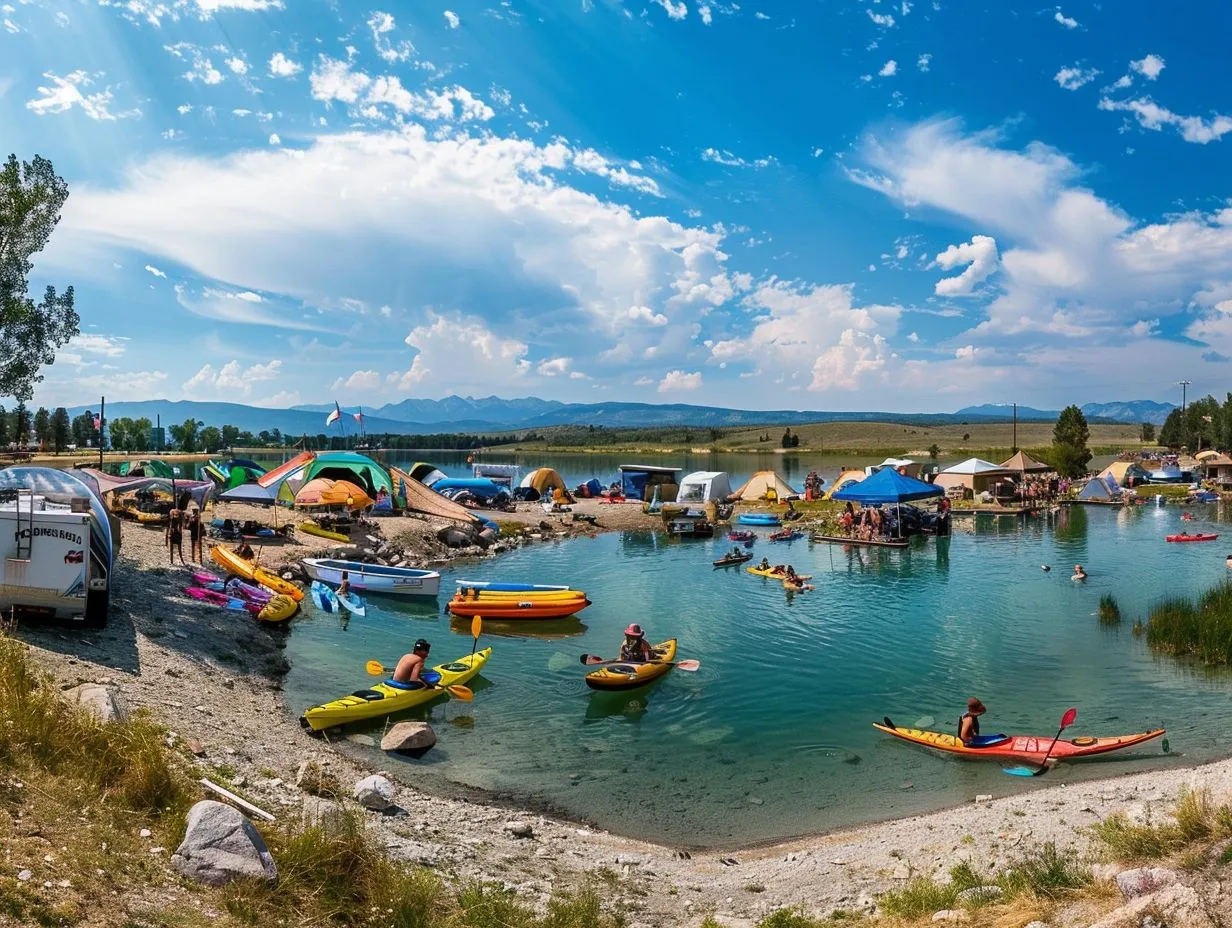
The UK has more good water on its doorstep than almost anywhere in Europe: 11,000 miles of coastline, thousands of lakes and lochs, and rivers you can paddle for days. Pitch a tent near the right stretch and you can surf before breakfast, paddle a canoe all afternoon, and swim in a river pool as the light goes. This is where to do each of those, what you need to bring, and the two things that keep it safe.
Water sports split cleanly into salt and fresh. The coast gives you surfing, kite surfing and sea kayaking; inland lakes and rivers give you canoeing, paddleboarding, wild swimming and fishing. The table below sorts the lot by where it happens, the best-known UK spots, and whether you need a licence.
It is the water activities guide from Camping Sites in Britain, where you can find and compare campsites, caravan parks and glamping across the UK.
Water sports at a glance
| Activity | Where | Best-known UK spots | Licence needed? |
|---|---|---|---|
| Surfing | Coast | Fistral, Croyde, Woolacombe | No |
| Kite surfing | Coast, shallow bays | Camber Sands, Hunstanton, West Wittering | No |
| Sea kayaking | Coast | Pembrokeshire, Anglesey, Scottish sea lochs | No |
| Canoeing and kayaking | Rivers, lakes | River Wye, Lake District, the Norfolk Broads | Yes on most rivers and canals in England and Wales |
| Paddleboarding | Lakes, calm rivers, sheltered coast | Derwentwater, Loch Lomond, Studland | Yes on licensed inland waters |
| Wild swimming | Rivers, lakes, tarns, coast | River Dart, Fairy Pools, Llyn Gwynant | No |
| Fishing | Rivers, stillwaters, coast | Rivers and coarse lakes nationwide | Yes, an Environment Agency rod licence for freshwater |
Use that as a shortlist, then match it to a pitch. We link the full guide for each activity in the sections below.
Surfing
The best surf in England is on the north Devon and Cornwall coast, where the Atlantic swell lands cleanest. Fistral in Newquay is the country's most famous break and holds a national competition every summer; Croyde and Woolacombe in Devon are the pick for consistent, beginner-friendly beach breaks with surf schools on the sand. Wales adds Rhossili on the Gower, and Scotland has world-class cold-water waves at Thurso East.
Camp within walking distance of the beach and you can read the surf from your pitch and go when it is working rather than when the car park allows. Cornwall around Newquay and the north coast and the beaches of north Devon have the densest cluster of surf-side sites in the country. A 5mm wetsuit, boots, and often a hood are standard year-round; UK sea temperatures sit around 12°C even in summer.
Read the full guide: the best campsites for surfing enthusiasts.
Kite surfing
Kite surfing needs a wide, flat beach and a steady cross-shore wind, which is why the same handful of spots come up every time. Camber Sands in East Sussex has huge tidal sand flats and is the south east's home of the sport; Hunstanton in Norfolk faces west across The Wash and works on the prevailing wind; West Wittering in West Sussex is the classic beginner venue. Never launch in an offshore wind, which will blow you out to sea.
These beaches are backed by good camping, though the region slugs vary, so browse our full campsite listings to pitch near your chosen launch. Kite surfing is powerful and needs proper instruction; do not learn it from a video.
Read the full guide: the best campsites for kite surfing.
Canoeing and kayaking
The finest canoe journey in Britain is the River Wye, roughly 100 miles from Hereford to Chepstow, with a public right of navigation on much of the lower river and riverside campsites spaced for two, three or five-day trips. For lake paddling, the Lake District is unmatched: Derwentwater, Coniston Water and Ullswater are all open to canoes and kayaks, ringed by campsites, and calm enough for families.
Sea kayaking is a different discipline again, with the Pembrokeshire coast, Anglesey and the Scottish sea lochs offering the best of it for paddlers with the skills and the kit. Wherever you launch, a buoyancy aid is not optional.
Several of our guides cover this in depth. Start with kayaking and camping in the UK for the basics, then the best canoe camping routes in the UK for multi-day trips like the Wye. For lake paddling among the fells, read our guide to kayaking in the Lake District, and if you are carrying a boat to a wild pitch, how to pack a kayak for camping saves you a soaking. The best sites cluster in the Lake District and Cumbria and in Pembrokeshire.
Paddleboarding
Stand-up paddleboarding is the fastest way into water sports because the kit is cheap, packs into a rucksack, and works on any calm water. Flat lakes are ideal for learning: Derwentwater in the Lake District, Loch Lomond in Scotland, and Ullswater are all popular, as are slow lowland rivers and sheltered coastal spots like Studland in Dorset on a settled day.
An inflatable board, a pump, a leash and a buoyancy aid are the whole outfit, which is why so many campsites now rent them by the hour. Keep to inland water while you learn, and never take an inflatable out in an offshore wind. On licensed rivers and canals in England and Wales you need a waterways licence, covered further down.
Wild swimming
Open-water swimming has boomed, and Britain has some of the best spots in Europe. The River Dart in Devon, the Fairy Pools on Skye, and Llyn Gwynant in Snowdonia are classic freshwater swims; the tarns of the Lake District and the plunge pools below Welsh waterfalls reward a short walk from the tent. A campsite on a lake or river gives you the thing that makes wild swimming brilliant, which is being in the water at dawn before anyone else.
Cold water is the whole point and the whole risk. Enter slowly, never jump into water you have not checked for depth and obstacles, and know that even in July most UK lakes and rivers sit well below 15°C. Snowdonia's swims are around Gwynedd, and the Lakeland tarns sit above the valley campsites of Cumbria.
Read the full guide: wild swimming spots near campsites.
Fishing
Fishing is the water sport you can do from the bank of almost any campsite lake or river, and many sites have their own coarse fishing waters or day-ticket access. Rivers hold trout, grayling and coarse species; commercial stillwaters are stocked for carp and are the easiest place to start. To fish for salmon, trout, freshwater fish or eels anywhere in England and Wales, you need an Environment Agency rod licence first.
Fish responsibly and the fishery stays healthy for the next camper: barbless hooks, a proper landing net, and returning coarse fish carefully all matter. Our guide to sustainable fishing while camping covers catch and release and the rules on close seasons.
Read the full guide: the best fishing spots near campsites.
Camping by the water itself
A pitch beside a river or stream is the water sports base most people actually want, with the paddle, the swim and the fishing spot all a few steps from the tent. Riverside sites cluster along the Wye, the Dart, the rivers of the Yorkshire Dales and the lochside meadows of Scotland, and the good ones book up months ahead for summer weekends.
Pitch above the flood line, never in the lowest corner of a riverside field, and check the forecast upstream as well as overhead, because rivers rise fast after rain in the hills. The Dales sites are in North Yorkshire, and Scotland's lochside camping is strongest in the Highlands.
Read the full guide: camping near Britain's rivers and streams.
Licences: what you need before you launch
Two activities need paperwork, and both are quick to sort online. Fishing needs a rod licence; paddling needs a waterways licence on most inland water in England and Wales.
For fishing, you need an Environment Agency rod licence to fish for salmon, trout, freshwater fish, smelt or eels in England and Wales. A 12-month coarse, trout and eel licence covering up to two rods costs £36.80, with one-day (£7.30) and eight-day (£14.70) options for a short trip. You need one from the age of 13; children under 13 do not need a licence, and a junior licence for those aged 13 to 16 is free. Buy it from the official gov.uk rod fishing licence page.
For paddling, you need a waterways licence to canoe, kayak or paddleboard on most rivers and canals in England and Wales, because a paddlecraft counts as a boat. The simplest route is an "On the Water" membership from British Canoeing (Paddle UK), which bundles a licence covering the Canal and River Trust, Environment Agency, Broads Authority and other navigations into one card. Scotland is different: under the Land Reform (Scotland) Act 2003 and the Scottish Outdoor Access Code there is a right of responsible access to inland water, so no paddling licence is required. Check the current rules on the British Canoeing waterways licence page.
Water safety: the two things that matter most
Cold water shock is the single biggest danger in UK water, and it catches strong swimmers as easily as weak ones. Water below 15°C, which covers almost every UK lake, river and beach for most of the year, triggers an involuntary gasp and a racing heart the moment you go under. The danger passes in 60 to 90 seconds if you do not panic and do not try to swim hard against it.
The RNLI's advice for anyone who ends up in cold water unexpectedly is Float to Live: tilt your head back with your ears in the water, relax, and spread your arms and legs, letting the water hold you until the cold water shock passes and your breathing settles. Only then swim to safety or call for help. This is the one piece of safety knowledge every camper near water should have. Read it in full on the RNLI Float to Live page.
- Wear a buoyancy aid for all paddling, whatever your ability. It keeps you at the surface long enough to recover from cold water shock.
- Check the tide and the wind before any coastal activity. An offshore wind will carry an inflatable or a beginner kite out to sea in minutes.
- Never swim or paddle alone in open water, and tell someone your plan and your return time.
- Enter cold water slowly and acclimatise; never jump or dive into water you have not checked for depth and obstacles.
- At the coast, call 999 and ask for the Coastguard. Inland, call 999 for the fire service or ambulance.
Which water sport should you choose?
Match the activity to your group and your nearest water. Surfing and kite surfing need the coast, a wetsuit and, for kiting, lessons. Paddleboarding is the easiest and cheapest way in and works on any calm lake. Canoeing suits families and multi-day river trips; kayaking is more agile and better for moving water. Wild swimming needs nothing but a costume, courage and respect for the cold. Fishing is the most relaxed of all and the one you can do from your own riverside pitch.
If you are packing for a mixed water sports trip, the core kit is a wetsuit or swim gear, a buoyancy aid per paddler, dry bags for phones and car keys, water shoes for rocky entries, and a change of warm, dry clothes kept sealed for when you get out. A flask of something hot beats any piece of gear for treating the shivers.
Frequently asked questions
Do I need a licence to kayak or paddleboard in the UK?
Yes, on most rivers and canals in England and Wales, where a paddlecraft counts as a boat. The easiest option is a British Canoeing (Paddle UK) "On the Water" membership, which includes a waterways licence. Scotland requires no paddling licence under its right of responsible access.
How much is a fishing rod licence?
An Environment Agency 12-month coarse, trout and eel licence for up to two rods costs £36.80. One-day and eight-day licences cost 7.30 and £14.70. You need one from age 13; under-13s are exempt and 13 to 16 junior licences are free. Buy it on gov.uk.
Where is the best surfing in the UK?
North Devon and Cornwall have the most consistent Atlantic surf. Fistral in Newquay is the famous break, while Croyde and Woolacombe in Devon are the best beginner beaches. Wales has Rhossili on the Gower and Scotland has cold-water waves at Thurso East.
Is wild swimming in UK lakes and rivers safe?
It can be, with respect for the cold. Most UK water sits below 15°C, which causes cold water shock. Enter slowly, never jump into unchecked water, swim with others, wear a bright cap, and learn the RNLI's Float to Live technique before you go.
What should I pack for a water sports camping trip?
A wetsuit or swimwear, a buoyancy aid for each paddler, water shoes, dry bags for keys and phones, and a sealed set of warm, dry clothes for afterwards. Add a flask of a hot drink, which is the fastest cure for post-swim shivers.
Can you swim or paddle at any campsite by water?
Not always. Some private lakes and stretches of river are for fishing only, and some have no safe access. Check with the campsite before you book, confirm which activities are allowed, and ask about depth, currents and launch points.
The short version
Pick your water first: coast for surfing and kite surfing, lakes and rivers for canoeing, paddleboarding, swimming and fishing. Sort a rod licence for fishing and a waterways licence for paddling in England and Wales, wear a buoyancy aid, respect the cold, and learn Float to Live before you get in.
Then find a pitch beside the right stretch of water and everything else follows. Browse our campsites across the UK or start at the Camping Sites in Britain homepage to plan your trip.