Best Beaches in Cumbria: A Camper's Guide to the Quiet Coast
· Updated
Everyone drives inland to the fells and misses the best-kept secret in the county: Cumbria has a whole coast, and it is quiet. West of the Lake District the land runs down to the Irish Sea and the Solway Firth in a long line of dunes, red sandstone cliffs and wide flat sands, most of them empty even in August. St Bees, Silecroft, Roanhead, Allonby, Silloth: these are proper beaches with room to breathe, and the mountains sit an hour or less behind them.
This is our pick of the best beaches on the Cumbria coast for campers, what makes each one worth the trip, and where the wildlife and the camping actually are. It is part of our guide to coastal camping in the UK, and it comes from Camping Sites in Britain, where you can find and compare campsites right along this coast.
The short answer for the impatient: St Bees for cliffs and seabirds, Roanhead and Sandscale Haws for dunes and rare toads, Silecroft for the biggest Lakeland backdrop, Allonby and Silloth for Solway sunsets over Scotland. The detail is below.
The Cumbria coast at a glance
The Cumbria coast splits into three stretches, and knowing which one you want saves a lot of driving. The south, around Barrow and the Duddon estuary, is dunes and salt marsh. The west, from Millom past St Bees to Whitehaven, is beaches backed by farmland and red sandstone cliffs. The north, along the Solway Firth from Maryport to Silloth, is the flattest and quietest, looking straight across to Scotland.
| Beach | Where | Best for |
|---|---|---|
| St Bees | West coast, near Whitehaven | Cliffs, seabirds, the Coast to Coast walk |
| Silecroft | South west, near Millom | Long sands with the biggest fell views |
| Haverigg | Duddon estuary, near Millom | Sand, dunes and a sheltered lagoon |
| Roanhead & Sandscale Haws | North of Barrow | National Trust dunes, natterjack toads |
| Drigg | West coast, near Ravenglass | Wild dunes and a nature reserve |
| Seascale | West coast, near Gosforth | Family sands with a village behind |
| Allonby | Solway Firth, near Maryport | Wide bay, views to Scotland and the Isle of Man |
| Silloth | Solway Firth, north west | Victorian promenade and green, sunsets |
St Bees
St Bees is the one to see first, because nowhere else on this coast has cliffs like it. St Bees Head is the only cliff-nesting seabird colony on the west coast of England, run as an RSPB reserve, and in spring and early summer the red sandstone is loud with guillemots, razorbills, kittiwakes and fulmars. It is the only English breeding site for the black guillemot, so bring binoculars.
The beach itself is sand and shingle with a slipway, a car park, toilets and a couple of places to eat, so it works for a family day as well as a birding one. St Bees is also the official start of Wainwright's Coast to Coast walk, the 190-mile route east to Robin Hood's Bay, and the tradition is to dip your boots in the Irish Sea before you set off. If long-distance paths are your thing, our guide to Britain's coastal pathways covers the walking in more depth.
Silecroft
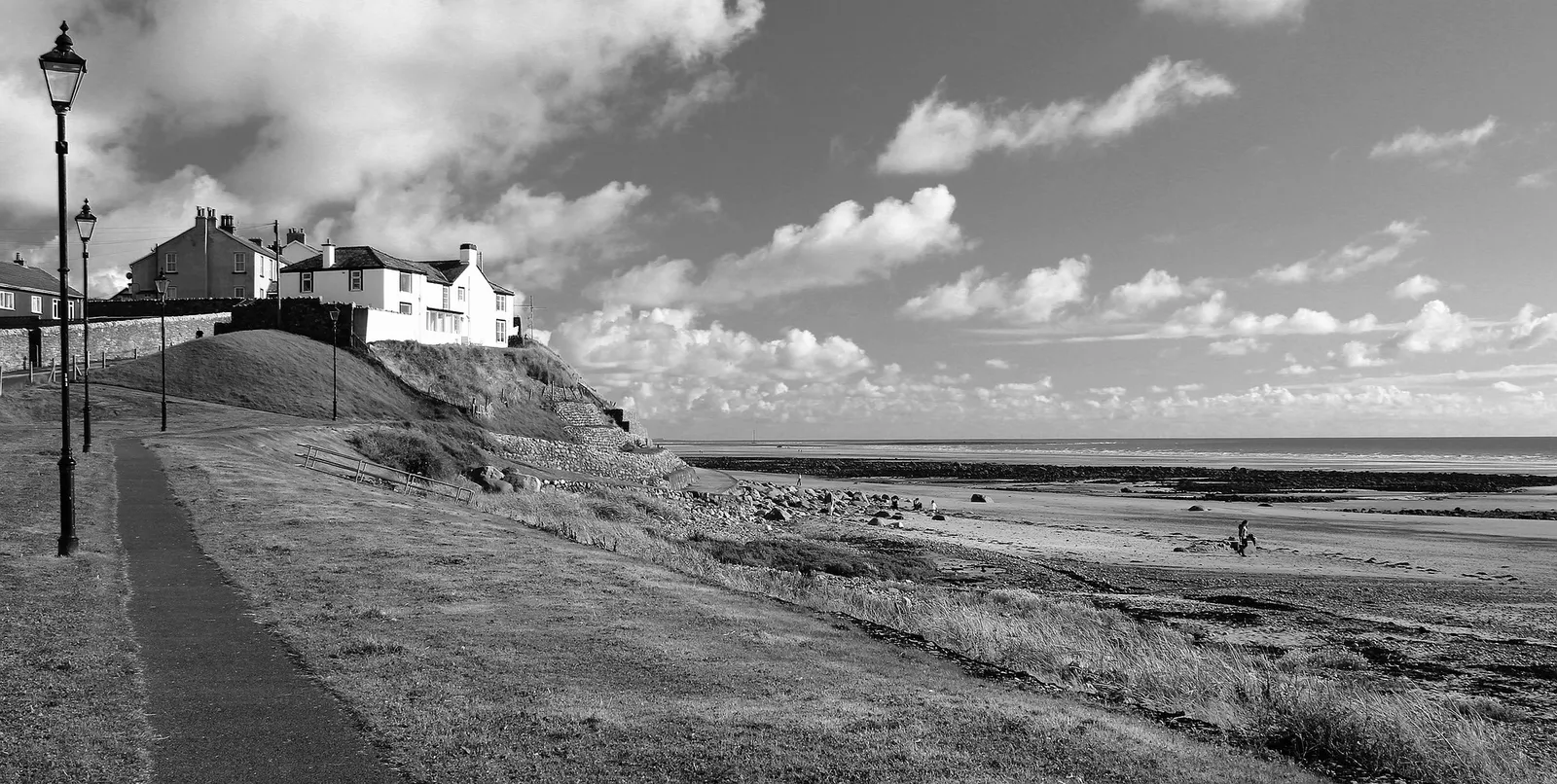
Silecroft has the biggest view on the coast. It is a long, flat, clean beach of sand and shingle a few miles south of Millom, and behind it Black Combe rises straight off the plain to 600 metres, so you get open sea in front and Lakeland fell behind in one look. It stays quiet because there is not much here beyond a car park, a level crossing and a pub, which is exactly why people who know the coast come back to it.
The sands run for miles at low tide and the water shelves gently, so it is good for a paddle, a long walk or a swim if you like your sea cold and honest. There is roadside and car park access right by the beach, which is rare on this coast, and campsites sit within a short drive.
Haverigg
Haverigg gives you sand, dunes and shelter in one spot at the mouth of the Duddon estuary. The main beach is broad and backed by grassy dunes, with a sheltered lagoon inland that is calmer than the open sea, so families with small children tend to settle here. Millom and its RSPB reserve are close by, and the estuary is good for wading birds through autumn and winter. It is a working village rather than a resort, so keep an eye on the tide, because the estuary sands cover fast.
Roanhead and Sandscale Haws
Roanhead is the wildest and most beautiful beach on the south Cumbria coast, and its dunes are nationally important. The beach sits within Sandscale Haws National Nature Reserve, looked after by the National Trust, a wide sweep of sand backed by one of the finest dune systems in Britain. On a clear day you look across the Duddon to Black Combe and out to the Isle of Man.
The dunes are home to natterjack toads, Britain's rarest amphibian, along with great crested newts and thousands of dune plants, which is why the reserve is protected and why a plan to build a holiday park here was fought off. Stick to the marked paths, keep dogs under control in the breeding season, and take everything home with you. There is a National Trust car park, and Barrow-in-Furness is minutes away for supplies.
Drigg
Drigg is dunes and solitude with almost nothing built on it. The beach runs for miles near Ravenglass, backed by the Drigg Dunes nature reserve, and on a weekday you can have a good stretch of it entirely to yourself. Access is on foot from the village over the railway, parking is limited, and there are no shops or toilets on the beach, so come prepared. The reward is one of the quietest sand-and-dune landscapes in England, with the Lakeland fells filling the horizon inland.
Seascale
Seascale is the easiest family beach on the west coast, with a village right behind the sand. There is a long beach of sand and shingle, a promenade, a car park, toilets, a shop and a cafe or two, and the railway station is a short walk away, so it is a straightforward day out. Rock pools appear at low tide and the sands are wide enough for cricket and kites.
It sits a few miles south of Sellafield, which puts some people off, but the beach is clean, popular with local families and well used all summer. For the practical side of seaside towns like this one, our guide to Britain's seaside towns for campers is worth a read.
Allonby
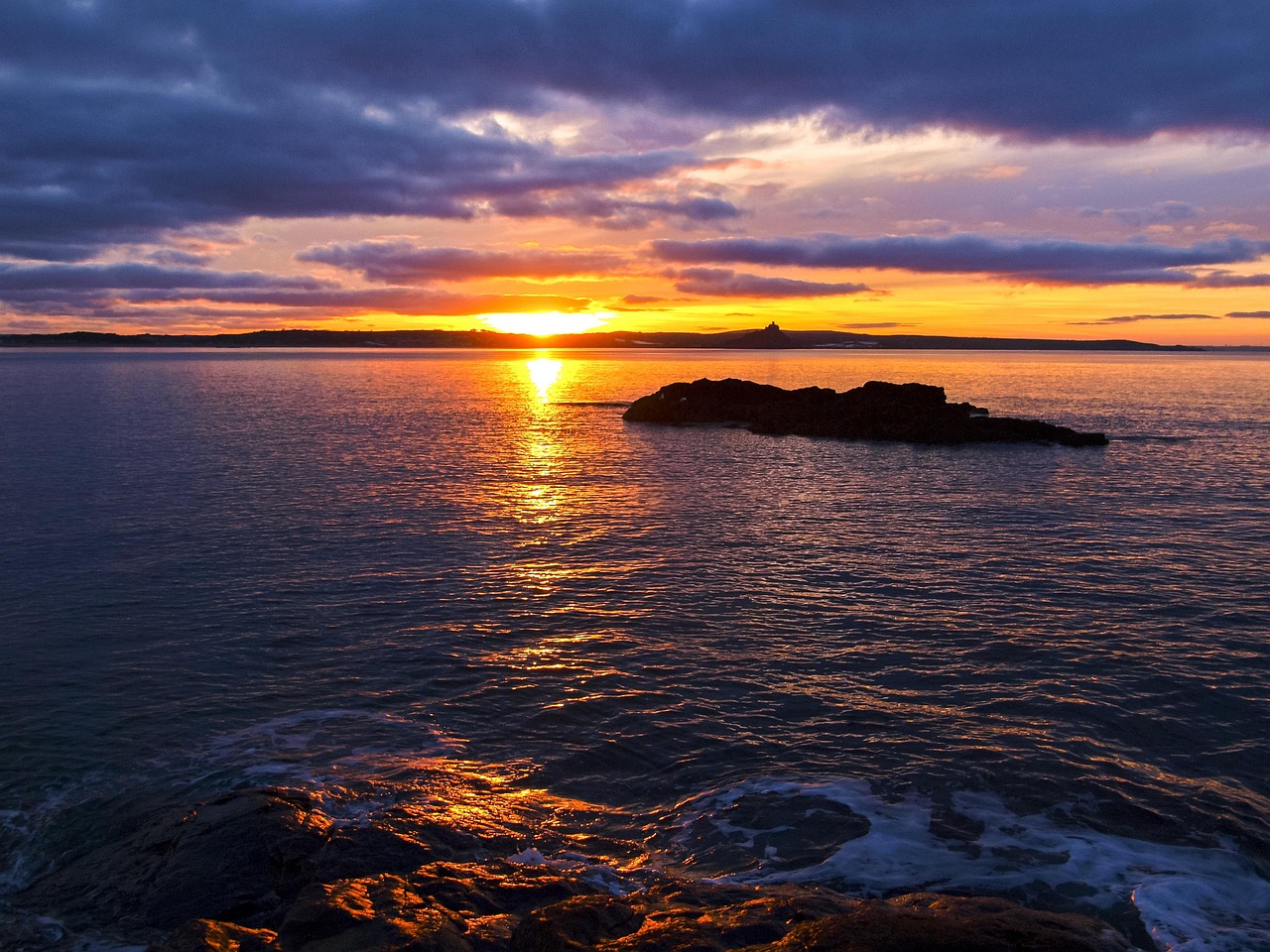
Allonby is the Solway sunset beach, a wide bay of sand and shingle looking straight across the firth to the Galloway hills of Scotland and, on a clear day, the Isle of Man. It sits within the Solway Coast National Landscape, and Allonby Bay is a Marine Conservation Zone protecting rare honeycomb worm reefs offshore, so the wildlife interest runs from the sand into the sea.
The village is a small huddle of old cottages and a green, with a car park, toilets and an ice cream shop that has been going for generations. The open aspect makes it breezy, which suits kite flyers and walkers, and the light here in the evening is the reason people keep coming back.
Silloth
Silloth is a proper Victorian seaside town on the Solway, built by the railway and laid out around a huge green. The seafront has a cobbled promenade of Canadian granite setts, a wide grassy Silloth Green with play areas and a pitch-and-putt, and long views across the firth to Scotland. The beach is sand and shingle, and the sunsets are among the best in the north of England. It has more going on than the smaller villages, with cafes, pubs and events on the green through summer, and it makes a good base for the northern Solway from Maryport to the salt marshes at Bowness.
Wildlife on the Cumbria coast
This coast is one of the best wildlife stretches in northern England. The dunes hold natterjack toads and rare orchids, St Bees Head has the seabird cliffs, and the Duddon and Solway estuaries fill with wading birds, geese and wildfowl through autumn and winter. The rules are simple and they matter: keep to marked paths through the dunes, keep dogs under close control near ground-nesting birds and breeding toads, and take all your litter home. To plan a trip around the wildlife, our guide to Britain's secret beaches and cove campsites points to more quiet spots.
The Lake District is right behind the coast
The best trick of the Cumbria coast is how close the mountains are. Silecroft to Wast Water is under an hour. St Bees to Ennerdale and Buttermere is a short drive up quiet valleys most visitors never reach. Ravenglass, just south of Drigg, is where the narrow-gauge Ravenglass and Eskdale Railway runs inland to the foot of the fells. You can spend the morning on an empty beach and the afternoon on a mountain, which is a rare combination anywhere in England.
That makes a coast campsite a clever base for a Lakeland trip as well as a beach one. You dodge the crowds and the prices of the honeypot villages and still reach the big scenery in half an hour. Browse the options across the county on our Lake District and Cumbria campsites pages.
Camping on the Cumbria coast
There is a good spread of coastal campsites here, and they are cheaper and quieter than their Lakeland equivalents. You will find sites near Silecroft, around Millom and Haverigg, near Seascale and Ravenglass on the west coast, and up on the Solway near Silloth and Allonby, ranging from simple farm fields to full facility parks. Wild camping is not a legal right anywhere in England outside Dartmoor, so pitch on a proper site or ask the landowner first, and follow the Countryside Code and Leave No Trace.
Pack for wind, because this is an exposed coast and the Solway in particular catches the weather off the Irish Sea. A solid, well-pegged tent, a windbreak and warm layers for the evening make the difference between a brilliant trip and a cold one. Compare sites the length of the coast on the Camping Sites in Britain directory.
Frequently asked questions
What is the best beach in Cumbria?
For scenery and wildlife, St Bees is hard to beat, with its seabird cliffs and the start of the Coast to Coast walk. For empty sand and the biggest fell backdrop, choose Silecroft. For dunes and rare wildlife, go to Roanhead and Sandscale Haws.
Can you camp on the beach in Cumbria?
No. Beach camping and wild camping are not a legal right in England outside Dartmoor, so you need the landowner's permission everywhere else. Use one of the many coastal campsites near Silecroft, Seascale, Silloth or Millom instead, and follow the Countryside Code.
Are Cumbria's beaches good for swimming?
Silecroft, Seascale, St Bees and Allonby all have clean sand and gently shelving water suited to a paddle or a swim. The sea is cold year round and the Solway and Duddon estuaries have fast tides and channels, so check conditions and swim where others do.
Where can you see natterjack toads in Cumbria?
Sandscale Haws National Nature Reserve at Roanhead, north of Barrow, is one of the best sites in Britain for natterjack toads. They breed in shallow dune pools in spring. Keep to the paths and keep dogs under control to protect them.
Which Cumbria beach has views of Scotland?
The Solway Firth beaches look straight across to Scotland. Allonby and Silloth give the clearest views over the water to the Galloway hills, and on a clear day you can also see the Isle of Man to the west.
The short version
Cumbria's coast is the quiet half of the county, and it is genuinely worth the drive: seabird cliffs at St Bees, rare toads in the Roanhead dunes, huge fell backdrops at Silecroft and Solway sunsets over Scotland at Allonby and Silloth, with the Lake District never more than an hour behind you. Pick a coast campsite, pack for the wind, and you have the best of both worlds. Start planning with our guide to coastal camping in the UK.