The best UK seaside towns for camping: harbours, beaches and piers
· Updated
The best British seaside towns for camping pair a working harbour or a Victorian pier with a proper sandy beach and a campsite within a short drive. St Ives and Padstow in Cornwall, Whitby and Scarborough in Yorkshire, Tenby in Pembrokeshire, and Southwold on the Suffolk coast are the classics, and every one of them puts you close to a pitch, a chip shop and the sea.
Pick your town, then pick your pitch. This is part of our guide to coastal camping in the UK, and here at Camping Sites in Britain we have listed campsites near every one of these resorts so you can wake up, walk to the front and be on the sand before the day-trippers arrive.
Below we run through 11 classic seaside towns by region, with what each one actually offers: the harbour, the beach, the fish and chips, the pier, and where to pitch nearby.
Cornwall: St Ives and Padstow
Cornwall's two most famous harbour towns sit on opposite coasts and reward campers in different ways. St Ives faces north into the Atlantic light that drew the painters, while Padstow sits on the Camel Estuary, sheltered and food-obsessed.
St Ives
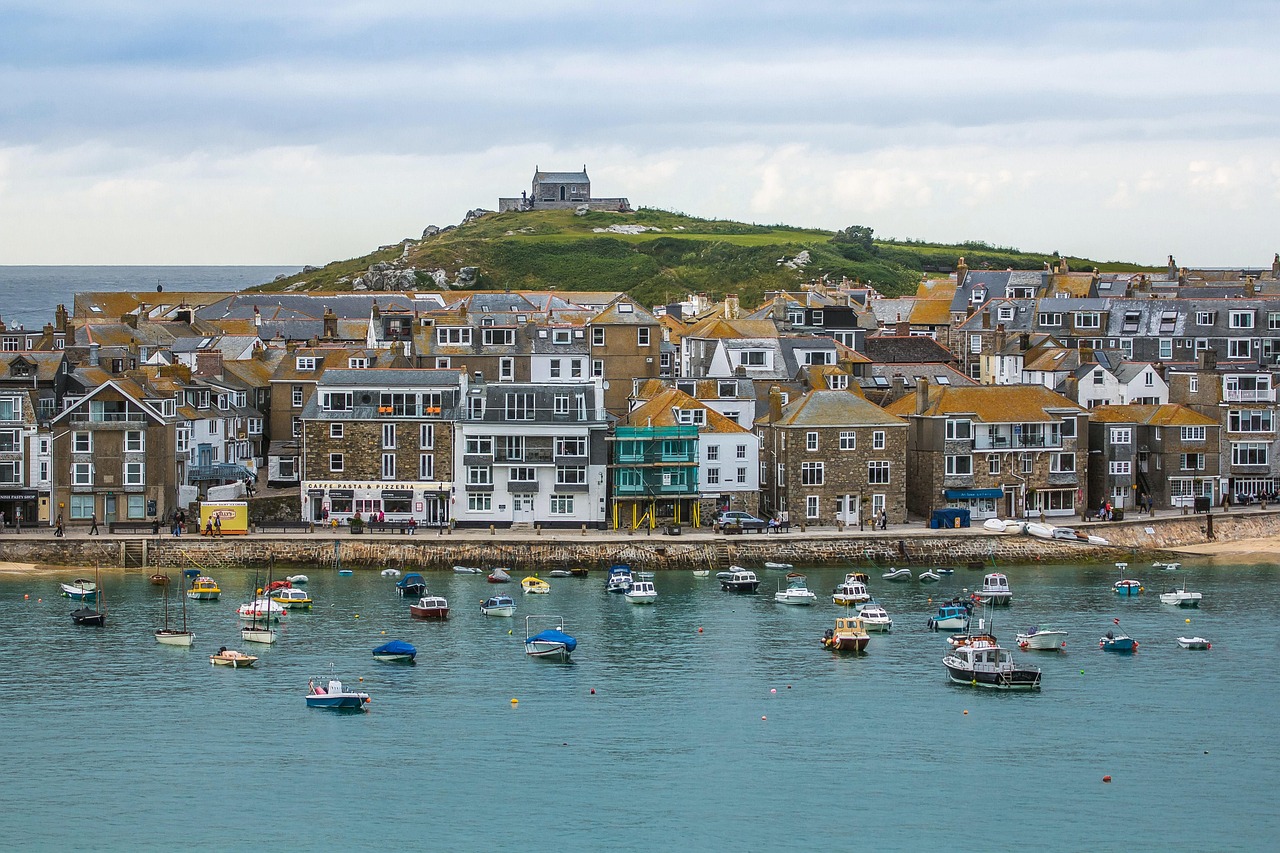
St Ives gives you four beaches within walking distance of one small town. Porthminster and Porthmeor are the headline sands, the harbour fills with fishing boats and gulls that will happily take your pasty, and Tate St Ives sits right above Porthmeor if the weather turns. The South West Coast Path runs straight through, so you can walk to the beaches at Carbis Bay and beyond.
For chips, the seafront kiosks near the harbour do the job, and the town is small enough to explore on foot once you have parked or pitched. Campsites cluster around the Land's End peninsula and along the north coast, and you can browse pitches across the county on our Cornwall campsites pages.
Padstow
Padstow is a fishing harbour turned foodie town on the Camel Estuary. The Camel Trail runs 18 miles from Padstow to Bodmin along a former railway, flat and traffic-free, which makes it brilliant for a family cycle straight from a nearby pitch. Rick Stein's fish and chips on South Quay is the obvious lunch, and the estuary beaches at Rock and Daymer Bay are a short ferry hop across the water.
Yorkshire: Whitby and Scarborough
The North Yorkshire coast is the north's answer to the West Country, with two big resorts and dramatic cliffs between them. Both towns sit within the reach of moorland campsites, and you can compare pitches on our North Yorkshire campsites pages.
Whitby
Whitby is a working harbour town under the ruins of an abbey that inspired Bram Stoker's Dracula. The 199 steps climb from the old town to St Mary's Church and the abbey, the harbour is split by the River Esk, and the twin piers with their lighthouses guard the mouth. Whitby is famous for its fish and chips, with the Magpie Cafe drawing queues along the quay, and the town is the home port of Captain Cook. Beaches sit either side of the piers, with West Cliff and Sandsend giving you the wider sand.
Scarborough
Scarborough is Britain's original seaside resort, split into two bays by a headland and castle. South Bay has the classic promenade, amusements and the harbour, while North Bay is quieter with the beach and Peasholm Park behind it. The town has held a spa since the 17th century, the funicular cliff lifts still run, and there is fish and chips on almost every corner near the front.
Pembrokeshire: Tenby
Tenby is the walled seaside town of west Wales, and its pastel harbour is one of the most photographed in Britain. Three beaches surround the town: North Beach below the walls, plus the long South and Castle beaches, all backed by the coloured Georgian houses. Boats leave the harbour for Caldey Island and its monastery, the medieval town walls still stand, and the Pembrokeshire Coast Path runs through, part of the wider coastal walking that makes this stretch so good.
Tenby sits inside the Pembrokeshire Coast National Park, so campsites are plentiful just inland and along the coast towards Saundersfoot and Manorbier. Browse them on our Pembrokeshire campsites pages.
Suffolk: Southwold and Aldeburgh
The Suffolk coast trades big amusements for pier charm, beach huts and fresh fish off the boat. Southwold and Aldeburgh sit a few miles apart and make an easy pair for one trip.
Southwold
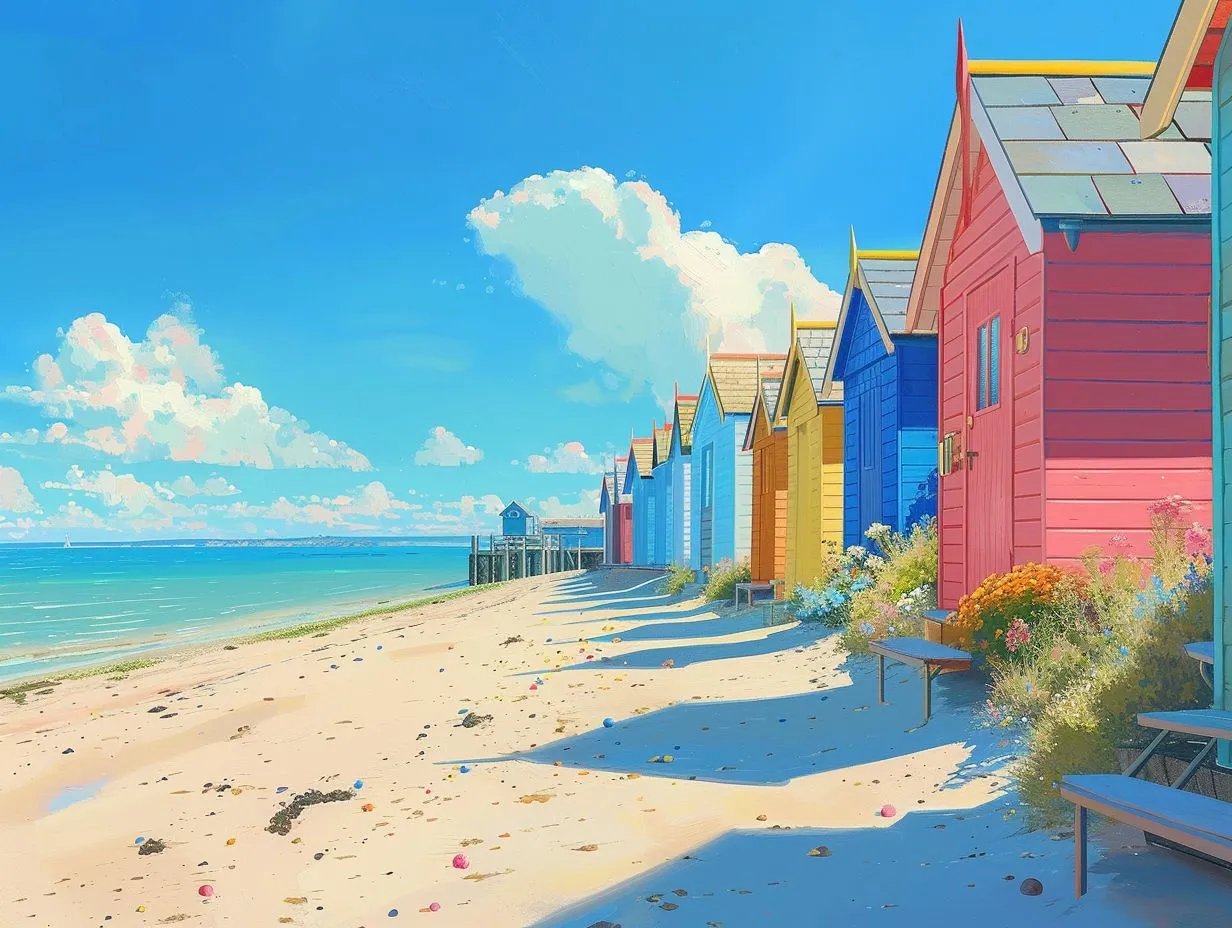
Southwold is a genteel resort with a much-loved pier, rows of colourful beach huts and the Adnams brewery in the middle of town. The pier reopened in 2001 and houses the eccentric Under the Pier Show arcade, the lighthouse stands right among the houses, and the wide sandy beach runs south towards the harbour on the River Blyth, where you can buy fish straight from the huts. A rowing-boat ferry crosses the Blyth to Walberswick in summer.
Aldeburgh
Aldeburgh is a shingle-beach town where the fishing boats still land their catch on the beach and sell it from wooden huts. The Aldeburgh Fish and Chip Shop is a pilgrimage in its own right, Maggi Hambling's Scallop sculpture sits on the beach to the north, and the town hosts the classical music festival founded by Benjamin Britten at nearby Snape Maltings.
North Wales: Llandudno
Llandudno is the grande dame of Welsh seaside resorts, a Victorian town built between two headlands. The sweeping promenade curves around the North Shore, the pier is the longest in Wales at more than 2,000 feet, and the Great Orme rises above the town with its tramway, cable car and summit views over the bay. There is a second, quieter beach on the West Shore, plenty of traditional chip shops along Mostyn Street, and the Alice in Wonderland trail nods to the town's literary link. Campsites sit around the Conwy Valley and along the coast towards Conwy and Anglesey.
Dorset: Weymouth
Weymouth has one of the finest sandy beaches on the south coast, a gently shelving arc of sand that made it a royal resort under George III. The Georgian seafront curves behind the beach, the old harbour is lined with pubs and fishing boats, and Punch and Judy still plays on the sand in summer. Weymouth is the gateway to the Jurassic Coast, with Portland and its lighthouse just to the south, and chip shops line the esplanade. Pitches are easy to find across the county on our Dorset campsites pages.
Norfolk: Cromer
Cromer is a proper old-fashioned Norfolk resort famous for one thing above all: the Cromer crab, landed by a small fleet of local boats and sold fresh across the town. The Victorian pier carries the Pavilion Theatre and one of the last end-of-pier variety shows in the country, plus the RNLI lifeboat station at its head. The wide sandy beach sits below cliffs, the lighthouse stands on the hill behind, and the fish and chips is as good as the crab. North Norfolk has campsites all along this coast towards Sheringham and the seal colonies at Blakeney.
Kent: Broadstairs
Broadstairs is the pick of the Kent seaside towns, built around seven sandy bays on the Isle of Thanet. Viking Bay is the main beach, a sheltered crescent of sand with a small harbour and a tidal pool, and the town leans hard into its Charles Dickens link with a festival every June. It is quieter and prettier than neighbouring Margate, the chip shops and ice cream sit right above the sand, and the Kent coast is an easy run down from London for a weekend pitch.
Seaside towns at a glance
Use this table to match a town to what you want most from a trip, then find a pitch nearby through our campsite listings.
| Town | Region | Best for |
|---|---|---|
| St Ives | Cornwall | Beaches, art, Atlantic light |
| Padstow | Cornwall | Food, estuary, the Camel Trail |
| Whitby | North Yorkshire | Harbour, abbey, fish and chips |
| Scarborough | North Yorkshire | Two bays, promenade, castle |
| Tenby | Pembrokeshire | Walled town, three beaches |
| Southwold | Suffolk | Pier, beach huts, brewery |
| Aldeburgh | Suffolk | Fresh fish, shingle, music |
| Llandudno | North Wales | Promenade, pier, the Great Orme |
| Weymouth | Dorset | Sandy bay, Jurassic Coast |
| Cromer | Norfolk | Crab, pier, variety show |
| Broadstairs | Kent | Seven bays, Dickens, day trips |
How to camp near a seaside town
Pitch a few miles inland and drive or cycle in, because campsites right on the seafront are rare and book up fast. Most of these towns have sites within a 10 to 15 minute drive, often on farmland or clifftop above the resort, which keeps the price sensible and the nights quieter. If pitching right on the sand is the goal, read our guide to choosing a site for beach camping first.
Book early for July and August, when the school holidays fill coastal sites months ahead, and check whether your site has hardstanding if you are towing. Many of these resorts also sit near lighthouses worth a visit, and our guide to Britain's lighthouses covers the ones at Whitby, Cromer, Portland and beyond.
Frequently asked questions
What is the best UK seaside town for camping?
St Ives, Tenby and Whitby top most lists because each combines a working harbour, sandy beaches and campsites within a short drive. St Ives suits beach lovers, Tenby suits walkers on the Pembrokeshire Coast Path, and Whitby suits fans of harbours and fish and chips.
Which seaside towns have the best fish and chips?
Whitby, Aldeburgh and Cromer are the standouts. Whitby's Magpie Cafe is nationally known, Aldeburgh fries fish landed on its own beach, and Cromer pairs its chips with the town's famous fresh crab.
Can you camp right on the beach in the UK?
Rarely. Almost all UK beaches sit within someone's land or a council's control, so you need permission and there is no general right to pitch on the sand. Use a licensed campsite near the front instead, and never pitch below the high-tide line.
Which seaside towns still have piers?
Southwold, Llandudno and Cromer all have well-kept Victorian piers. Llandudno's is the longest in Wales, Cromer's carries an end-of-pier variety show and a lifeboat station, and Southwold's houses a quirky homemade arcade.
When is the best time to visit British seaside towns?
May, June and September give you warm days without the peak-season crowds and prices. July and August are busiest, with the warmest sea, but campsites and car parks fill fast, so book pitches well ahead.
Are these seaside towns good for families?
Yes. Weymouth, Broadstairs and Scarborough are especially family-friendly, with gently shelving sandy beaches, promenades, amusements and traditional attractions like Punch and Judy, tidal pools and cliff lifts.
The short version
Britain's classic seaside towns give you a harbour, a beach, a pier and a chip shop, and a campsite is rarely far away. Match the town to the trip, book your pitch early for summer, and pitch inland if the seafront is full. Start with our guide to coastal camping in the UK, or jump straight to our campsite listings to find a spot near the coast you fancy.