Lighthouses to Visit in the UK: A Camper's Guide to Britain's Coast
· Updated
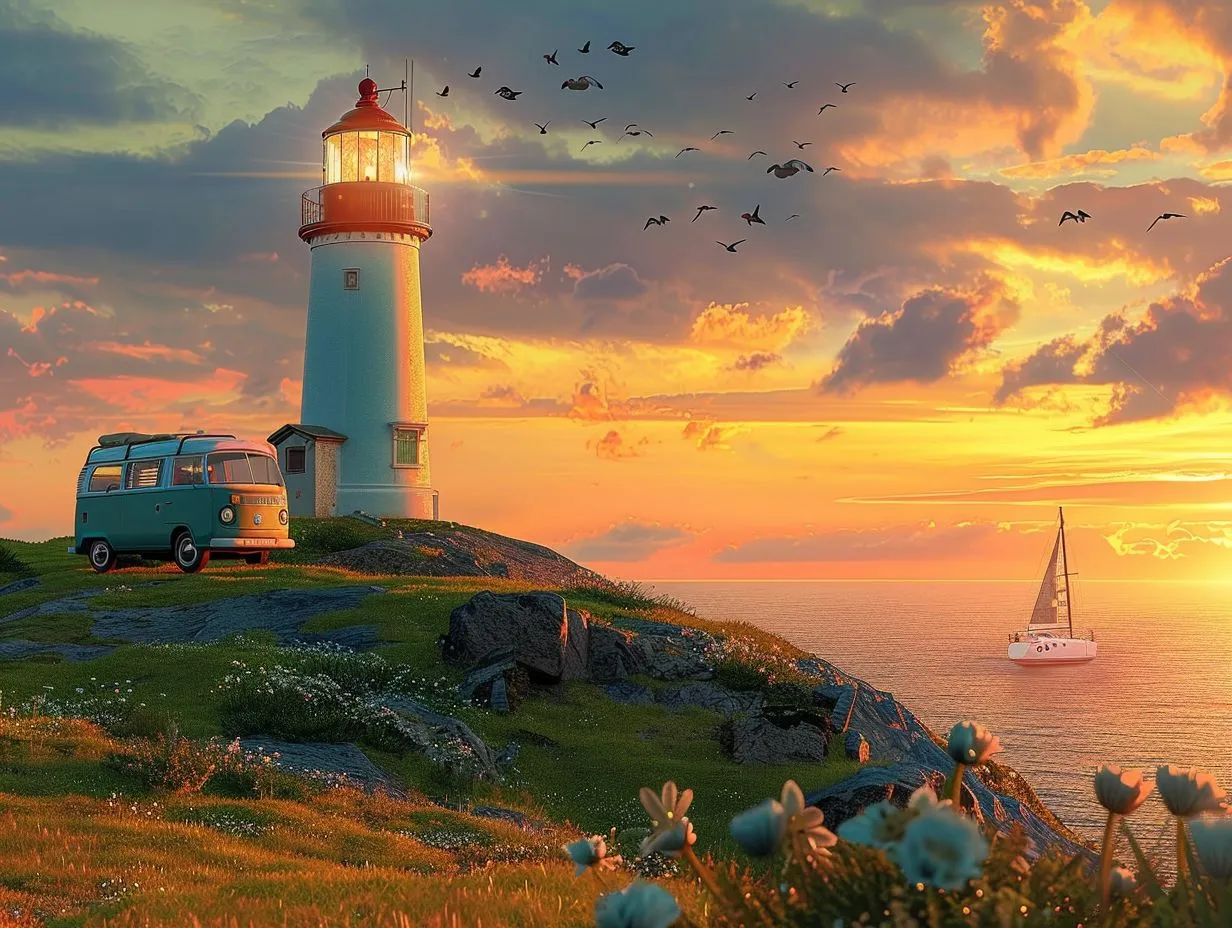
Britain has a lighthouse on almost every notable headland, and a good number of them welcome visitors. Some have full visitor centres and guided climbs to the lantern room. A handful rent out the old keepers' cottages as holiday lets. Most sit within an easy drive of a campsite, which makes a lighthouse the perfect anchor for a weekend on the coast.
This is a camper's shortlist of the ones worth the trip: what you can actually see and do at each, which you can go inside, and where to pitch up nearby. It is part of our guide to coastal camping in the UK, and it comes from Camping Sites in Britain, where you can find and compare campsites, caravan parks and glamping right across the country.
Who runs Britain's lighthouses
Two authorities look after almost all of them. Trinity House is responsible for lighthouses across England, Wales, the Channel Islands and Gibraltar, and it runs the public visitor centres and holiday cottages. In Scotland and the Isle of Man the job belongs to the Northern Lighthouse Board. Almost every lighthouse is now automated and monitored remotely, so the buildings you visit are working navigation aids rather than staffed stations.
That matters for a trip, because access varies. A few have proper visitor centres you can climb. Some are open only on the outside, with the tower itself locked. Others are on private or offshore rock and can only be admired from the clifftop or a boat. The table below sorts the pick of them.
The best lighthouses to visit in the UK
Here are ten to build a trip around, from the south coast to the far north, with what each one offers.
| Lighthouse | Where | What to see |
|---|---|---|
| Beachy Head and Belle Tout | East Sussex | Red and white tower below the cliffs; Belle Tout above is a B&B |
| Portland Bill | Dorset | Trinity House visitor centre, tower climb, Jurassic Coast |
| Start Point | Devon | Guided tours and two holiday cottages on a dramatic headland |
| Lizard | Cornwall | Heritage centre at mainland Britain's most southerly point |
| Godrevy | Cornwall | Island tower that inspired Virginia Woolf, seals below |
| South Stack | Anglesey | 400 steps, a visitor centre and an RSPB seabird colony |
| Souter | Tyne and Wear | The world's first electric lighthouse, National Trust |
| Flamborough Head | Yorkshire | Chalk headland tower near the Bempton seabird cliffs |
| Bell Rock | Off Angus | Offshore engineering marvel, seen from Arbroath |
| Fastnet | Off County Cork | Ireland's tallest, the famous "Teardrop" seen by boat |
Beachy Head and Belle Tout, East Sussex
You get two lighthouses for the price of one walk here. The candy-striped Beachy Head Lighthouse stands in the sea at the foot of England's highest chalk sea cliff, best seen from the clifftop path above. Higher up sits Belle Tout, the older lighthouse that was famously moved 17 metres back from the crumbling cliff edge in 1999 and now runs as a bed and breakfast. The walk between them along the Seven Sisters is one of the great south coast strolls.
Portland Bill, Dorset
Portland Bill is the most visitor-friendly lighthouse on the south coast. Trinity House runs a visitor centre here with guided tower climbs to the lantern, plus exhibits on how the light works. The red and white tower marks the tip of the Isle of Portland at the western end of the Jurassic Coast, so it pairs well with a fossil-hunting day out. See our guide to the best campsites for dinosaur fossil hunting if that is your thing.
Start Point and the Lizard, Devon and Cornwall
Two of the best south west lighthouses let you go inside. Start Point, on a long finger of rock in the South Hams, offers guided tours in season and rents out two holiday cottages in the former keepers' quarters. The Lizard, at the most southerly point of mainland Britain, has a heritage centre where you can learn how the light and foghorn worked, and Trinity House lets its Lizard cottages too. Both sit on cracking stretches of the South West Coast Path.
Godrevy, Cornwall
Godrevy is the little white tower on an island in St Ives Bay that gave Virginia Woolf the setting for "To the Lighthouse". You cannot land on it, but the National Trust headland opposite gives you the classic view, and the rocks below are one of the most reliable spots in Cornwall to watch grey seals hauled out at low tide. Bring binoculars.
South Stack, Anglesey
South Stack is the most spectacular arrival of any lighthouse on this list. You reach it down roughly 400 steps and across a small bridge to its own islet off the west coast of Anglesey. Trinity House runs a visitor centre with tower access, and the cliffs above are an RSPB reserve packed with puffins, guillemots and razorbills through spring and early summer. Go for the birds as much as the light.
Souter, Tyne and Wear
Souter, on the coast between South Shields and Sunderland, holds a genuine world first: when it opened in 1871 it was the first lighthouse in the world designed and built to be powered by electricity. The National Trust now runs it, so you can climb the tower, see the engine room and foghorn, and walk the wildflower grassland of The Leas along the cliffs.
Flamborough Head, Yorkshire
Flamborough Head marks a great chalk promontory on the Yorkshire coast, with a striking white tower dating from 1806. The surrounding cliffs are a short hop from Bempton, home to one of the largest seabird colonies in England and Yorkshire's gannets. It is a fine base for clifftop walking and one of the more underrated corners of the English coast.
The offshore giants: Bell Rock and Fastnet
Two lighthouses earn their place by being impossible to visit, which is rather the point. Bell Rock, off the Angus coast near Arbroath, was built by Robert Stevenson between 1807 and 1810 on a reef that is submerged at high tide, and it is often called the oldest surviving sea-washed lighthouse in the world. Fastnet, the "Teardrop of Ireland" off County Cork, is the tallest lighthouse in Ireland and the famous turning mark of the Fastnet ocean race. You admire both from land or a boat trip, never up close, which only adds to the legend.
Lighthouses you can stay in
Several lighthouse sites now double as holiday accommodation, which is the closest most of us will get to keeping the light. Trinity House rents former keepers' cottages at a number of stations, including Lizard, Start Point and Portland Bill, usually let by the week. Belle Tout at Beachy Head runs as a small bed and breakfast with the lantern room as a shared lounge. These book up early for summer, so if a lighthouse stay is the goal, plan months ahead.
For everyone else, camping nearby gets you the same sunrises over the water at a fraction of the cost. A tent on a clifftop pitch within sight of a working light is hard to beat.
Camping near the lighthouses
Almost every lighthouse on this list has good camping within easy reach, because headlands and coast paths tend to attract campsites. Portland Bill sits among the Dorset campsites of the Isle of Portland and Weymouth. Start Point is surrounded by the coastal sites of the South Hams, part of our wider Devon listings, while the Lizard and Godrevy fall among the Cornwall campsites of the far south west.
For the rest, from South Stack in Anglesey to Souter in the north east, browse the full campsite directory and filter by region. To plan the walking that links them, our guides to Britain's coastal trails and campsites and exploring Britain's coastal pathways map out the paths that pass most of these lights. If you would rather base yourself in a harbour town, see exploring Britain's seaside towns.
Frequently asked questions
Can you go inside lighthouses in the UK?
Some, not all. Trinity House runs public visitor centres with tower climbs at Portland Bill, South Stack and a few others, and the National Trust opens Souter. Many lighthouses are open only on the outside, with the working tower locked and monitored remotely.
Which UK lighthouses can you stay in?
Trinity House rents former keepers' cottages at stations including Lizard, Start Point and Portland Bill, usually by the week. Belle Tout at Beachy Head is a bed and breakfast. These are popular and tend to book out months in advance for summer.
Are lighthouse visits free?
The clifftop views are always free. Visitor centres and tower climbs usually charge a modest admission, and National Trust sites like Souter are free to members. Check the individual Trinity House or National Trust page before you travel, as opening days are seasonal.
What is Britain's most famous lighthouse?
Bell Rock, off the Angus coast, is the most celebrated, built by Robert Stevenson on a reef that vanishes at high tide and often called the oldest surviving sea-washed lighthouse in the world. Beachy Head and Portland Bill are the most photographed.
Can you camp next to a lighthouse?
Rarely right beside one, but often within a mile or two. Headlands with lighthouses usually have campsites nearby along the coast path. Always pitch on a proper site or with the landowner's permission, and follow the Countryside Code.
Which lighthouse is best for seeing seabirds?
South Stack on Anglesey and Flamborough Head in Yorkshire are the standouts, both surrounded by RSPB cliffs with puffins, guillemots and gannets. Godrevy in Cornwall is better for grey seals hauled out on the rocks below.
The short version
Pick a lighthouse, check whether it opens its tower or rents its cottages, then find a campsite on the same headland. Portland Bill, South Stack and Souter are the easiest to go inside; Godrevy and the offshore giants are for admiring from the cliff. Start with our guide to coastal camping in the UK or dive straight into the campsite directory to find your pitch.