Britain's Canal Towpaths: A Walking and Cycling Guide for Campers
· Updated
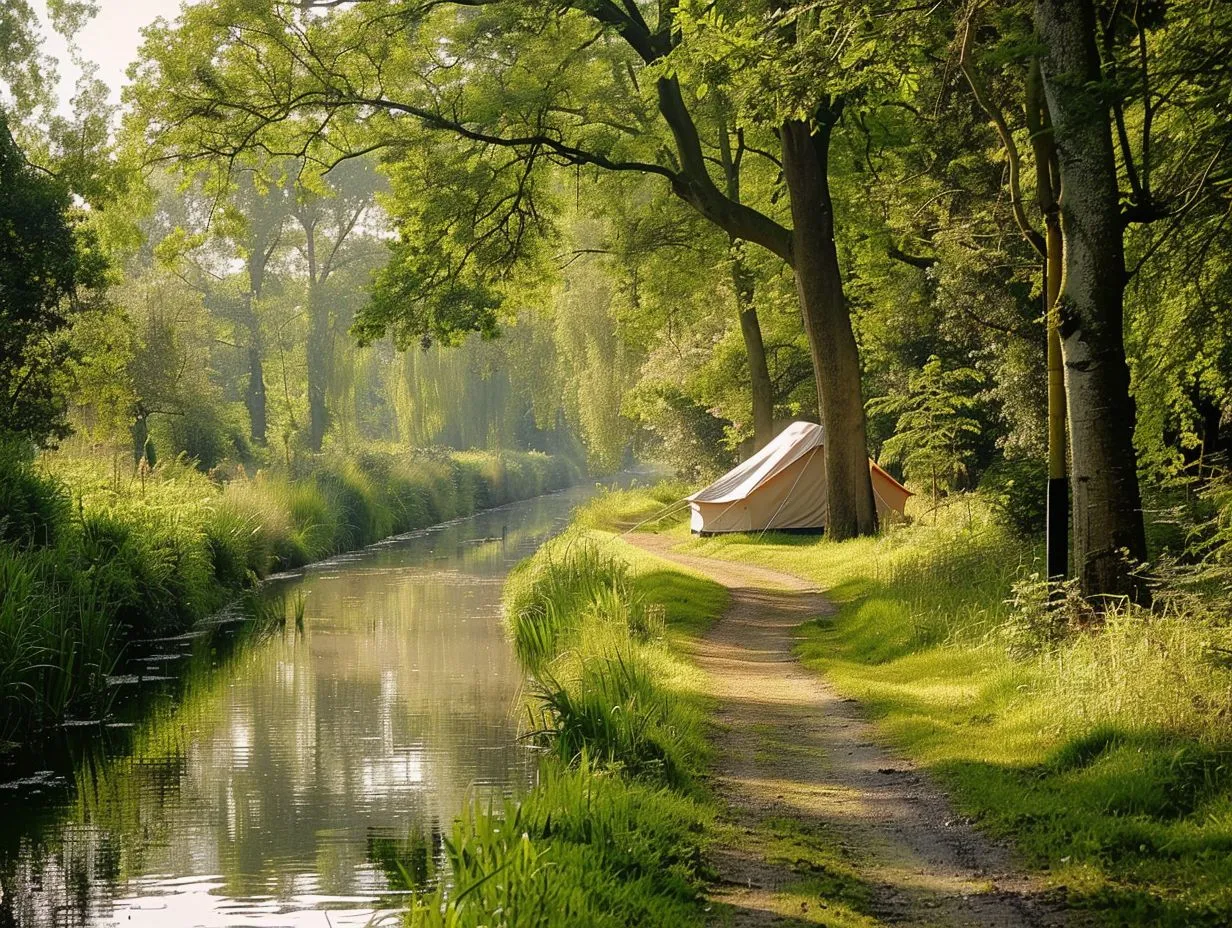
Britain's canal towpaths are the easiest long-distance walking and cycling in the country. They are flat, traffic-free, well waymarked, and impossible to get lost on, because you simply follow the water. That makes them brilliant for campers with dogs, children, loaded panniers or tired legs, and it is why a towpath is often the gentlest way to link one campsite to the next.
The network runs for around 2,000 miles across England and Wales, most of it cared for by the Canal and River Trust, with Scotland's canals managed by Scottish Canals. Almost all of it is open to walkers, and much of it to cyclists too, threaded with locks, hump-backed bridges, canalside pubs and more wildlife than you would expect this close to town.
This guide is part of our wider advice on camping along the UK's national trails, and it comes from Camping Sites in Britain, where you can find and compare campsites, caravan parks and glamping across the country.
Why towpaths suit campers so well
A towpath asks almost nothing of your navigation and very little of your legs. The path was built for horses to haul boats along a level line, so there are no climbs, no stiles to lift a rucksack over and no road crossings for miles at a stretch. You keep the water on one side and walk.
That flatness is the whole appeal. A family can manage several miles without complaint, a dog can trot off the lead where it is safe, and a fully loaded touring bike rolls along without a single hill. The routes are waymarked and dotted with reference points such as locks and numbered bridges, so working out where you are and where the next pub sits is straightforward. You can also walk a stretch, pitch up at a canalside site, and pick the same path up the next morning, which makes them ideal for a multi-day trip.
Who looks after the network
Most of England and Wales's canals are managed by the Canal and River Trust, a charity that maintains the towpaths, locks, bridges and aqueducts and publishes free route maps for every navigation. Scotland's canals, including the Caledonian and the Forth and Clyde, are run separately by Scottish Canals.
Both organisations keep towpaths open to the public for walking, and the Trust actively encourages cycling on many stretches under a shared-use code. Before a longer trip it is worth checking the relevant canal page for closures, diversions and towpath condition, as sections do close for lock repairs and dredging.
The best canals to walk and cycle
Britain has dozens of navigations, but a handful stand out for scenery, heritage and access. Here are the ones worth planning a camping trip around.
| Canal | Where it runs | The highlight |
|---|---|---|
| Kennet and Avon | Bath to Reading | Caen Hill flight of 16 locks at Devizes |
| Llangollen | North Wales into Shropshire | Pontcysyllte Aqueduct, a UNESCO World Heritage Site |
| Leeds and Liverpool | West Yorkshire to Merseyside | The longest canal in Britain at 127 miles |
| Grand Union | London to Birmingham | England's longest single canal route |
| Oxford | Oxford to Coventry | Quiet, rural, gently winding countryside |
| Caledonian | Fort William to Inverness | Neptune's Staircase and Loch Ness |
| Regent's | Across north London | Little Venice, London Zoo and Camden |
Kennet and Avon Canal
The Kennet and Avon links Bath to Reading across 87 miles of some of the loveliest countryside in southern England. Its showpiece is the Caen Hill flight at Devizes, a staircase of 16 locks climbing the hillside in a near-continuous run, best watched with a cup of tea from the cafe at the top. The towpath here is a favourite for both walkers and cyclists, and there are campsites within easy reach of Bath, Bradford on Avon and Devizes.
Llangollen Canal
The Llangollen carries you across the Pontcysyllte Aqueduct, Thomas Telford's "stream in the sky", a cast-iron trough 38 metres above the River Dee. The aqueduct and the surrounding canal became a UNESCO World Heritage Site in 2009, and the towpath runs the full length beside the water, which is not a walk for anyone unnerved by heights. The scenery through the Welsh borders is superb and the town of Llangollen makes a natural base.
Leeds and Liverpool Canal
At 127 miles, the Leeds and Liverpool is the longest canal in Britain built as a single waterway, crossing the Pennines between West Yorkshire and the Merseyside coast. The towpath passes through Skipton and the edge of the Yorkshire Dales, so you can pair a canal walk with a night at a Dales campsite. Our region page for campsites in North Yorkshire is a good place to start planning that stretch.
Grand Union and Oxford canals
The Grand Union is the great trunk route between London and Birmingham, and its towpath makes for long, easy days through the Midlands countryside with regular villages and pubs. The Oxford Canal, which meets it, is narrower, quieter and more rural, winding gently through Warwickshire and Oxfordshire. Both suit riders and walkers who want distance without drama.
Caledonian Canal
Scotland's Caledonian Canal runs 60 miles from Fort William to Inverness, stitching together Loch Ness and the other lochs of the Great Glen. Its landmark is Neptune's Staircase at Banavie, a flight of eight locks that lifts boats close to 20 metres, with Ben Nevis rising behind. The Great Glen Way shares much of the route, so towpath walking here connects to proper Highland trails and Highland campsites.
Regent's Canal
For a city break on foot, the Regent's Canal threads across north London from Little Venice through Regent's Park, past London Zoo and into Camden and the East End. It is entirely flat, largely traffic-free and a genuinely peaceful way to cross the capital, which surprises most first-time visitors.
Practical notes for camping the towpaths
Towpaths are easy, but they are not a manicured promenade, so a little preparation pays off. The path is unsurfaced in places and turns to mud after rain, so proper footwear or decent tyres matter more than the flat profile suggests.
- Expect mud. Lowland towpaths get churned and boggy in winter and after heavy rain. Walking boots beat trainers, and a cyclist may want wider tyres.
- Share the path. Walkers, cyclists, anglers and boaters all use it. Cyclists should give way to people on foot, ring a bell or call out on blind bends, and slow right down under bridges.
- Most walking is lock-free. You only work locks if you are on a boat. On foot or by bike you simply pass them, which is where the flat, uninterrupted miles come from.
- Mind the water's edge. Keep children and dogs on the landward side near deep water and lock chambers, and take care where the towpath narrows.
- Plan your stops. Canalside pubs are frequent and welcoming, and there are campsites strung along most major canals, so you can break a long route into comfortable days.
If you are riding, check the Canal and River Trust's guidance for the canal you are on, because a few narrow or busy stretches ask cyclists to dismount. And whichever way you travel, follow the same leave-no-trace habits you would anywhere: take your litter home and leave gates as you find them.
Wildlife and industrial heritage along the water
Canals are among the richest wildlife corridors in Britain, precisely because they are quiet and lined with water. Keep an eye out for the electric-blue flash of a kingfisher, herons standing motionless at the margins, and dragonflies over the water on warm days. Water voles, swans, moorhens and bats at dusk are all common sights.
The heritage is just as rewarding. These waterways powered the Industrial Revolution, and the engineering still on show, the aqueducts, lock flights, tunnels and cast-iron bridges, is the work of Georgian and Victorian builders such as Telford and Brindley. Walking a towpath is a slow tour of that history, told through the structures rather than a museum.
More walking and outdoor trips from CSIB
If canal towpaths suit your pace, a few of our other guides run in the same easy, scenic vein. Try walking the Cotswolds for gentle circular routes, our pick of walks in Lincolnshire for flat, quiet countryside, or something with a bit more giddy-up in our guide to camping and horse riding.
Frequently asked questions
Can you walk along canal towpaths in Britain?
Yes. Almost all towpaths on the Canal and River Trust network in England and Wales are open to the public for walking, free of charge, and the same applies to Scotland's canals run by Scottish Canals. You do not need a permit to walk them.
Can you cycle on canal towpaths?
You can cycle most towpaths under the Canal and River Trust's shared-use code. Give way to people on foot, slow down at bridges and blind bends, and be ready to dismount on a few narrow or busy sections. Check the specific canal's page before a long ride.
Which is the longest canal in Britain?
The Leeds and Liverpool Canal, at 127 miles, is the longest canal in Britain built as a single waterway. It crosses the Pennines between West Yorkshire and Merseyside, passing Skipton and the edge of the Yorkshire Dales.
Can you camp beside a canal?
Not on the towpath itself, which is for passing through rather than pitching on. Instead use one of the many campsites and caravan parks close to the water. Search our campsite listings to find sites near the canal you plan to walk.
Are canal towpaths good for families and dogs?
Very. They are flat, traffic-free and easy to follow, with frequent pubs and picnic spots. Keep children and dogs on the landward side near deep water and lock chambers, and a dog can often walk off the lead where the path is wide and quiet.
What is the Pontcysyllte Aqueduct?
It is Thomas Telford's cast-iron canal aqueduct on the Llangollen Canal, carrying boats and a towpath 38 metres above the River Dee in North Wales. Nicknamed the "stream in the sky", it became a UNESCO World Heritage Site in 2009.
The short version
Canal towpaths give you flat, waymarked, traffic-free miles that you cannot get lost on, threaded with locks, pubs, wildlife and centuries of engineering. Wear proper footwear for the mud, give way to walkers if you are on a bike, and let the water do the navigating.
Pick a canal, find a campsite along it, and make a trip of it. Start with our campsite listings or read more about camping along the UK's national trails.