The Best Beaches on the Yorkshire Coast for Campers
· Updated
The Yorkshire coast runs for roughly 45 miles from Saltburn down to Spurn, and the best of it for campers sits in the middle: Whitby, Robin Hood's Bay, Scarborough, Filey and the chalk headland at Flamborough. This is the one stretch of England where a national park meets the North Sea, so you get moorland, cliffs, fossils and proper surf within a short drive of each other.
Whitby is the only beach on this list currently flying a Blue Flag (2026), but the awards are not the whole story. The quiet coves at Runswick Bay and Sandsend, the fossils at Robin Hood's Bay and the seabirds at Flamborough are the reason campers keep coming back.
This guide is part of our wider look at coastal camping in the UK, and it comes from Camping Sites in Britain, where you can find and compare campsites, caravan parks and glamping right along the Yorkshire coast.
The Yorkshire coast at a glance
Pick your beach by what you actually want out of the day. This table sorts the main ones by character and the nearest town for supplies.
| Beach | Best for | Character | Nearest town |
|---|---|---|---|
| Whitby | Family days, history, Blue Flag sand | Busy, classic resort | Whitby |
| Sandsend | Surf, angling, quieter sand | Relaxed village | Whitby |
| Runswick Bay | Rockpools, calm swimming | Pretty and sheltered | Whitby |
| Robin Hood's Bay | Fossils, rockpools | Historic, steep village | Whitby |
| Scarborough | Amusements and quieter North Bay | Two bays, one town | Scarborough |
| Cayton Bay | Surfing | Wild, cliff-backed | Scarborough |
| Filey | Long walks, families | Five miles of sand | Filey |
| Flamborough Head | Seabirds, chalk cliffs | Dramatic headland | Bridlington |
| Bridlington | Traditional seaside fun | Big, lively harbour town | Bridlington |
| Saltburn | Surf, pier, cliff lift | Victorian, just over the border | Saltburn |
Where the North York Moors meets the sea
The northern stretch, from Saltburn to Robin Hood's Bay, is the most dramatic, because the North York Moors National Park runs all the way to the cliff edge. The coastal pathways here follow the Cleveland Way, so you can walk between beaches on a proper waymarked trail rather than trudging along roads.
Whitby is the anchor of this coast. The ruined abbey on the East Cliff inspired Bram Stoker's Dracula, the harbour still lands crab and lobster, and the main sands under the West Cliff hold a Blue Flag for water quality. It is busy in August, so arrive early for parking.
Sandsend sits two miles up the coast and is calmer, with a long run of sand backed by the old railway line. It is one of the more reliable surf breaks on this stretch and a favourite with sea anglers. Runswick Bay, a little further north, is the picture-postcard one: a curve of red-roofed cottages, sheltered water good for a paddle, and rockpools at low tide.
Saltwick Bay, just south of Whitby past the abbey, is quieter still and known for the wreck of the Admiral Von Tromp on its rocks. Check the tide before you walk in, because the bay cuts off quickly.
Fossils and rockpools
Robin Hood's Bay is the best fossil beach on the Yorkshire coast. The rocks here are Lower Jurassic, and the scars and boulders regularly turn up ammonites, belemnites and the occasional reptile bone washed out of the cliffs. The North York Moors advice is simple: collect loose fossils from the beach, never hammer the cliffs, and keep an eye on the incoming tide, which fills the bay fast.
Boggle Hole, the next cove south, is quieter and just as productive, with a youth hostel tucked into the old mill. If fossils are the whole point of your trip, our guide to the best campsites for fossil hunting covers where to pitch up near the good stuff. Both bays are brilliant for rockpooling on a dropping tide: crabs, blennies, anemones and the odd starfish.
The big resort beaches
If you want amusements, chips and a beach you can walk for miles, the south of the coast delivers. Scarborough is really two beaches. South Bay is the classic British seaside: arcades, donkeys and the harbour. North Bay is quieter, cleaner and better for families, and it holds a Seaside Award. It is a short walk over the headland between the two, under the castle.
Filey has five miles of firm golden sand, the flattest and most walkable beach on the coast. At its northern end, Filey Brigg is a long rocky finger that marks the end of the Cleveland Way and shelters some of the best rockpools around. It is a proper family beach with plenty of room even in peak season.
Bridlington splits into North and South beaches around a working harbour. South Beach has the promenade, huts and traditional seaside fun; North Beach is the calmer of the two. Both earned Seaside Awards for 2026. Bridlington is also the gateway to Flamborough Head, so it makes a sensible base if seabirds are on your list. For more towns in this vein, see our guide to Britain's seaside towns.
Chalk cliffs and seabirds at Flamborough
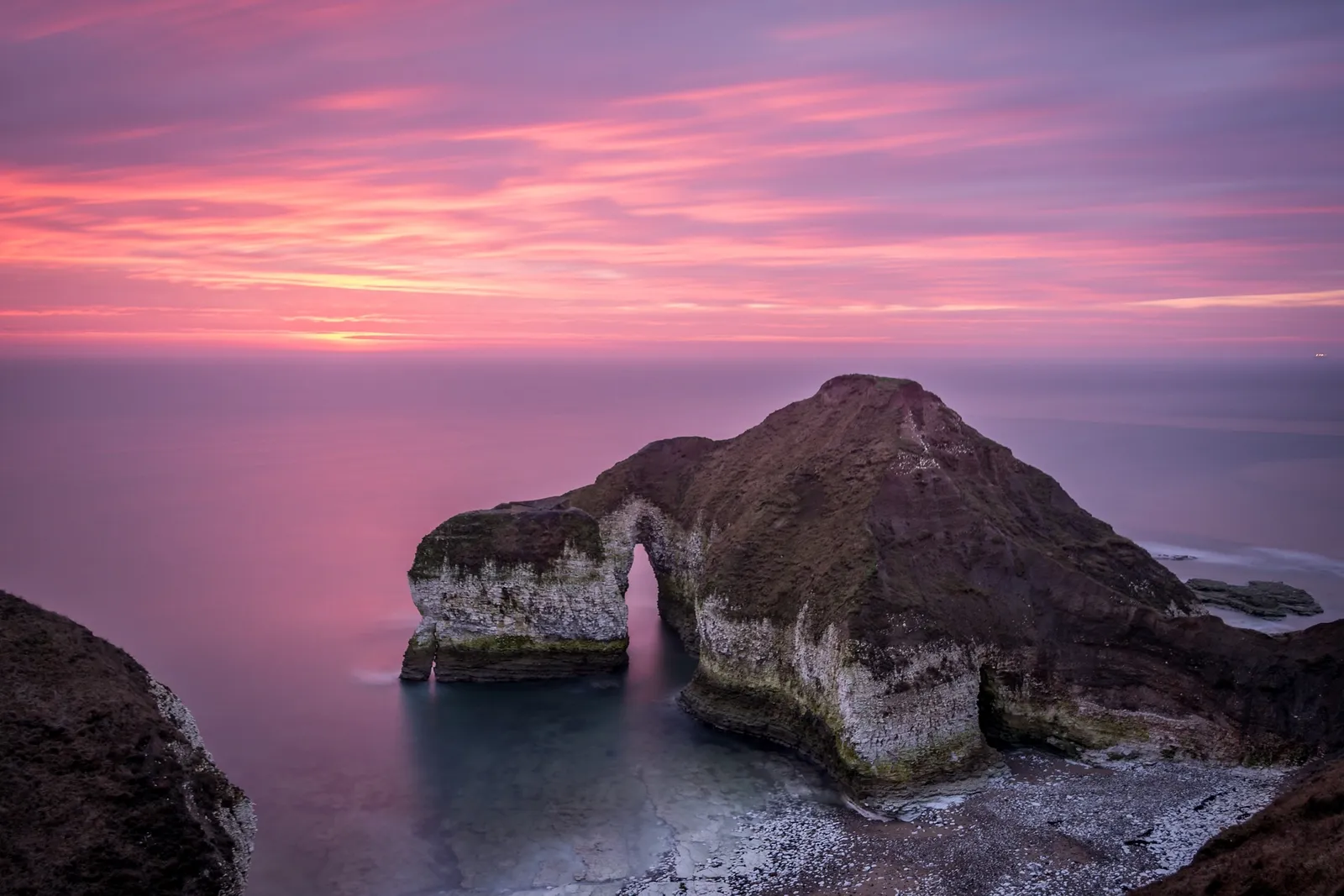
Flamborough Head is where the coast changes from dark Jurassic rock to brilliant white chalk. North Landing and Thornwick Bay are small, dramatic coves of sand and shingle framed by chalk arches, caves and stacks, ideal for exploring at low tide and popular with sea kayakers.
Just along the cliffs, RSPB Bempton Cliffs holds England's only mainland gannet colony and around half a million seabirds in the breeding season. Puffins are on the cliffs roughly April to July, along with guillemots, razorbills and kittiwakes. Bring binoculars and keep well back from the crumbling cliff edge.
Surf on the Yorkshire coast
Yorkshire has a genuine surf scene, and two beaches stand out. Cayton Bay, between Scarborough and Filey, is the most consistent break on the coast, a wide cliff-backed bay with a surf school and a car park up on the top. Saltburn is the other, a long beach with a pier and a proper surf community; it sits just over the border in Redcar and Cleveland rather than Yorkshire proper, but it is close enough to belong here.
Saltburn's other draw is its cliff lift, which opened on 28 June 1884 and is the oldest operating water-balanced cliff funicular in Britain, according to the North York Moors National Park. It saves you the steep climb back up from the sand.
Camping near the Yorkshire coast
Most of the good campsites cluster around Whitby, Scarborough and Filey, within easy reach of the beaches above. Browse and compare them on our North Yorkshire campsite listings, or start from the full campsite directory if you want to widen the search.
A few practical notes for a beach trip here. The North Sea is cold and the tides on this coast are strong, so check tide times before walking under any cliff or onto Filey Brigg, and follow RNLI safety advice if you are swimming or surfing. Many of the resort beaches have summer dog restrictions between roughly May and September, so check the local sign. If it is your first time pitching by the sea, our guide on how to choose a site for beach camping covers wind, tides and facilities.
Frequently asked questions
What is the best beach on the Yorkshire coast for families?
Filey and Scarborough North Bay are the best family beaches. Filey has five miles of firm, flat sand and gentle water, while North Bay is cleaner and quieter than Scarborough's South Bay and holds a Seaside Award. Both have parking and facilities nearby.
Which Yorkshire beach has a Blue Flag?
Whitby is the only beach covered here currently flying a Blue Flag, awarded for 2026. Hornsea and Withernsea further south also hold Blue Flags, while Filey, Cayton Bay, Robin Hood's Bay, Runswick Bay, Sandsend, Scarborough North Bay and both Bridlington beaches hold Seaside Awards.
Where can you find fossils on the Yorkshire coast?
Robin Hood's Bay and neighbouring Boggle Hole are the best spots. The Jurassic rocks yield ammonites and belemnites. Collect only loose fossils from the beach, never hammer the cliffs, and watch the fast incoming tide, which cuts the bay off quickly.
Can you surf in Yorkshire?
Yes. Cayton Bay, near Scarborough, is the most consistent surf beach, with a surf school on site. Saltburn, just over the border in Redcar and Cleveland, has a strong surf community, a pier and board hire. Both work best on an autumn or winter swell.
Can you see puffins on the Yorkshire coast?
Yes, at RSPB Bempton Cliffs near Flamborough, roughly April to July. The reserve holds England's only mainland gannet colony and around half a million seabirds in summer, including guillemots, razorbills and kittiwakes. Bring binoculars and stay back from the cliff edge.
Are dogs allowed on Yorkshire coast beaches?
It depends on the beach and season. Many resort beaches, including parts of Whitby, Scarborough, Filey and Bridlington, restrict dogs between roughly May and September. Quieter beaches such as Runswick Bay and Sandsend are usually more relaxed. Always check the local signage on arrival.
The short version
For fossils and coves go north to Robin Hood's Bay, Runswick Bay and Whitby; for long family sands and amusements head south to Filey, Scarborough and Bridlington; for seabirds and chalk cliffs stop at Flamborough; and for surf try Cayton Bay or Saltburn. It is the most varied stretch of coast in England, and easy to camp along. Find your pitch through our North Yorkshire campsites or read more on coastal camping in the UK.