Camping Near Britain's Rivers and Streams: Where to Go and How to Do It Safely
· Updated
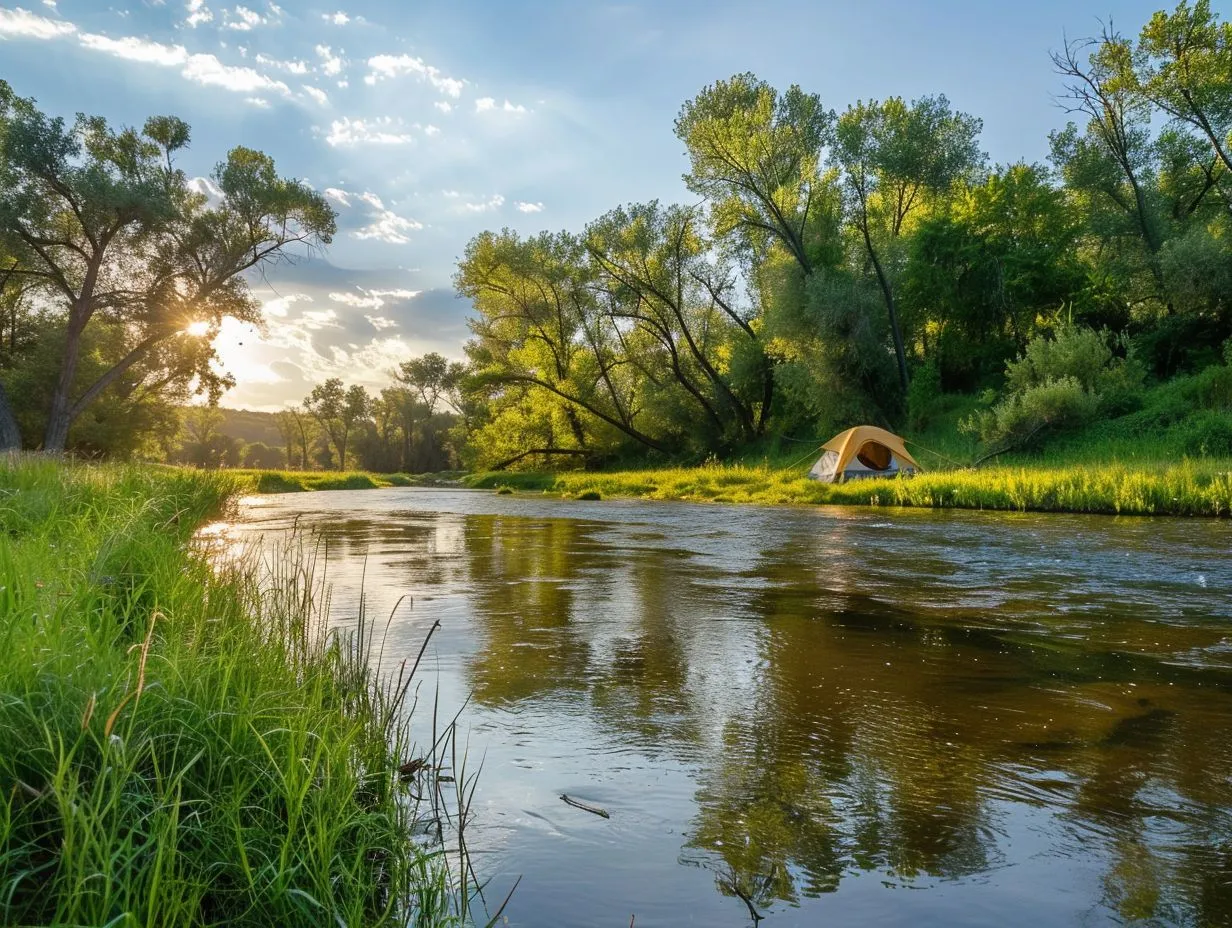
Riverside camping is one of the best pitches Britain offers, but the golden rule matters more than the view: pitch on higher ground and never right on the water's edge. Rivers can rise fast and flash-flood after heavy rain upstream, sometimes when it is still dry where you are sitting, and that risk is highest on moorland and mountain rivers. Get the spot right and you get the sound of moving water, morning swims, fishing and a proper chance of spotting a kingfisher. Get it wrong and you can be flooded out in minutes.
This guide covers where to camp beside British rivers, why people love it, and the practical and safety points that keep it brilliant rather than dangerous. If your main draw is paddling, kayaking or open-water swimming, our guide to campsites with water sports is the place to start for pitches set up around the water itself.
It is the riverside camping guide from Camping Sites in Britain, where you can find and compare campsites, caravan parks and glamping across the UK.
Why people love camping by a river
A river gives a campsite something a field never can: constant, gentle movement and sound. The noise of water running over gravel is the reason many people sleep better in a tent than at home, and it is the first thing you notice when you pitch up beside a beck or a broad, slow river.
Then there is the water itself. On a warm day you can swim, paddle, float a dinghy or launch a canoe straight from your pitch. Anglers get to fish the evening rise a few steps from the tent. And rivers are the richest wildlife corridors in the country, so a quiet dawn by the bank is your best chance of a kingfisher flashing past, an otter working the far side, or a dipper bobbing on a midstream rock. Bring the kids and it turns into hours of stone-skimming, dam-building and net-dipping for free.
Where to go: Britain's best riverside camping regions
The finest riverside camping in Britain clusters around a handful of rivers and valleys, each with its own character. Here is where to look, and what each one is known for.
| River or area | Where | Known for |
|---|---|---|
| River Wye | Herefordshire and Monmouthshire | Canoe-friendly meadow campsites, easy paddling |
| River Dart and Dartmoor rivers | Devon | Wooded gorges, wild swimming, moorland streams |
| River Wharfe and the Dales rivers | North Yorkshire | Bolton Abbey, Appletreewick, classic Dales bathing spots |
| River Severn | Shropshire and Worcestershire | Britain's longest river, broad lowland camping |
| Lake District becks and the River Eden | Cumbria | Mountain streams, riverside farm sites |
| River Spey and Highland rivers | Scotland | Salmon fishing, canoe descents, big wild scenery |
| Hampshire chalk streams | Test and Itchen valleys | Clear, gentle water and famous fly fishing |
The River Wye
The Wye is the classic British canoe-camping river. It winds through Herefordshire and along the border with Monmouthshire in gentle, mostly calm water, and its banks are lined with meadow campsites geared up for paddlers who want to launch a canoe, drift downstream for a day and camp beside the water each night. Hire is easy to arrange locally, and the river is graded for beginners on most of its length, which makes it a brilliant first multi-day paddle.
If a Wye descent is the plan, our guide to the best canoe camping routes covers how to string the days and pitches together.
The River Dart and the Dartmoor rivers
The Dart runs off Dartmoor through steep, wooded gorges into some of the most loved wild swimming water in England, with deep pools and slabs of granite to dry off on. The upland streams that feed it, along with the Teign and the East and West Dart, are pure moorland rivers, which means they respond to rain fast. A downpour on the high moor can put a friendly pool into brown spate within an hour, so this is exactly the kind of country where you watch the sky upstream and keep your pitch well back and high.
The River Wharfe and the Yorkshire Dales
Wharfedale is riverside camping at its most postcard-perfect. The Wharfe runs clear over limestone past Bolton Abbey and through Appletreewick, with grassy campsites right on the bank and shallow, sunlit reaches that are ideal for families. A word of caution local to the Wharfe: the Strid, just above Bolton Abbey, is a narrow, deceptively powerful channel that has killed people, so treat any sign warning you off the water there as absolute. You can compare pitches across the area on our North Yorkshire campsites listings.
The River Severn
The Severn is Britain's longest river, and by the time it reaches Shropshire and Worcestershire it is broad, slow and lowland in character, which makes for relaxed riverside pitches and easy canoeing. Slower, warmer water like this looks calm but has its own risk: still and sluggish stretches are where blue-green algae is most likely to bloom in summer, so it pays to know what to look for before anyone swims.
The Lake District becks and the River Eden
Cumbria gives you two flavours of riverside camping. High in the fells the becks are small, fast and cold, tumbling off the mountains through farm campsites that sit right beside them. Out in the Eden Valley the river is bigger and gentler, with red sandstone banks and quiet pools. The mountain becks carry the classic upland warning again: they rise and fall very quickly with hill rain, so never pitch on the low shingle beside one however inviting it looks in the sun. Browse options across the region on our Lake District and Cumbria campsites listings.
The Spey and the Highland rivers
The Spey is one of Scotland's great rivers, famous for salmon and for the Spey descent by canoe. Along with rivers like the Tay and the Findhorn it offers big, wild riverside camping in serious scenery. Scotland is also the one part of Britain where you have a legal right to wild camp beside these rivers, which is covered in the access section below.
The Hampshire chalk streams
The Test and the Itchen are chalk streams, which means gin-clear water welling up from the chalk at a steady temperature all year. They are gentle, shallow and famous worldwide for fly fishing. Much of the bank is privately owned and tightly managed for the fishing, so this is prime example country for using a proper campsite and arranging access rather than assuming you can pitch anywhere.
The safety that actually matters by a river
Riverside camping is safe when you respect two things above all: how fast rivers rise, and how cold and strong the water is. Neither is obvious from a sunny riverbank, and both have caught out experienced campers.
Rivers rise fast, so pitch high
Pitch on higher ground and keep well back from the water's edge, always. Rivers can flash-flood after heavy rain that falls miles upstream, which means the water where you are can surge even while your own sky stays blue. The effect is fastest and most dramatic on moorland and mountain rivers, where rain runs straight off the hills. Before and during your trip, keep an eye on the weather upstream and on the Environment Agency's flood warnings, and if the water starts to rise or discolour, move your gear up and away without waiting to see how bad it gets. The Government's advice on flash flooding is blunt: it happens with little or no warning, so never try to walk or drive through moving flood water (GOV.UK: flash flooding).
Watch children and dogs near the water
Keep children and dogs in sight and within reach whenever they are near fast or deep water, and give weirs a very wide berth. Weirs create powerful recirculating currents at their base that can trap even a strong swimmer, and they are far more dangerous than they look from the bank. Fast, deep or clouded water is not the place for young swimmers, and a dog that jumps in after a stick can quickly get into trouble in a current.
Cold water shock and what to do about it
Even in summer, British river water is cold enough to trigger cold water shock, which makes you gasp involuntarily and can cause you to breathe in water and drown within seconds. The RNLI's advice if you fall in or get into difficulty is to fight the urge to thrash, lean back, extend your arms and legs and float on your back until the shock passes and you can control your breathing, then swim to safety or call for help (RNLI: cold water shock). Enter unfamiliar water slowly, never jump or dive into water you do not know, and check the depth and what lies beneath first.
Know the water-borne risks
Two health risks are worth naming. Blue-green algae blooms in still or slow-moving water in warm weather, looking like green paint, scum or pea soup, and it can make people and especially dogs seriously ill, so keep out and keep pets out of any water that looks like that. Weil's disease (leptospirosis) is a bacterial infection carried in water contaminated by animal urine, most often in still or slow water; cover cuts before you go in, do not swallow river water, and see a doctor and mention the exposure if you develop flu-like symptoms within a fortnight of swimming. For where the water is clean and safe to swim, our guide to wild swimming spots and to the best fishing spots is worth a read.
Access: where you are actually allowed to camp
Most riverside land in Britain is private, so the simple answer is to use a proper campsite or get the landowner's permission. Wild camping beside a river needs the landowner's consent everywhere in England and Wales, with two exceptions. In Scotland, the Land Reform (Scotland) Act 2003 and the Scottish Outdoor Access Code give you a right to wild camp responsibly on most unenclosed land, which includes many riverbanks, so a Highland river is the one place you can pitch wild by the water without asking first. On Dartmoor, a UK Supreme Court ruling on 21 May 2025 confirmed a right to backpack camp on much of the common, which covers some of the Dartmoor rivers, subject to the local byelaws.
Everywhere else, do not assume a quiet-looking bank is fair game. Fishing rights and riverbank land are often owned and managed, particularly on the chalk streams and salmon rivers, and pitching without permission is trespass. Booking a riverside campsite is easier anyway, because you get a flood-sensible pitch, facilities and someone who knows the river. Start with our campsite listings and filter for the region you want.
Leave No Trace by the water
Riverbanks are fragile and easily polluted, so leave your pitch cleaner than you found it. Take every scrap of rubbish home, including food waste, and never wash up, brush your teeth or use soap or shampoo directly in the river, even the biodegradable kind, because it still harms the water life. Do your washing in a bowl and tip the grey water away from the bank, and go to the toilet well back from the water, at least 30 metres, burying waste or better still using the site facilities. Keep noise down at dawn and dusk when wildlife is most active, and leave the kingfishers and otters to get on with it.
Frequently asked questions
Is it safe to camp next to a river?
Yes, as long as you pitch on higher ground and keep back from the water's edge. Rivers can flash-flood after heavy rain upstream, especially on moorland and mountain rivers, so choose a raised spot, watch the weather and the Environment Agency's flood warnings, and move your gear up if the water starts to rise.
Can you wild camp beside a river in the UK?
Only in Scotland and on parts of Dartmoor without permission. Scotland's access laws allow responsible wild camping on most unenclosed land, and a 2025 Supreme Court ruling confirmed backpack camping on much of Dartmoor. Everywhere else in England and Wales you need the landowner's consent.
Can you swim in British rivers?
In many you can, but enter slowly and pick clean, moving water. The water is cold enough to cause cold water shock even in summer, so never jump into water you do not know. Avoid still water with green scum, which may be blue-green algae, and keep well clear of weirs.
Which is the best river for canoe camping in Britain?
The River Wye in Herefordshire and Monmouthshire is the classic choice. It is calm and beginner-friendly for most of its length, lined with meadow campsites set up for paddlers, and easy to hire canoes on. The Scottish Spey is the other great multi-day descent for more experienced paddlers.
What is cold water shock?
Cold water shock is the body's reaction to sudden immersion in cold water, causing an involuntary gasp and rapid breathing that can make you inhale water. The RNLI's advice is to lean back and float on your back until it passes, then swim to safety or call for help.
How far from a river should you pitch a tent?
Well back and on higher ground, never on the low shingle or grass right beside the water. There is no single legal distance, but the aim is to stay above any level the river could reach in a flood and to protect the fragile bank, so favour a raised, set-back spot over the closest view.
The short version
Camping by a British river is one of the great pitches, from the canoe-friendly Wye to the Dales, the Dartmoor pools and the Highland rivers. Pitch high and back from the edge, watch the weather upstream, respect the cold and get permission or use a proper site. Find your riverside pitch through our campsite listings or start with campsites with water sports.