Best Beaches in Scotland for a Camping Trip: 10 White-Sand Escapes
· Updated
Scotland has the finest beaches in Britain, and the best of them for a camping trip are Luskentyre and Seilebost on Harris, Achmelvich and Clachtoll in Sutherland, Sandwood Bay, Calgary Bay on Mull, the West Sands at St Andrews, Camusdarach near Arisaig, and Balnakeil and Sango Sands at Durness. Every one delivers white or silver sand and clear water, and most have a proper campsite within walking distance of the tideline.
This is part of our guide to coastal camping in the UK, and it is the Scotland chapter: where to pitch, where to swim, and what the water actually demands of you. It comes from Camping Sites in Britain, where you can find and compare campsites, caravan parks and glamping right across the country.
The best beaches in Scotland for a camping trip
The shortlist below is chosen for one thing: a brilliant beach with somewhere to sleep near it. A few are wild-camping-only, reached on foot, and we say so. The rest sit beside a working campsite, which is what most families want.
| Beach | Where | Best for | Nearest pitch |
|---|---|---|---|
| Luskentyre & Seilebost | Isle of Harris | The white sand postcard shot | Croft campsites nearby |
| Achmelvich | Sutherland | Family swimming, sheltered bay | Campsite on the beach |
| Clachtoll | Sutherland | Snorkelling and rock pools | Campsite behind the dunes |
| Sandwood Bay | NW Sutherland | Wild solitude, sea stack | Wild camping only |
| Calgary Bay | Isle of Mull | Sunsets and machair | Free informal camping |
| West Sands | St Andrews, Fife | Two-mile flat sand, easy access | Holiday parks in town |
| Camusdarach | Near Arisaig | Silver sands, island views | Campsite behind the beach |
| Balnakeil | Durness, Sutherland | Dunes and a long empty strand | Campsites in Durness |
| Sango Sands | Durness, Sutherland | Clifftop pitch above the beach | Campsite on the clifftop |
Luskentyre and Seilebost, Isle of Harris
Luskentyre is the beach that turns up on every list of the best in the world, and it earns it. A mile of pale sand runs out to a tidal flat that glows turquoise over white shell-sand when the sun is out, with the hills of Taransay across the sound. Seilebost, just across the water, gives you the same view looking back. Both are on the west coast of Harris off the A859, backed by machair grassland rather than a car park, so they never feel busy even in August. Small croft campsites and pods sit within a few miles, and this is machair-and-dune country, so keep off the fragile grassland when you pitch.
Achmelvich, Sutherland
Achmelvich is the family beach of the north west: a small sheltered bay of white sand and shallow, startlingly clear water, tucked into the rocky coast near Lochinver. The shelter is the point, because it takes the edge off both the wind and the cold, which makes it one of the more forgiving spots for a first sea swim with children. There is a campsite and hostel a short walk from the sand, so you can roll out of the tent and be on the beach in minutes.
Clachtoll, Sutherland
Clachtoll, a few miles up the coast from Achmelvich, is the one for snorkelling and rock pools. The bay is small, clear and studded with rock, with a natural split-rock arch and an Iron Age broch nearby, so there is plenty to explore beyond the swim. A well-run community campsite sits right behind the dunes, close enough that the beach is effectively your front garden. Book ahead in summer, because it is popular and deliberately small.
Sandwood Bay, north west Sutherland
Sandwood Bay is the wild one, and the reward for a proper walk. There is no road and no campsite: you park at Blairmore and walk roughly four miles across moorland to reach a mile of pink-tinged sand, a freshwater loch behind it, and the Am Buachaille sea stack standing offshore. This is one of Scotland's great wild-camping beaches, but you carry everything in and, crucially, everything out. Leave no trace, camp back from the dunes and the loch, and treat the whole bay as somewhere to be left exactly as you found it.
Calgary Bay, Isle of Mull
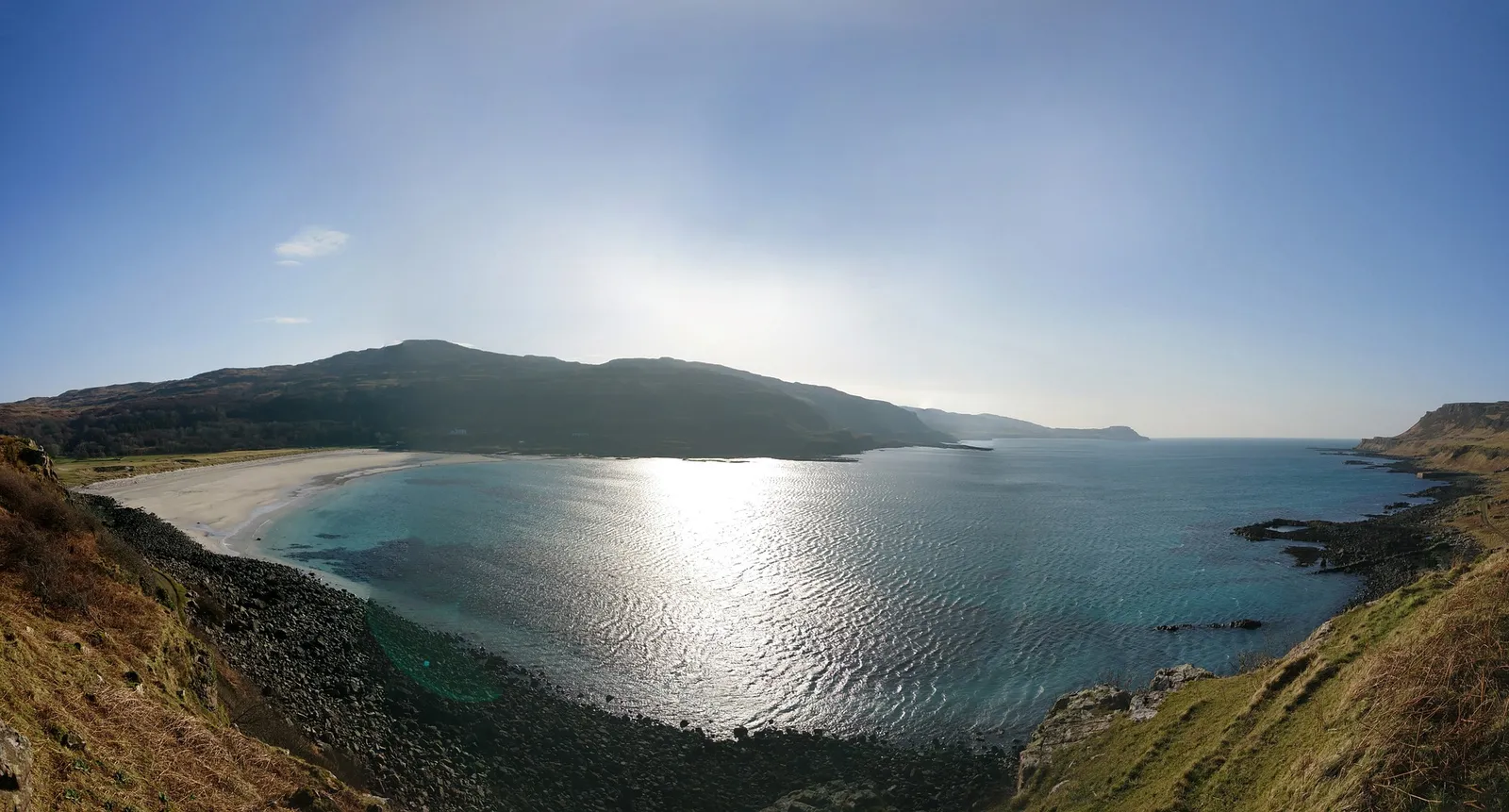
Calgary Bay is Mull's best beach and one of the easiest wild pitches in the Hebrides. A curve of white sand faces west for the sunsets, backed by machair where informal camping has long been tolerated free of charge, with basic toilets provided. It gets busy and it relies on people behaving, so this is the place to be a model camper: pack out your rubbish, use the facilities, and do not light fires on the machair. The gallery and cafe up the road are a bonus on a wet day.
The West Sands, St Andrews, Fife
The West Sands is the most accessible great beach on this list: two miles of flat, firm sand running north from St Andrews, famous as the opening shot of "Chariots of Fire". It is a town beach, so there is no wild camping here, but several holiday parks and campsites sit within a short drive, and it makes an easy first or last night for a trip that flies into Edinburgh. Wide, safe and dog-friendly out of season, it is the antidote to a long drive north.
Camusdarach, near Arisaig
Camusdarach is the "Local Hero" beach, one of the string of silver-sand coves on the Road to the Isles between Arisaig and Morar. Fine pale sand, dunes, and a view out to Eigg and Rum make it a favourite for family camping, and there is a campsite set back behind the dunes with a five-minute walk to the water. The whole stretch of coast here is worth a couple of nights, so use it as a base and beach-hop.
Balnakeil and Sango Sands, Durness, Sutherland
Durness gives you two outstanding beaches within a couple of miles. Balnakeil is a long, dune-backed strand of pale sand next to an old ruined church and a craft village, quiet and huge and perfect for a windswept walk. Sango Sands, right in the village, is a smaller cove of golden sand broken up by sea stacks, with a clifftop campsite pitched straight above it, so you sleep with the beach below you and the sound of the surf all night. Both are near the far north west tip of the mainland, and both are stops on the North Coast 500.
White sand and turquoise water, explained
The Caribbean colours are real, and there is a reason for them. Scotland's west and north coast beaches are made of pale shell-sand, ground down from shells and coral-like maerl rather than dark rock, so the seabed is bright. Shallow, exceptionally clean water over that pale floor scatters light back as turquoise, and on a sunny day the effect is genuinely tropical. The catch, of course, is the temperature: the colour is Caribbean and the water is not. Sea temperatures off north west Scotland sit around 12 to 15°C at the height of summer, which is why the safety section below matters.
Wild swimming and cold water safety
Scottish sea water is cold enough to be dangerous even in July, so treat every swim as cold-water swimming. The risk is cold water shock: a sudden gasp reflex and rapid breathing when you enter water below about 15°C, which can make you inhale water and lose control of your breathing in the first minute. It is the reason strong swimmers get into trouble, and it is entirely manageable if you respect it.
- Enter slowly. Wade in and give your body a minute or two to get past the initial gasp before you commit to a swim.
- Never swim alone, and never straight after alcohol. Keep to depths you can stand in on a first dip in a new spot.
- Check for rip currents and tides. Beaches like the West Sands and the big Hebridean strands have real tidal flows; ask locally or check before you go in.
- Know the float. If you get into trouble, the RNLI advice is to Float to Live: fight the urge to swim, lean back, spread your arms and legs, and float until your breathing settles, then call for help or swim to safety. In an emergency, call 999 and ask for the Coastguard.
- Warm up properly afterwards with dry layers and a hot drink. Getting out is when cold hits hardest.
The current guidance is on the RNLI Float to Live page and the RNLI cold water shock page. A cheap wetsuit and neoprene gloves turn a two-minute shock into a proper swim, and are well worth packing for a Scottish trip.
Your right to camp: Scotland's access rights
Scotland gives you a legal right to wild camp on most unenclosed land, which is why beach camping is so good here. The Land Reform (Scotland) Act 2003 created a statutory right of responsible access, set out in the Scottish Outdoor Access Code, and it covers lightweight wild camping done by small numbers of people for two or three nights in any one place. That is a genuine right, not a grey area, and it is the reason places like Sandwood Bay and Calgary Bay work.
Responsible is the operative word. The Code asks you to camp in small groups, keep away from houses and roads, take all litter away, bury human waste well away from water, and either use a stove or keep any fire small, controlled and off fragile ground like machair and peat. Fires are the biggest cause of friction, so on dune and machair beaches the safe answer is simply not to light one.
There are limits worth knowing. Enclosed farmland, sports fields and the immediate surrounds of buildings are excluded, and byelaws in the Loch Lomond and the Trossachs National Park require a permit for camping in certain zones from 1 March to 30 September. None of the beaches on this list fall in those permit zones, but check locally if you extend a trip south. Full detail is on the official Scottish Outdoor Access Code site.
Campsites near the beaches
Most of these beaches have a campsite within walking distance, which is the easy way to enjoy them without the wild-camping logistics. Achmelvich, Clachtoll, Camusdarach and Sango Sands all have sites more or less on the sand, and Durness and Arisaig have several to choose between. For the far north west cluster, browse pitches across the region in our Highlands campsite listings, or search the whole country from the Camping Sites in Britain directory.
If you want to build a whole trip around the coast rather than a single beach, three of our guides pair well with this one. Start with Britain's secret beaches and cove campsites for the quieter corners, use our guide to Britain's coastal trails and campsites to link beaches on foot, and read Britain's lighthouses, a camper's guide before you head out to Cape Wrath beyond Durness.
Frequently asked questions
What is the best beach in Scotland for camping?
For the full white-sand experience, Luskentyre on Harris is hard to beat, with croft campsites nearby. For a campsite right on the sand with easy family swimming, Achmelvich in Sutherland is the top pick.
Can you wild camp on beaches in Scotland?
Yes. The Land Reform (Scotland) Act 2003 gives you a right to lightweight wild camping on most unenclosed land, including many beaches, if you follow the Scottish Outdoor Access Code: small groups, no litter, no damage, and fires kept small and off fragile ground.
Which Scottish beach has white sand and turquoise water?
Luskentyre and Seilebost on Harris, Achmelvich and Clachtoll in Sutherland, and Calgary Bay on Mull all have pale shell-sand and clear turquoise water on a sunny day. The colour comes from bright shell-sand under shallow, very clean water.
Is it safe to swim in the sea in Scotland?
It can be, with care. Sea temperatures stay around 12 to 15°C even in summer, so cold water shock is a real risk. Enter slowly, never swim alone, know the Float to Live technique, and consider a wetsuit.
Do you need a campsite for Sandwood Bay?
No, and there is not one. Sandwood Bay is reached by a four-mile walk from Blairmore and is wild-camping only. Carry everything in and out, camp back from the dunes and loch, and leave no trace.
Which Scottish beach campsite is best for families?
Achmelvich for a sheltered, shallow swimming bay with a campsite by the sand, or Camusdarach near Arisaig for silver sands, dunes and island views with a site behind the beach. Both suit children well.
The short version
Head for Luskentyre or Achmelvich if you want the classic white-sand postcard with a pitch nearby, Sandwood Bay if you will walk in and camp wild, and Durness if you want two great beaches and a clifftop site in one stop. Respect the water, which is colder than it looks, and respect the access rights that make it all possible.
Ready to pick a pitch? Browse the coast in our Highlands listings, or read the rest of our guide to coastal camping in the UK.