The Best UK Kitesurfing Spots and Campsites Nearby
· Updated
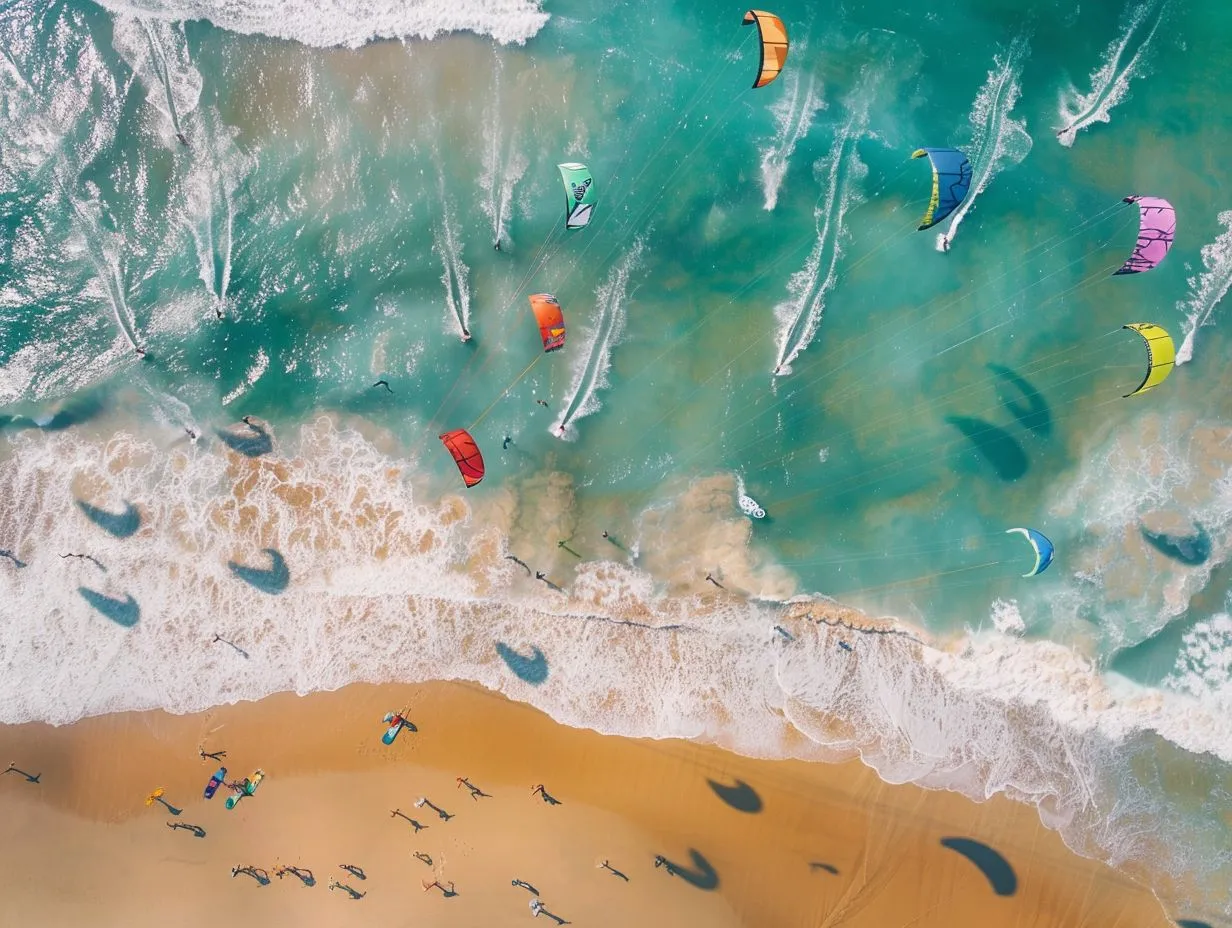
The best kitesurfing in the UK sits on a handful of wide, shallow beaches with reliable wind, and most of them have a campsite within a short drive. Camber Sands in East Sussex, Hayling Island in Hampshire and Poole Harbour in Dorset are the go-to spots for learning, because the water is flat and shallow and the beaches are huge. Rhosneigr on Anglesey, Troon on the Scottish west coast and Exmouth in Devon reward experienced riders with stronger wind and more swell.
Pick the spot to match your level and the wind forecast, book lessons with an accredited school if you are new, then find a pitch nearby so you can chase the good days. This guide names the best UK kitesurfing beaches, tells you who each one suits, and points you to camping close by. It sits alongside our roundup of campsites with water sports, and you can search every option on Camping Sites in Britain.
Kitesurfing is not a self-teach sport. The kite is a powerful bit of kit that can drag or lift you, so proper tuition from a British Kitesports Association recognised school is the first thing on the list, ahead of picking a beach.
The best UK kitesurfing spots at a glance
Here are the main spots, who they suit and the wind that switches them on. Cross-shore or side-onshore wind is the safest and most useful for kiting, because it carries you back to the beach rather than out to sea.
| Spot | Region | Best for | Best wind |
|---|---|---|---|
| Camber Sands | East Sussex | Beginners | South west, cross-shore |
| Hayling Island | Hampshire | All levels | South west |
| West Wittering | West Sussex | Beginners to intermediate | South west |
| Poole Harbour | Dorset | Beginners | South west, flat water |
| Weymouth | Dorset | Beginners to intermediate | South west |
| Hunstanton and Brancaster | North Norfolk | All levels | North to north west |
| Exmouth and Instow | Devon | Beginners to intermediate | South west |
| Rhosneigr | Anglesey | Experienced | South west to west |
| Troon and the west coast | Ayrshire, Scotland | Experienced | South west |
Best spots for beginners
If you are learning, you want flat, shallow water, a big beach and space to make mistakes. These four are the classics.
Camber Sands, East Sussex
Camber Sands is one of the best beginner beaches in the country. It is a huge stretch of sand that dries out at low tide, so you get shallow water and acres of room on a south westerly. The size of the beach means schools can spread learners out safely away from swimmers. Several campsites and holiday parks sit right behind the dunes, so you can walk to the water.
Hayling Island, Hampshire
Hayling Island is a proper kitesurfing hub and, fittingly, the place the sport was invented. The seafront works on a south westerly and there is a large, welcoming community and more than one accredited school on the beach. It suits every level: beginners use the gentler conditions, while stronger wind and swell keep experienced riders busy. Camping and caravan sites are dotted across the island.
Poole Harbour and Weymouth, Dorset
Poole Harbour gives you flat, shallow, sheltered water, which is close to ideal for a first season. It is one of the largest natural harbours in the world and the flat water makes learning board skills far less punishing than open surf. Weymouth, a little further along the Dorset coast, adds more beginner-friendly beach riding. Search pitches across the county on our Dorset campsites pages.
West Wittering, West Sussex
West Wittering is a clean, sandy beach with a large lagoon area that fills on the tide, giving beginners flatter water to practise in. It works best on a south westerly and gets busy in summer, so early starts and respect for swimmers matter here. It is an easy day trip from campsites across West Sussex and Hampshire.
Best spots for experienced riders
More experienced kiters chase stronger, cleaner wind and waves, which the exposed western and northern coasts deliver.
Rhosneigr, Anglesey
Rhosneigr is Anglesey's kitesurfing capital and one of the best wave-riding spots in Wales. It catches south westerly and westerly wind and offers a mix of flatter bays and rolling swell depending on the tide, which rewards riders who can already handle the kite in punchier conditions. There is a strong local scene and camping across the island.
Troon and the west coast, Scotland
Troon and the wider Ayrshire coast get consistent, strong south westerly wind straight off the Atlantic. The trade-off is colder water and bigger conditions, so this is territory for confident riders in a good wetsuit rather than first-timers. The west coast of Scotland has miles of empty beach if you are willing to explore.
Hunstanton and Brancaster, north Norfolk
The north Norfolk coast faces north, so it fires on northerly and north westerly wind when the south coast is flat. Hunstanton has an accredited school and shallow, sandy conditions that suit all levels, while Brancaster gives you more open, wilder space for stronger sessions. It is a brilliant option when the rest of England is windless.
Exmouth and Instow, Devon
Exmouth sits at the mouth of the Exe estuary and offers flat estuary water on the inside and beach riding on the outside, so it spans beginner and intermediate levels on a south westerly. Instow, on the north Devon coast, adds estuary flat-water riding near Bideford. Browse pitches on our Devon campsites pages, then link up with the local scene before you rig.
What you need before you go
Kitesurfing needs the right kit and, above all, the right training. Turning up without either is how people get hurt.
- Lessons from an accredited school. This is non-negotiable for beginners. A recognised school teaches you to control the kite on land, self-rescue and read conditions before you ever get on a board.
- A wetsuit. UK water is cold most of the year. A 5/4mm wetsuit with boots and gloves suits winter and spring; a 3/2mm covers the warmer months. You will be in the sea a long time, so warmth keeps you safe as well as comfortable.
- A kite, board, bar, lines and harness. Schools supply these while you learn, which saves you buying the wrong size before you know your style.
- A wind and tide check. Look at the forecast for wind strength and, crucially, direction, plus the tide times for the beach. The right wind on the wrong tide can leave you with no water or no beach.
- A helmet and impact vest. Sensible protection, especially in waves or crowded water.
If you are weighing up which watersport to start with, our guides to the best surfing campsites and kayaking and camping cover gentler ways onto the water.
Kitesurfing safety and beach etiquette
Kitesurfing safety comes down to the wind direction, your training and respecting everyone else on the beach. The kite generates real power, so a moment of bad judgement carries a genuine risk.
- Never kite in offshore wind without cover. Wind blowing straight out to sea will carry you away from land if anything goes wrong. Both the RNLI and the British Kitesports Association warn against it unless a safety boat is watching you.
- Respect designated launch and landing zones. Many beaches split kiting areas from swimming and general use. Rig, launch and land where you are meant to.
- Keep well clear of swimmers, walkers and other beach users. Give yourself a wide margin downwind, because that is where the kite drags you if you lose control.
- Check the wind and tide every time. Conditions change fast on the coast. Know your escape route to the beach before you launch.
- Follow local rules and the BKSA guidance. Read the British Kitesports Association advice and the RNLI kitesurfing safety pages before your first session, and heed any local codes of conduct posted at the beach.
Kitesurfing pairs naturally with other cold-water fun. If you fancy a gentler dip on a flat day, our guide to wild swimming spots is a good companion.
Frequently asked questions
Where is the best place to learn kitesurfing in the UK?
Camber Sands in East Sussex, Hayling Island in Hampshire and Poole Harbour in Dorset are the top learning spots. All three offer flat, shallow water, large beaches and accredited schools, which is exactly what beginners need.
Can you teach yourself to kitesurf?
No. The kite is powerful enough to drag or lift you, so self-teaching is dangerous. Take lessons with a British Kitesports Association recognised school, which teaches kite control, self-rescue and how to read the wind before you get on a board.
What wind is best for kitesurfing?
Cross-shore or side-onshore wind is safest, because it brings you back towards the beach. Avoid offshore wind, which blows you out to sea. Most UK spots need a steady 12 to 25 knots to get going.
Do I need a wetsuit to kitesurf in the UK?
Yes. UK water stays cold for most of the year. A 5/4mm wetsuit with boots and gloves suits autumn to spring, and a 3/2mm works through summer. Warmth is a safety matter, not just comfort.
Which UK spots suit experienced kitesurfers?
Rhosneigr on Anglesey, Troon on the Scottish west coast and Brancaster in north Norfolk offer stronger wind and more swell. Exmouth in Devon spans intermediate to advanced depending on whether you ride the estuary or the beach.
Is kitesurfing safe for beginners?
It is safe when you learn properly. Book lessons, ride flat shallow water, avoid offshore wind, keep clear of swimmers and follow RNLI and BKSA guidance. Most incidents come from poor training or the wrong conditions, both avoidable.
The short version
Learn at flat, shallow beaches like Camber Sands, Hayling Island or Poole Harbour, then progress to windier spots like Rhosneigr, Troon and Brancaster once you can handle the kite. Take lessons from an accredited school, wear a proper wetsuit, check wind and tide, and never kite offshore without cover. When you have found your spot, pitch up nearby and search every option on Camping Sites in Britain.