The Best Beaches in Wales for Campers: 12 Shores Worth the Trip
· Updated
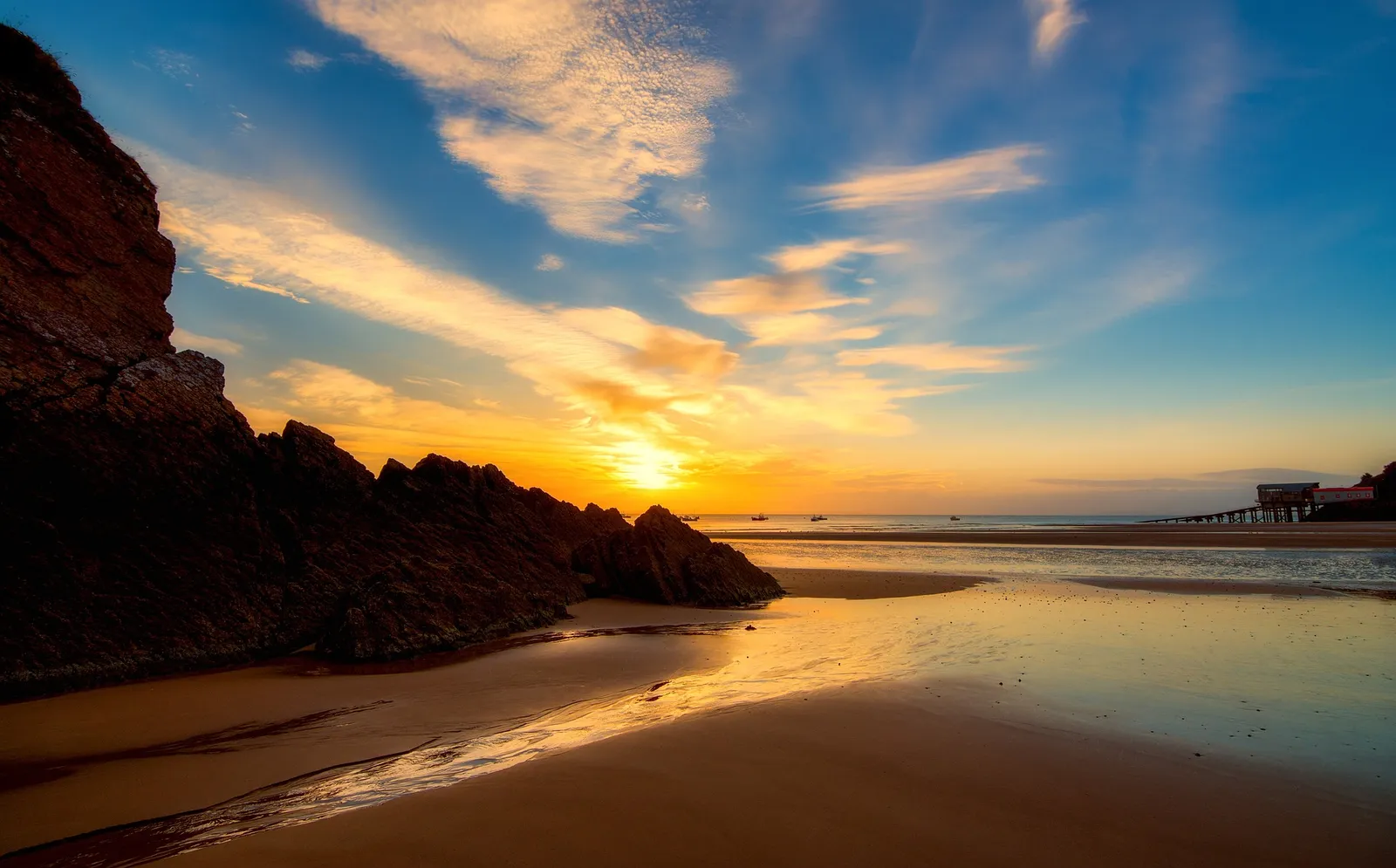
The best beach in Wales for most campers is Rhossili Bay on the Gower, a three-mile sweep of clean sand that has been voted among the finest in the world by TripAdvisor travellers and named among the world's best by Swansea Council. Wales packs Blue Flag family sands, world-class surf breaks and quiet coves into a coastline you can reach on foot from a tent, which is exactly why it rewards a camping trip more than a day out.
This guide names 12 real beaches worth pitching up near, and tells you what each is actually good for: surf, walking, swimming or a quiet afternoon with the kids. It is part of our guide to coastal camping in the UK, and here at Camping Sites in Britain we list the campsites that put these shores within a short walk of your pitch.
The 12 best beaches in Wales at a glance
Here are the beaches, grouped by what they do best, so you can match a shore to your trip before you book.
| Beach | Area | Best for | Summer lifeguards |
|---|---|---|---|
| Rhossili Bay | Gower, Swansea | Walking, surf, big views | Yes (RNLI) |
| Three Cliffs Bay | Gower, Swansea | Scenery, walking | No |
| Barafundle Bay | Pembrokeshire | Swimming, seclusion | No |
| Whitesands Bay | Pembrokeshire | Surf, families | Yes (RNLI) |
| Tenby (North and South) | Pembrokeshire | Families, town amenities | Yes (RNLI) |
| Newgale | Pembrokeshire | Surf, kite sports | Yes (RNLI) |
| Freshwater West | Pembrokeshire | Advanced surf | No |
| Harlech | Gwynedd | Space, dunes, walking | Seasonal |
| Barmouth | Gwynedd | Families, seaside town | Yes (RNLI) |
| Llangrannog | Ceredigion | Cove swimming, village | Seasonal |
| Aberdaron | Llyn, Gwynedd | Quiet, wildlife, walking | No |
That is 11 named shores plus Tenby's separate beaches, which comfortably clears a dozen options. Always check the current season's lifeguard cover on the RNLI beach finder before you swim, as patrols move year to year.
Best beaches in Wales for surfing
Pembrokeshire and Gower hold the strongest surf in Wales, with Freshwater West and Whitesands the standout breaks. If you have come to catch waves, base yourself in the west.
Freshwater West is the most powerful beach break in Pembrokeshire and suits confident surfers only. It has strong rips, no lifeguards and a big Atlantic swell, so it is a spot to respect rather than a place to learn. Whitesands Bay near St Davids is the friendlier all-rounder, with a consistent beach break, RNLI lifeguards in summer and a surf school on the sand.
Newgale gives you two miles of open beach that works for surfing, bodyboarding and kite sports when the wind is up. On the Gower, Rhossili Bay picks up clean swell along its length and holds a wave when smaller beaches are flat. For a first lesson, pick a lifeguarded beach and go at low to mid tide.
Best beaches in Wales for walking
The Wales Coast Path runs the length of the country's shoreline, so most of these beaches double as a trailhead. Three Cliffs Bay and Rhossili are the classic Gower walks.
Rhossili rewards the climb to Rhossili Down and the tidal walk out to Worm's Head, which you can only cross for about two and a half hours either side of low water, so check the tide times before you set off. Three Cliffs Bay has no direct road access; you reach it on a 15 to 20 minute walk down through Pennard, which keeps it quiet and photogenic.
In the north, Harlech pairs miles of dune-backed sand with a walk up to Harlech Castle, and Aberdaron on the Llyn Peninsula sits on one of the wildest, least-crowded stretches of the whole path. For more routes, see our guide to Britain's coastal pathways.
Dog rules on Welsh beaches
Many popular Welsh beaches ban dogs between 1 May and 30 September, so check before you travel with a dog in summer. The restriction is set by each council, not nationally, and it usually covers the busiest, most family-focused sands.
In Pembrokeshire, seasonal bans apply to sections of Tenby, Whitesands, Newgale and other main beaches from 1 May to 30 September, with details published by Pembrokeshire County Council. Quieter beaches such as Freshwater West and much of Barafundle are more relaxed, and dog-friendly sections often exist at one end of an otherwise restricted beach.
Out of season, from 1 October to 30 April, most Welsh beaches welcome dogs off the lead where it is safe. If you are travelling with a dog in July or August, ring the local council or check its website first, because fines apply on restricted sands.
Beach safety and the RNLI
Swim between the red and yellow flags on a lifeguarded beach and check the tide, because Welsh beaches carry real hazards. Rip currents, fast incoming tides and cut-off points cause most of the serious incidents.
The RNLI patrols the main Welsh beaches through the summer, including Rhossili, Whitesands, Newgale, Tenby and Barmouth, and the red and yellow flags mark the safest area to swim. Freshwater West and Barafundle have no lifeguards, so they suit strong, experienced swimmers rather than young children. If you are caught in a rip, float on your back, do not swim against it, and call 999 for the Coastguard if someone is in trouble.
Tides matter as much as flags. Worm's Head at Rhossili and the causeway to some coves cut off fast, so plan your walk around low water and give yourself a wide margin. Check current cover on the RNLI beach finder and read the beach's own safety signs on arrival.
Camping near the best Welsh beaches
The two counties to base a beach camping trip are Pembrokeshire in the south west and Gwynedd in the north, where campsites sit within walking distance of the sand. Both have coast-hugging farms, holiday parks and back-to-basics fields.
For Barafundle, Whitesands, Tenby, Newgale and Freshwater West, pitch up in Pembrokeshire and you can reach several beaches without moving the car. Browse our Pembrokeshire campsites to find a pitch near the coast. For Harlech, Barmouth and the Llyn beaches such as Aberdaron, head to Gwynedd, where our Gwynedd campsites put Snowdonia's mountains behind you and the sea in front. You can also start from our full campsite listings and filter by region.
If a wilder, quieter cove is the goal, our guide to Britain's secret beaches and cove campsites covers the hidden end of the coast, and Tenby fans will find more ideas in our look at Britain's seaside towns for campers.
Frequently asked questions
What is the best beach in Wales?
Rhossili Bay on the Gower is widely rated the best beach in Wales. It has been voted among the world's top beaches by TripAdvisor travellers, with three miles of clean sand, dramatic cliffs and reliable surf. Barafundle Bay in Pembrokeshire runs it close for looks.
Which Welsh beaches are best for surfing?
Freshwater West and Whitesands Bay in Pembrokeshire, Newgale, and Rhossili Bay on the Gower are the best surf beaches in Wales. Freshwater West suits experienced surfers only, while Whitesands and Newgale are better for lessons and beginners.
Can you take dogs on Welsh beaches?
Yes, but many popular beaches ban dogs from 1 May to 30 September. Restrictions are set by each council, so check locally before you travel in summer. Out of season, from October to April, most Welsh beaches allow dogs.
Are Welsh beaches safe to swim at?
Welsh beaches are safe to swim at when you use a lifeguarded beach and swim between the red and yellow flags. The RNLI patrols main beaches such as Rhossili, Whitesands and Tenby in summer. Watch for rip currents and fast incoming tides.
Where should I camp for the Welsh beaches?
Camp in Pembrokeshire for the south-west beaches such as Barafundle, Whitesands and Tenby, and in Gwynedd for Harlech, Barmouth and the Llyn Peninsula. Both counties have campsites within walking distance of the sand.
Can you camp on the beach in Wales?
No, you cannot legally camp on a Welsh beach without the landowner's permission, as wild camping needs consent everywhere in Wales. Use a proper campsite near the coast instead, of which there are many in Pembrokeshire and Gwynedd.
The short version
Rhossili and Three Cliffs on the Gower, Barafundle and Whitesands in Pembrokeshire, and Harlech and Barmouth in Gwynedd give you the full range of Welsh beaches, from surf to seclusion. Check the tide, swim between the flags on a lifeguarded beach, and mind the summer dog bans. Then find a pitch near the sand through our coastal camping in the UK guide or straight from our campsite listings.