How to Stay Safe Camping in Remote Areas: A UK Guide
· Updated
Staying safe camping in a remote area comes down to three things: someone knows where you are and when you are due back, you can navigate and call for help without a phone signal, and you are dressed and fed for weather that can turn in an hour. Get those right and the British hills, moors and islands are one of the finest places to pitch up. Get them wrong and a twisted ankle two miles from the nearest track becomes a serious problem.
This guide covers wild and backcountry camping in genuinely remote spots, well away from a warden, a car park or a phone mast. The good news first: there is nothing in the UK that will hunt you, and mountain rescue in England and Wales is free and volunteer-run. The rest is preparation, and it is all learnable.
Before you read on, make sure your first aid is sound, starting with our essential first aid tips for campers. This article is from Camping Sites in Britain, where you can find and compare campsites across the UK, and it sits alongside the rest of our safety guides.
Before you go
Tell someone your plan and your expected return time, then stick to it. Give a trusted person your route, where you intend to camp, what you are wearing, and the time you will contact them by. Agree what they should do if they do not hear from you, and by when. This single step is what turns a missing walker into a targeted search rather than a guess across a whole mountain range.
Check the mountain weather, not the town forecast. Use the Mountain Weather Information Service (MWIS) for the free hazard-focused mountain forecast covering the Scottish areas, the Lake District, Snowdonia, the Peak District and more, and cross-check it against the Met Office mountain forecasts. Pay attention to wind speed on the tops, cloud base and freezing level, not just whether it will rain. A summit can be 10C colder than the valley with a wind that knocks you off your feet.
Know your route and carry a bail-out plan. Work out your distance, your ascent, and roughly how long it will take, then note the quickest safe way off the hill from the halfway point in case the weather closes in or someone tires. For a fuller pre-trip checklist, read our guide to preparing for unexpected weather while camping.
Check you are actually allowed to be there. Wild camping without the landowner's permission is a legal right in England only on most of Dartmoor, confirmed by the UK Supreme Court on 21 May 2025. Scotland allows responsible wild camping almost everywhere under the Land Reform (Scotland) Act 2003 and the Scottish Outdoor Access Code, though the Loch Lomond and the Trossachs byelaw zones need a permit from 1 March to 30 September. Everywhere else in England, Wales and Northern Ireland you need the landowner's permission. Follow the Countryside Code and leave no trace.
Navigation: a map, a compass and the skill to use them
Carry a paper map and a compass, and know how to use them before you set off. In remote areas a phone is a bonus, not a plan. Batteries die in the cold, screens crack, and signal disappears. A laminated Ordnance Survey map (1:25,000 Explorer or 1:50,000 Landranger) and a baseplate compass work in any weather and never run flat.
The skill matters more than the kit. Being able to take a bearing, follow it in mist, and relocate yourself when you are unsure is what actually keeps you safe when the cloud drops to ground level. If you are rusty, our guide on how to use a compass and map for camping walks you through the basics, and it is worth practising in easy terrain first. Treat any phone app as a backup to the paper, never the other way round.
Communication when there is no signal
Assume patchy or no phone signal, and build in backups. Large parts of the Highlands, the Welsh mountains and the moors have no coverage at all. Here is what to carry and know.
- A power bank and a charging cable, kept warm inside your jacket. Cold flattens a phone battery fast, so switch to aeroplane mode to preserve charge until you need it.
- 999 and 112 work on any network. Even with no bars on your own provider, an emergency call can connect through any available network, so it is always worth trying.
- Register for emergencySMS. Text the word register to 999 from your phone and follow the reply. Once registered you can text 999 when a call will not connect, which sometimes works where a voice call cannot. Do this at home before you go.
- what3words. The free app turns your exact position into three words that emergency services can use to pinpoint you to a three-metre square. Download the offline map for your area first.
- A satellite messenger for very remote trips. A device with a two-way messaging and SOS button, such as a Garmin inReach, works far beyond phone coverage and lets you trigger a rescue and share your location from anywhere with a view of the sky.
Weather and terrain hazards
The weather and the ground itself are the real risks in the British hills, not wildlife. Cold, wet and wind cause far more mountain rescue call-outs than anything with teeth. Know what you are up against.
| Hazard | Why it matters | What to do |
|---|---|---|
| Exposure and hypothermia | Wind and rain strip body heat fast, even in summer | Carry waterproofs, spare warm layers, hat and gloves; eat and drink regularly; stop and shelter early if someone starts shivering or stumbling |
| Fast weather change | Cloud, wind and rain can arrive within the hour on high ground | Check MWIS the morning you leave; turn back rather than push on into worsening conditions |
| River crossings | Streams rise quickly after rain and moving water is deceptively powerful | Cross at the widest, shallowest point; unclip your rucksack waist strap; if in doubt, walk upstream to a bridge |
| Boggy ground | Peat hags and bog slow you down and soak you through | Follow drier ground and paths; allow extra time; keep spare dry socks in a dry bag |
| Cliffs and steep ground | A slip in poor visibility can be fatal | Navigate carefully near edges in mist; do not shortcut down unknown steep ground in the dark |
| Short winter daylight | In December the light can be gone by 16:00 | Start early, carry a head torch with spare batteries, and plan to be at camp with time to spare |
Water and food
Carry enough water to get you between reliable sources, and treat what you collect. Running water from high, uninhabited ground is usually safe, but a filter, purification tablets or boiling removes the risk of picking up a stomach bug from water that has passed livestock or a dead animal upstream. Fill up above habitation and grazing where you can.
Take more food than you think you need, weighted towards calorie-dense, no-cook options. Nuts, flapjacks, cheese and chocolate keep you fuelled and warm, and warmth is a safety issue on the hill. Carry a stove and fuel for a hot drink and a hot meal, both of which do a lot for morale and body heat, plus emergency rations you do not touch unless things go wrong.
Wildlife: respect, not fear
Nothing in the UK will attack you, but three things deserve respect. Britain has no bears, wolves or big cats in the wild, so you can drop most of the wildlife worry that applies overseas. Keep these three in mind.
- Adders. The UK's only venomous snake basks on heath and moorland in spring and summer. It will slither off if it hears you coming. A bite is rare and very seldom serious, but keep the limb still and call 999 to be checked over.
- Ticks. These tiny biters live in bracken and long grass and can carry Lyme disease. Cover your legs, check your skin at the end of the day, and remove any attached tick promptly with a tick tool or fine tweezers, pulling straight out.
- Cattle. Farm animals cause more walker injuries than anything wild. Give cattle a wide berth, especially cows with calves, and if a herd approaches when you have a dog, let the dog off the lead so it can escape and you can too.
A first aid kit and the knowledge to use it
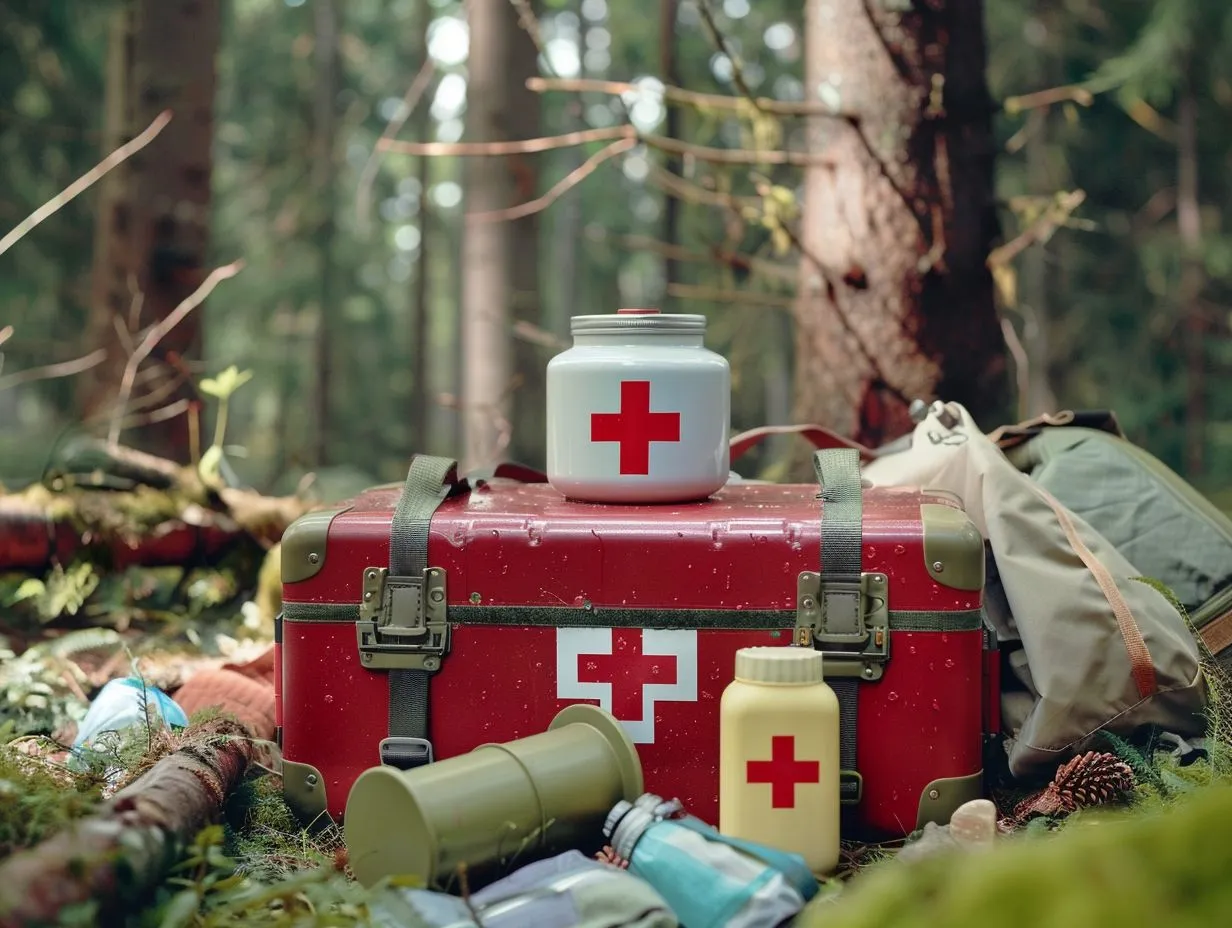
Carry a first aid kit sized for being hours from help, and know how to use it. Out here you are your own first responder until a rescue team arrives, which in a remote spot can be a long time. As a minimum, pack a way to treat blisters, dress a wound, manage a sprain, and keep a casualty warm, including a foil survival bag for every person.
Knowing what to do matters as much as the contents. Our guide to packing a first aid kit for camping covers exactly what to include and why, and a one-day outdoor first aid course is worth every penny before a serious trip. Practise using the kit before you rely on it in the rain with cold hands.
What to do in an emergency
If someone is seriously hurt or you are genuinely lost or benighted, call for help early and stay put. In the mountains, the procedure confirmed by Mountain Rescue England and Wales is clear.
- Dial 999 or 112 and ask for the Police, then Mountain Rescue. In Scotland the police coordinate mountain rescue in the same way.
- Give your location as a six-figure grid reference from your map, or your what3words address, plus what happened, how many are in your party, the casualty's name, age and injuries, and your phone number.
- If a call will not connect, text 999 (only if you have registered for emergencySMS beforehand).
- Stay where you are until the team reaches you, and keep everyone warm and sheltered. Do not wander off looking for signal once help is on the way.
If you have no phone contact at all, the international mountain distress signal is six blasts on a whistle (or six torch flashes) over one minute, then a minute's silence, repeated. The reply is three blasts. Keep blowing until you are found. Carry a whistle on your rucksack strap where you can reach it, and if you are camping this far out regularly, our region listings can help you build up in stages, from managed sites to wilder ground. Browse campsites across the country in our campsite directory.
Frequently asked questions
How do you call mountain rescue in the UK?
Dial 999 or 112, ask for the Police, then ask for Mountain Rescue. Give a grid reference or what3words location, the nature of the emergency, how many are in your group, and your phone number. Then stay put until the team reaches you.
Is there a phone signal when wild camping in remote areas?
Often not. Large parts of the Highlands, Welsh mountains and English moors have no mobile coverage. Carry a power bank, register for emergencySMS, download what3words offline, and for very remote trips carry a satellite messenger with an SOS function such as a Garmin inReach.
Can you text 999 in an emergency?
Yes, but only if you have registered first. Text the word register to 999 from your phone and follow the reply, ideally before your trip. Once registered, you can text 999 when a voice call will not connect, which sometimes gets through where a call cannot.
What is the biggest danger when camping in remote areas?
Cold, wet and wind, not wildlife. Exposure and hypothermia cause more UK mountain rescues than anything else, made worse by fast weather changes and short winter daylight. Waterproofs, spare warm layers, food and a survival bag are your main defence.
Is it safe to camp alone in remote areas?
It can be, with the right preparation. Tell someone your route and return time, carry a map, compass and a way to call for help without phone signal, check the mountain weather, and pick your first solo trips in manageable terrain rather than the remotest ground.
Do you need to treat water when wild camping in the UK?
Treat it to be safe. Running water from high, uninhabited ground is usually fine, but a filter, purification tablets or boiling removes the risk of a stomach bug from water that has passed livestock or a carcass upstream. Collect above grazing and habitation.
The short version
Tell someone your plan and return time, check MWIS and the Met Office, and carry a map, compass and the skill to use them. Assume no phone signal, so pack a power bank, register for emergencySMS, use what3words and take a satellite messenger for the wildest trips. If it goes wrong, dial 999, ask for Police then Mountain Rescue, give a grid reference or what3words, and stay put and warm. For more, start with our essential first aid tips for campers or find your next pitch in the campsite directory.