Peak District Waterfalls: 10 of the Best and How to Reach Them
· Updated
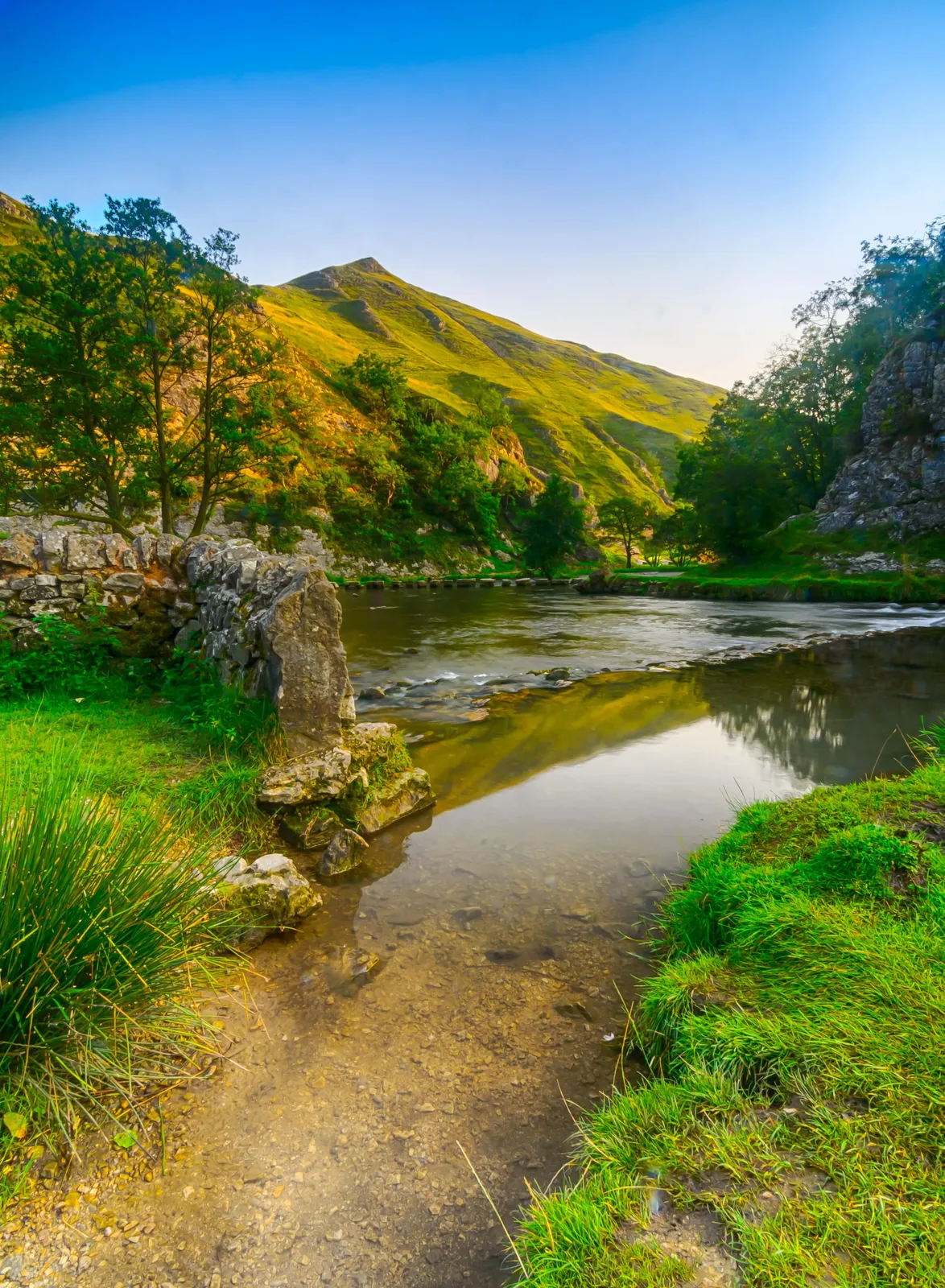
The Peak District's tallest waterfall is Kinder Downfall, which drops around 30 metres off the western edge of Kinder Scout. It is also the one waterfall in Britain that regularly runs upwards: in a strong westerly the wind catches the falling water and blows it back over the plateau in a plume you can see for miles. That single fact tells you what the Peak is about, gritstone edges, high moorland and water that behaves like the weather.
This is a guide to 10 Peak District waterfalls worth the walk, with honest notes on where to park, how far you are actually walking, and which ones you can safely get in. It is part of our wider guide to camping in the UK's national parks, and it comes from Camping Sites in Britain, where you can find and compare campsites across Derbyshire and the rest of the Peak.
The Peak District was Britain's first national park, designated in April 1951, and much of the open access you enjoy on these walks traces back to the Kinder Scout Mass Trespass of 24 April 1932, when hundreds of ramblers walked onto private moorland and helped win the right to roam that the law finally granted in the Countryside and Rights of Way Act 2000.
The 10 waterfalls at a glance
Here is the shortlist, ordered roughly from the wildest and hardest to reach down to the easy family outings.
| Waterfall | Nearest base | Walk | Best for |
|---|---|---|---|
| Kinder Downfall | Hayfield | 4 to 5 miles, hard | Drama and views |
| Three Shires Head | Flash / Gradbach | 1.5 to 3 miles, moderate | Plunge pools |
| Lumsdale Falls | Matlock | Under 1 mile, easy | History and cascades |
| Waterfall Swallet | Foolow / Eyam | Under 1 mile, easy | Hidden gem |
| Slippery Stones | Kings Tree, Derwent | 2 miles, easy | River pools |
| Padley Gorge | Grindleford | 2 miles, easy | Woodland with children |
| Middleton Dale falls | Stoney Middleton | Short, easy | Roadside stop |
| Monsal Dale weir | Monsal Head | 1 mile, moderate | The classic view |
| Wyming Brook | Redmires, Sheffield | 2 miles, easy | Cascades and rapids |
| Grindsbrook falls | Edale | 3 miles, hard | Ambitious hikers |
Kinder Downfall
Kinder Downfall is the highest waterfall in the Peak District at roughly 30 metres, sitting on the western rim of Kinder Scout above Hayfield. It is fed by the River Kinder off the highest, boggiest plateau in the park, which means it is spectacular after rain and can be a mere trickle in a dry August. The famous blowback happens when a strong westerly hits the fall square on and lifts the water vertically, sometimes freezing into strange ice sculptures in winter.
Start from the Bowden Bridge car park at Hayfield, the same spot the 1932 trespass set off from, and follow the route up to William Clough and onto the edge. Reckon on 4 to 5 miles round trip over rough, exposed ground with real climbing. This is a proper hill walk, not a stroll, so take boots, waterproofs and a map. Do not try to swim under it: the pools are shallow, the rock is slick, and the plateau above is no place to be caught out by weather.
Three Shires Head
Three Shires Head is where Derbyshire, Cheshire and Staffordshire meet, marked by a handsome old packhorse bridge over the River Dane. Below the bridge, a set of falls tumbles into clear plunge pools that have made this one of the most popular wild swimming spots in the Peak. On a warm weekend it gets busy, so come early or midweek if you want it to yourself.
The shortest approach is from the tiny village of Flash, England's highest village, or from Gradbach a little further round. It is a moderate walk of 1.5 to 3 miles depending on your start. If you do swim, check the depth by wading first, never jump into water you have not checked, and be aware the pools are cold year round. Our advice on getting to spots like this is in our guide to the best scenic drives to campsites, since the lanes around here are half the fun.
Lumsdale Falls
Lumsdale Falls is a series of cascades running down a wooded valley just outside Matlock, and it is the best short waterfall walk in the Peak for anyone who does not want a full hill day. The valley is an old industrial site, once powered by these very waters for corn milling, bleaching and lead smelting, and the mossy ruins of the mills sit right alongside the falls. The Arkwright Society now cares for the site.
Park considerately (spaces are very limited, so the honest move is to walk in from Matlock) and follow the path up through the glen. The whole loop is under a mile and takes well under an hour, though the rocks are wet and slippery, so hold on to children. It is a genuinely atmospheric spot and one of the finest examples in the country of nature reclaiming industry.
Waterfall Swallet
Waterfall Swallet is the Peak's best kept secret, a surprising 6 metre fall that drops into a wooded sinkhole near the village of Foolow, close to Eyam. A swallet is a hole where a stream vanishes underground, which is exactly what happens here, the water pours over the lip and disappears into the limestone. It is on private land with permissive access, so tread lightly and keep it tidy.
The walk in from Foolow is short and easy, though the final scramble down to the pool is steep and muddy. Because it sits in a hidden hollow you can be standing almost on top of it before you see it, which is exactly why people who know it love it.
Slippery Stones and the Upper Derwent
Slippery Stones is a beautiful set of river pools and small falls at the very top of the Upper Derwent Valley, above Howden Reservoir, reached by a fine old packhorse bridge that was moved here stone by stone when the reservoirs were flooded. It is a favourite quiet swimming and paddling spot, far calmer than Three Shires Head.
Drive to the Fairholmes visitor centre near Derwent Dam, then either walk or cycle the roughly 4 miles up the valley to Kings Tree and on to the bridge. The Upper Derwent is one of the great easy days out in the park, with reservoirs, woodland and the option to hire a bike. If you like this kind of terrain, our guide to the UK's geological wonders near campsites covers the gritstone that shapes it all.
Padley Gorge
Padley Gorge is the pick of the Peak for families, a tumbling run of small waterfalls and pools where Burbage Brook drops through ancient oak woodland below Grindleford. It is not one big fall but a whole staircase of little ones, with rocks to clamber and shallow pools to paddle in, which is why it is heaving on a sunny Sunday.
Park at Grindleford station or Longshaw and follow the brook up through the trees, a gentle 2 mile round trip. The woodland here is a protected fragment of the sessile oak forest that once covered the region, and it is glorious in autumn. For more woodland like this, see our roundup of the best campsites for exploring ancient woodlands.
Middleton Dale and Stoney Middleton
Middleton Dale gives you a waterfall you can see almost from the car, tucked into the limestone cliffs above the village of Stoney Middleton on the A623. It is a modest fall rather than a giant, but it is the easiest tick on this list, and the dale itself is a dramatic gorge of crags popular with rock climbers. Combine it with Eyam and Waterfall Swallet for a good half day without much walking.
Monsal Dale weir
The weir at Monsal Dale is not a natural waterfall but it is one of the most photographed drops in the Peak, a wide sheet of water on the River Wye directly below the famous Monsal Head viaduct. The view from Monsal Head down over the viaduct and the weir is the postcard shot of the White Peak, and it is right by the car park.
Walk down from Monsal Head, roughly a mile there and back but steep on the way back up, or take the level Monsal Trail along the old railway for an easier version. The Wye here is a clear chalk stream, cold and fast, better admired than swum.
Wyming Brook and Grindsbrook
Wyming Brook is a lovely series of cascades and rapids in a nature reserve on Sheffield's western edge, near the Redmires reservoirs, with an easy 2 mile path following the water down through the trees. It is a peaceful, accessible option on the Sheffield side of the park.
Grindsbrook, by contrast, is for ambitious walkers only. The brook cuts a rocky clough straight up out of Edale onto the Kinder plateau, with a string of small falls and pools along the way, and it forms one of the classic starts to the Pennine Way. Reckon on a hard 3 mile climb over boulders, best left for dry, settled weather.
Wild swimming and staying safe
Some of these pools are genuinely good to swim in, and Three Shires Head and Slippery Stones are the two most people choose. Cold water is the real risk, not depth alone: Peak pools stay cold all year and cold water shock can catch out even strong swimmers, so get in slowly, never jump into water you have not checked for depth and rocks, and get out before you start shivering. After heavy rain, rivers rise fast and turn brown and powerful, which is exactly when the waterfalls look best and the water is most dangerous. Keep children within arm's reach at every one of these sites.
Follow the Countryside Code on every visit: take your litter home, leave gates as you find them, keep dogs under close control near livestock and ground nesting birds, and stick to paths across farmland. Several of these falls, including Waterfall Swallet and parts of Lumsdale, sit on land where access is a courtesy rather than a right, and that access lasts only as long as visitors behave. Park in proper car parks rather than blocking narrow lanes and farm gateways.
Where to camp for the Peak's waterfalls
The Peak District splits into two halves, and where you pitch decides which falls are on your doorstep. Base yourself around Edale, Hayfield or the Upper Derwent for the wild Dark Peak falls (Kinder Downfall, Grindsbrook, Slippery Stones), or around Bakewell, Matlock and the southern dales for the gentler White Peak outings (Lumsdale, Monsal Dale, Middleton Dale). Three Shires Head sits out west near Buxton and the Staffordshire moorlands.
You can browse and compare sites across the region, from farm fields to full facility parks, in the Camping Sites in Britain directory. Book early for bank holidays and school summer holidays, when the honeypot villages and their car parks fill by mid morning.
Frequently asked questions
What is the highest waterfall in the Peak District?
Kinder Downfall, at around 30 metres, on the western edge of Kinder Scout above Hayfield. In a strong westerly wind the water is famously blown back up over the plateau rather than falling, creating a plume visible from a distance.
Can you swim at Peak District waterfalls?
Yes, at some. Three Shires Head and Slippery Stones on the Upper Derwent are the most popular wild swimming spots. The water is cold all year, so enter slowly, check depth before getting in, and avoid rivers after heavy rain when levels rise quickly.
Which Peak District waterfall is easiest to reach?
Lumsdale Falls near Matlock and Padley Gorge near Grindleford are the easiest, both under a mile of gentle walking. The falls in Middleton Dale at Stoney Middleton can almost be seen from the road, making them the least effort of all.
Where do three counties meet at a Peak District waterfall?
Three Shires Head, where Derbyshire, Cheshire and Staffordshire meet at an old packhorse bridge over the River Dane. Falls below the bridge feed a set of clear plunge pools that are popular for wild swimming in summer.
Is the Peak District a national park?
Yes. The Peak District was designated in April 1951 as Britain's first national park. Its open access owes much to the Kinder Scout Mass Trespass of 1932, which helped win the right to roam later secured by law in the year 2000.
Do I need to pay to visit Peak District waterfalls?
The waterfalls themselves are free to visit. You will usually pay for parking at official car parks such as Bowden Bridge, Fairholmes and Monsal Head. Some sites, including Lumsdale, ask for a small donation towards their upkeep.
The short version
For drama and a real hill day, walk up to Kinder Downfall from Hayfield. For a swim, head to Three Shires Head or Slippery Stones. For an easy hour with children, Lumsdale or Padley Gorge win every time. Whichever you choose, respect the Countryside Code and treat cold water with caution.
Sort your base first: browse sites across the region in the Camping Sites in Britain directory, or read more about camping in the UK's national parks before you pitch up.