The Best UK Campsites for Rock Climbers Near Classic Crags
· Updated
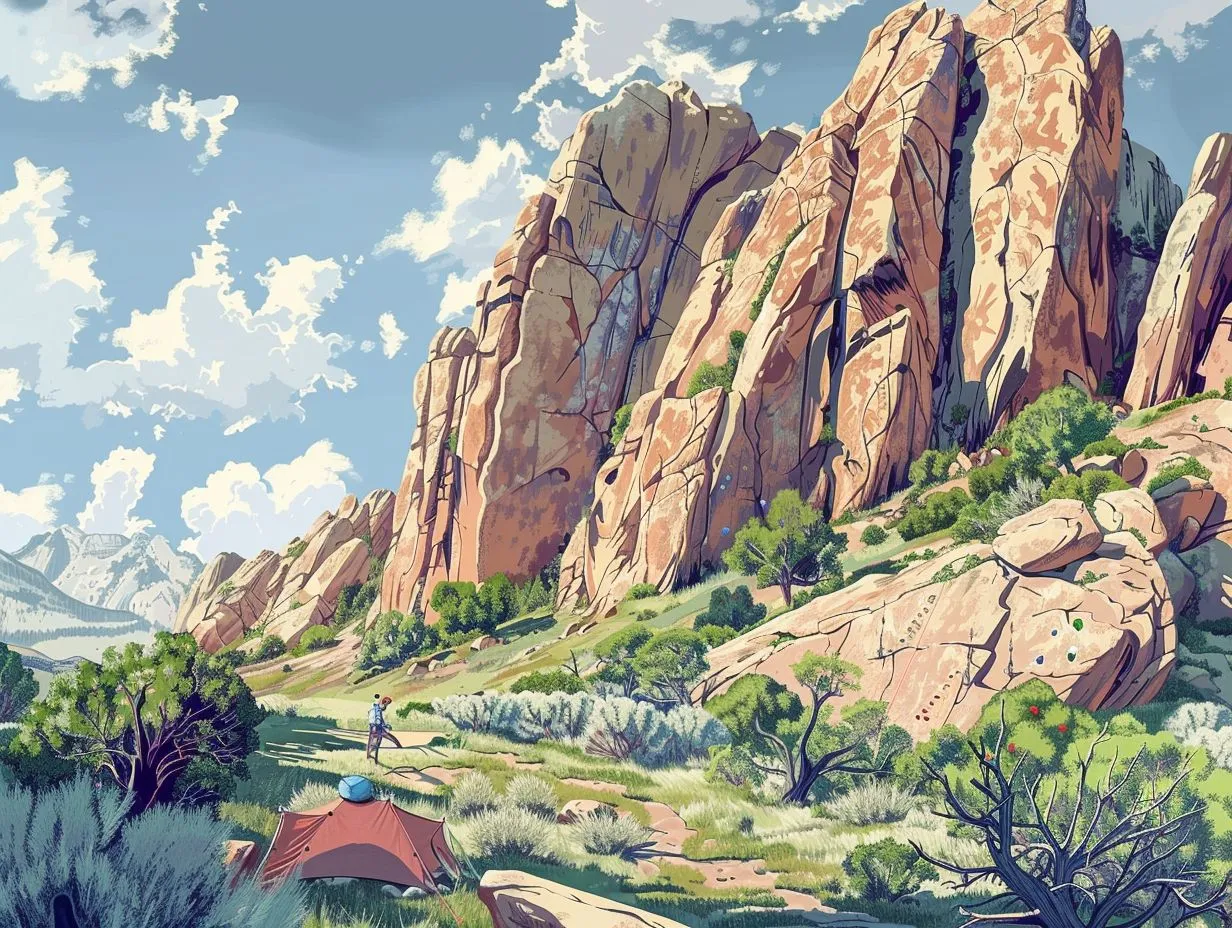
The best campsites for rock climbers in Britain are the traditional sites at the foot of the crag, where you can walk to the rock in minutes and get back for tea. North Lees below Stanage in the Peak District, the sites at Llanberis under the Snowdonia mountain crags, and the National Trust campsites in Langdale and Borrowdale are the classic examples, each one within a short walk or drive of world-class climbing.
This guide covers where to stay and climb across the UK's best areas, from gritstone edges and mountain rock to the sea cliffs of Pembroke and Dorset. It is about the bases and the crags, not a lesson in technique, and every area named here has proper climbing that carries real risk and needs proper skills and gear.
It sits alongside our guide to camping along the UK's national trails, and like the rest of Camping Sites in Britain it points you at sites you can actually book. Use the campsite listings to compare pitches near any of the areas below.
The regions at a glance
Britain's climbing splits neatly by rock type and region, and each has a natural base. This table is the short version of everything that follows.
| Area | Rock and style | Classic crags | Natural base |
|---|---|---|---|
| Peak District | Gritstone edges, limestone trad and sport | Stanage, Burbage, Froggatt | North Lees, Hathersage |
| Snowdonia (Eryri) | Mountain trad, slate, roadside crags | Llanberis Pass, Tremadog, Dinorwig slate | Llanberis |
| Lake District | Mountain and valley trad | Langdale crags, Borrowdale, Shepherds Crag | Old Dungeon Ghyll, Great Langdale |
| Pembrokeshire | Sea-cliff trad | Pembroke, St Govan's, Stennis Head | Bosherston area sites |
| Dorset | Sport and trad sea cliffs | Portland, Swanage | Portland, Swanage, Langton Matravers |
| Scottish Highlands | Mountain rock and winter | Glen Coe, Cairngorms | Glencoe, Glenmore near Aviemore |
The Peak District: gritstone edges and North Lees
The Peak District is the spiritual home of British rock climbing, and the base every climber knows is North Lees. The gritstone edges of Stanage, Burbage and Froggatt line the moors east of the Hope Valley, and the White Peak limestone around Stoney Middleton and the Manifold adds steep sport and trad to the mix.
North Lees Campsite is run by the Peak District National Park Authority and sits in a sheltered valley 1.5 miles north of Hathersage, directly below Stanage Edge on the Stanage-North Lees estate. It has a full shower block, a covered washing-up area, camping pods and, new for 2026, five camper van bays with electric hook-up. Note that no solid-fuel fires or disposable barbecues are allowed, so bring a gas stove. Stanage is a short walk uphill, which is exactly why climbers have used this field for generations.
Hathersage itself is a proper climbers' town with an outdoor shop, a pool and plenty of pubs, and it is a five-minute drive from the campsite. If North Lees is full, the village and the surrounding Hope Valley have several other sites within easy reach of the edges.
Gritstone bouldering
The Peak is also Britain's best-known bouldering venue, the closest thing we have to a home-grown Fontainebleau. The boulders below Stanage, the Plantation and Burbage hold hundreds of problems on the same grippy gritstone as the routes above, and you can boulder straight from the North Lees pitch. Bring a pad and a brush, and keep off the rock when it is damp, because wet grit is both dangerous and easily damaged.
Snowdonia and Eryri: mountain crags from Llanberis
Llanberis is the base for the greatest concentration of mountain climbing in Wales. The Llanberis Pass is lined with roadside crags such as Dinas Cromlech and Dinas Mot, the Dinorwig slate quarries above the village offer a whole world of their own, and Tremadog down towards the coast gives reliable low-level climbing when the mountains are wet.
The village has campsites, bunkhouses and the famous cafes that have fed climbers for decades, and it puts you within 15 minutes of the Pass. Snowdonia sits in the county of Gwynedd, so browse campsites in Gwynedd to find a pitch near Llanberis, Nant Peris or the coast at Tremadog. For the high mountain crags on Cloggy and the Glyderau you are committing to a mountain day, so treat the weather and the walk-in with respect.
The Lake District: Langdale, Borrowdale and the NT sites
The Lake District pairs serious mountain crags with two of the best-placed campsites in Britain. Great Langdale and Borrowdale are the classic valleys, giving everything from the roadside routes of Shepherds Crag to the long mountain adventures on Gimmer, Pavey Ark and the Langdale Pikes.
The National Trust campsite at Great Langdale sits right under the Pikes, next to the Old Dungeon Ghyll hotel, whose climbers' bar is an institution in its own right. The Trust's Borrowdale site at Hollows Farm does the same job for the crags above Derwentwater. Both are walk-to-the-rock bases with the full run of Lakeland fells on the doorstep. Compare these and other pitches through our Lake District campsite listings.
Lakeland climbing is mountain climbing, with long descents, changeable weather and exposed situations. Read our mountain climbing safety guide before you head up, and treat every route as a full day out.
Pembrokeshire: sea-cliff climbing near St Govan's
Pembrokeshire has the finest sea-cliff trad climbing in Britain, and most of it is a short walk from a campsite. The limestone cliffs around Pembroke, from St Govan's Head to Stennis and Mowing Word, drop straight into the sea and give steep, atmospheric routes at every grade, often reached by abseil.
The catch is access. Much of the best climbing sits inside the Castlemartin military firing range, which closes for live firing on published dates, and long stretches carry seasonal bird nesting restrictions. Always check firing times and the current restrictions before you go. Sites around Bosherston and the coast put you close to St Govan's, and you can find a pitch through our Pembrokeshire campsite listings. Sea-cliff climbing adds tides and loose rock to the usual risks, so it is not the place to learn.
Portland and Swanage: Dorset's Jurassic Coast
Dorset gives you sport and trad on the same weekend. Portland is Britain's most popular sport-climbing venue, with hundreds of bolted limestone routes above the sea and a mild climate that keeps it in condition through much of the year. Swanage, a few miles east along the Jurassic Coast, offers steep trad and deep-water soloing on Purbeck limestone.
Both sit within Dorset's cluster of campsites, so you can base yourself on Portland itself, near Swanage or around Langton Matravers and reach either in under half an hour. Browse campsites in Dorset to pitch up near the coast. The rock is tidal in places and the sea cliffs demand care, but Portland's roadside sport is as friendly an introduction to UK coastal climbing as you will find.
The Scottish Highlands: Glen Coe and the Cairngorms
Scotland is where British mountain and winter climbing reaches its most serious. Glen Coe gives huge summer rock routes on Buachaille Etive Mor and the Aonach Eagach, while the Cairngorms hold remote mountain crags and, in winter, some of the best and most committing ice and mixed climbing in the country.
The base for Glen Coe is the campsite at the foot of the glen near Glencoe village, and for the Cairngorms it is Glenmore by Loch Morlich, a short drive from Aviemore. Both put you within reach of the hills, and Aviemore has the shops and transport links to make a longer trip easy. Scotland also allows wild camping under the Land Reform (Scotland) Act 2003 and the Scottish Outdoor Access Code, provided you camp responsibly and follow Leave No Trace.
Highland climbing means mountain navigation, long approaches and fast-changing weather in every season. If the peaks themselves are the draw as much as the crags, our beginner's guide to climbing Munros is a sensible companion read.
Access, crag agreements and staying safe
Climbing access in Britain runs on agreements, not rights, and the British Mountaineering Council (BMC) manages most of them. Before you drive to any crag, check the BMC Regional Access Database, which holds the current access position for crags across England and Wales and is available as a free app.
- Check the BMC RAD first. It tells you whether a crag has parking issues, access agreements or restrictions in force, and it is kept more up to date than any guidebook. See the BMC Regional Access Database.
- Respect seasonal bird restrictions. Cliff-nesting birds protected under the Wildlife and Countryside Act 1981, including peregrines, ravens, ring ouzels and choughs, trigger restrictions on many crags for a couple of months during the breeding season. The BMC bird restrictions page and RAD show which routes are off limits and when.
- Follow crag agreements to the letter. Park where you are asked, keep to approach paths, and do not climb where access is currently withdrawn. One thoughtless visit can lose a crag for everyone.
- Leave No Trace. Take all rubbish home, keep chalk and tick marks to a minimum, and camp only where it is allowed.
Mountain and sea-cliff climbing carry genuine, serious risk. This guide tells you where to stay and climb, not how to climb. If you are new to it, learn with a qualified instructor or an experienced club, and never head onto a crag without the right skills, ropes and hardware.
Beyond the rope
Climbing trips rarely fill every daylight hour, and these areas reward a rest day. The valleys around most of these crags have low-level walks, swim spots and bike routes, and several are excellent for other outdoor activities. If your group mixes interests, our guide to the best UK locations for camping and horse riding covers some of the same countryside from the saddle.
Frequently asked questions
What is the best campsite for climbing in the Peak District?
North Lees Campsite near Hathersage, run by the Peak District National Park Authority. It sits directly below Stanage Edge, 1.5 miles north of Hathersage, with a shower block, camping pods and camper van bays. Stanage, Burbage and the gritstone bouldering are a short walk away.
Do I need to check crag access before climbing in the UK?
Yes. Most British crags are climbed under access agreements, not legal rights. Check the BMC Regional Access Database, available free online and as an app, for the current position, parking advice and any restrictions before you travel.
When are crags closed for nesting birds?
Restrictions typically run for a couple of months in spring and summer while protected birds such as peregrines, ravens and choughs are nesting. Exact dates vary by crag and region, so check the BMC RAD or bird restrictions page each time.
Where can I go sea-cliff climbing and camp nearby?
Pembrokeshire around St Govan's and Pembroke offers the best sea-cliff trad, with campsites near Bosherston. Dorset's Portland and Swanage give sport and trad on the Jurassic Coast, with plenty of Dorset campsites within half an hour.
Can I wild camp near crags in Scotland?
Yes, responsibly. Scotland allows wild camping under the Land Reform (Scotland) Act 2003 and the Scottish Outdoor Access Code. Camp in small numbers, stay clear of roads and buildings, take everything home and follow Leave No Trace.
Is rock climbing safe for beginners?
Climbing carries real risk and should be learned properly. Start indoors or with a qualified instructor or club before heading to a crag. Mountain and sea-cliff routes add weather, tides and long descents, so build experience before attempting them.
The short version
Base yourself at the foot of the rock, and the rest looks after itself. North Lees for the Peak gritstone, Llanberis for the Snowdonia mountains, Langdale or Borrowdale for the Lakes, Bosherston for Pembroke and Portland or Swanage for Dorset are the classic climbers' bases, each within a short walk or drive of world-class crags.
Check the BMC RAD before every trip, respect access and nesting restrictions, and climb within your skills. Then find your pitch through our campsite listings or read more about camping along the UK's national trails.