Mushroom Foraging Near Campsites: A Safe Beginner's Guide
· Updated
Never eat a wild mushroom unless you are 100% certain of what it is. Britain has a handful of genuinely deadly species, and the death cap alone is behind around 90% of the world's fatal mushroom poisonings. There is no home test, no colour change and no folk trick that tells a killer from a safe one, and cooking does not make a poisonous mushroom safe. Get the identification right or leave it in the ground.
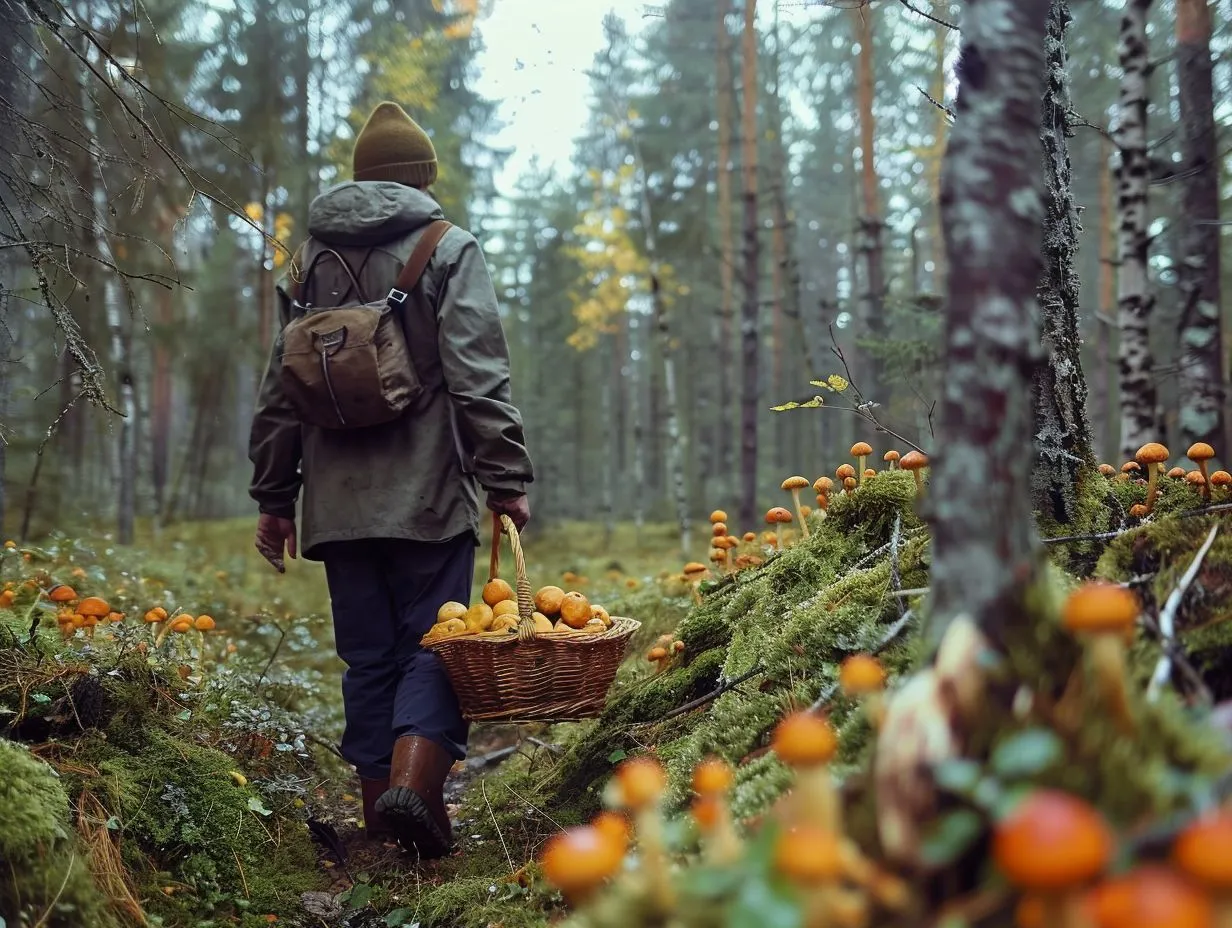
That sounds severe, and it is meant to. Foraging in autumn woodland is one of the best things you can do on a camping trip, and a basket of wild ceps cooked over the fire is a proper reward. It only works, though, if you treat identification as non-negotiable and stick to a short list of easy, unmistakable edibles.
This guide pairs with our guide to campfire cooking essentials, because almost everything you pick is destined for the pan. We are Camping Sites in Britain, where you can find and compare campsites, caravan parks and glamping across the UK, including plenty pitched on the edge of good foraging woodland.
The one rule that matters
If you are not 100% certain, do not eat it. That is the whole of foraging safety in a single line, and it is the rule that keeps people alive. The consequences of getting it wrong are not an upset stomach. The death cap (Amanita phalloides) and the destroying angel (Amanita virosa) both cause fatal liver and kidney failure, and the first symptoms are often delayed by six to 24 hours, by which point the damage is already done.
The safe way to start is to learn from someone who knows. Go on a guided foray with an expert, join a local fungus group, or work from a good, UK-specific field guide rather than a phone app or a photo on the internet. Learn a small number of species properly and pick only those. Every experienced forager built their basket one certain mushroom at a time.
Beginner-friendly mushrooms worth learning
A short list of edibles is genuinely hard to mistake, and these are the ones a beginner should focus on. Each has a stand-out feature that the deadly species do not share. Learn them one at a time, and confirm every find against a field guide before it goes anywhere near a pan.
| Mushroom | How to know it | Where and when | Watch out for |
|---|---|---|---|
| Chanterelle (Cantharellus cibarius) | Egg-yolk yellow, funnel shaped, blunt forking ridges (not true gills) running down the stem, smells faintly of apricot | Mossy woodland under beech, oak and birch, July to November | False chanterelle is a poor edible with thinner, true gills. Not deadly, but learn the difference |
| Cep or penny bun (Boletus edulis) | Brown, bun-shaped cap, a sponge of pale pores instead of gills, fat stem with a fine white net | Under birch, beech, oak and pine, August to November | Avoid any bolete with red or orange pores, or one that stains strongly blue when cut |
| Giant puffball (Calvatia gigantea) | White, football sized, no cap, gills or stem | Fields, pasture and hedgerows, late summer to autumn | Cut it in half. It must be pure white like marshmallow all through. Any yellowing, or any sign of gills, means discard it |
| Chicken of the woods (Laetiporus sulphureus) | Bright sulphur-yellow to orange bracket growing in tiers on a tree trunk | Oak, sweet chestnut and willow, summer to autumn | Never eat it from yew or conifers. Cook it well and try a small amount first, as some people react to it |
| Hedgehog fungus (Hydnum repandum) | Cream to buff cap with soft spines (teeth) underneath instead of gills | Woodland floor, late summer to autumn | No dangerous lookalike shares those spines, which makes it one of the safest to learn |
Notice that none of these five has ordinary white gills. That is deliberate. The simplest safety habit a beginner can build is to steer clear of the entire white-gilled group, because that is exactly where the Amanita killers live. For the wider picture on gathering wild food safely, see our wider guide to foraging while camping.
When and where to forage
Autumn is the season. Most of Britain's edible fungi fruit from late August to November, peaking through September and October, and they come up fastest a few days after warm autumn rain. A cold snap ends the season quickly, so the sweet spot is a mild, damp spell before the first hard frosts.
Habitat matters as much as timing. Head for broadleaf and mixed woodland, especially near birch, beech and oak, where most of the prized edibles grow in partnership with tree roots. Puffballs prefer open grassland, pasture and hedgerows, and chicken of the woods lives on standing trunks. Woodland campsites in places like the New Forest, the Lake District and the Scottish Highlands sit within easy reach of proper foraging ground. Browse our campsite listings to find one near the woods you want to explore.
The deadly mushrooms you must be able to recognise
Two species account for almost every serious mushroom poisoning in the UK, and you should be able to picture both before you pick anything. The death cap has a shiny olive-green to greenish-bronze cap between 5cm and 15cm across, pure white gills, and a white stem with a floppy ring and a swollen, sac-like base. It grows in deciduous woods, often under oak and beech, from July to November. Half a cap can kill an adult, according to the Woodland Trust.
The destroying angel is pure white all over, with white gills, a ring and the same sac-like base, and it is every bit as lethal. Both can look, to an untrained eye, like an innocent field mushroom or an edible woodland species. No amount of cooking, drying or peeling removes the toxin. This is why the white-gilled rule is worth taking seriously: when in any doubt at all, treat a white-gilled mushroom as deadly and walk away.
The law and the forager's code
You can legally pick wild fungi for your own use in England and Wales, but only within limits and with the landowner's blessing. The Theft Act 1968, section 4 makes clear that picking the "four Fs", fungi, foliage, fruit and flowers, growing wild is not theft, provided it is for personal, non-commercial use. Selling what you forage is a different matter and needs permission.
That does not give you the run of the land. You still need the landowner's permission to be there, and the Wildlife and Countryside Act 1981 makes it an offence to uproot any wild plant or fungus without authorisation, with some rare species protected outright. Do not pick on Sites of Special Scientific Interest, National Nature Reserves or many local nature reserves, where foraging is often banned. The New Forest, for example, prohibits fungi picking entirely.
Beyond the law, forage by the Wild Mushroom Pickers' Code of Conduct: take only what you will actually eat, cut the stem rather than uprooting it so the underground mycelium survives, leave plenty behind for wildlife and other people, and never strip a site bare. The Wildlife Trusts set out the same principles. Good foraging leaves the woodland exactly as productive as you found it.
Cooking what you pick
Cook every wild mushroom thoroughly, because none of the edibles here should be eaten raw. Ceps are brilliant sliced and fried in butter, chicken of the woods needs proper cooking and is best treated like a meat substitute, and giant puffball takes on flavour beautifully cut into thick slices and pan-fried. Even with a correctly identified species, try a small portion the first time, as individual reactions do happen.
A handful of foraged mushrooms lifts almost any camp meal, and they slot neatly into our guides to how to make your own camping meals and campfire cooking essentials. If foraging has you looking more closely at what grows around your pitch, our guide to wildflower walks near campsites is a gentler, no-risk companion.
Frequently asked questions
Is it legal to forage mushrooms in the UK?
Yes, for personal use. The Theft Act 1968 allows you to pick wild fungi that are not being sold, but you need the landowner's permission to be on the land, and picking is banned on many SSSIs and nature reserves. Always cut rather than uproot.
What is the most dangerous mushroom in the UK?
The death cap (Amanita phalloides). It causes fatal liver and kidney failure, half a cap can kill an adult, and cooking does not make it safe. The destroying angel is equally lethal. Both have white gills and a swollen, sac-like base.
When is the best time to forage mushrooms in the UK?
Autumn. Most edible species fruit from late August to November, peaking in September and October, and they appear fastest a few days after warm, damp weather. The season ends abruptly once hard frosts arrive.
What is the easiest edible mushroom for a beginner to identify?
The giant puffball and chicken of the woods. A giant puffball is a football-sized white ball with no gills, and chicken of the woods is a bright yellow-orange bracket on a tree trunk. Neither has a deadly lookalike, but confirm every find against a field guide.
Can cooking make a poisonous mushroom safe to eat?
No. The toxins in deadly species such as the death cap are not destroyed by cooking, drying or peeling. There is no home test and no antidote you can rely on. If you are not 100% certain of a mushroom, do not eat it.
Do I need to worry about touching poisonous mushrooms?
Touching a poisonous mushroom will not harm you, as the danger comes from eating it. Even so, wash your hands afterwards and keep any unidentified mushrooms well away from the ones you intend to cook to avoid mixing them up.
The short version
Learn a few unmistakable species, pick only those, cut rather than uproot, and never eat anything you are not 100% sure of. Autumn woodland near birch, beech and oak is where to look, and a guided foray is the best possible start.
Get the identification right and mushroom foraging is one of the great pleasures of an autumn camping trip. Find a pitch beside the right woodland in our campsite listings, and read up on campfire cooking essentials before you go.