The Best Portable Water Filters for Campers: Types and How to Choose.
· Updated
For most UK camping and hiking, a lightweight hollow-fibre squeeze filter such as the Sawyer Squeeze or Sawyer Mini is the best portable water filter you can carry. It filters down to around 0.1 micron, which removes the bacteria and protozoa that make people ill, including Giardia and Cryptosporidium, weighs almost nothing, and lets you drink straight from a hill stream in seconds.
The one thing to understand up front is what a filter does not do. A standard filter removes bacteria and protozoa but not viruses. In UK upland water that is a low risk, so a filter is genuinely enough for most trips. If you want virus protection too, you need a purifier, chemical tablets, UV or a rolling boil. We cover the full method below, and it pairs neatly with our essential first aid tips for campers, because a dodgy stomach miles from the car is exactly the sort of thing worth avoiding.
This is the gear guide from Camping Sites in Britain, where you can find and compare campsites, caravan parks and glamping across the UK. For when water is actually safe and which method to use, read our companion guide to safe drinking water methods.
What a filter does and does not do
A filter is a physical sieve, so it stops anything bigger than its pore rating and lets smaller things through. Most camping filters are rated at about 0.1 to 0.2 micron, which is fine enough to catch bacteria like E. coli and protozoa like Giardia and Cryptosporidium. Those are the bugs behind most waterborne illness in Britain, and they mostly come from livestock and wildlife upstream.
Viruses are far smaller, roughly 0.02 micron, so they slip through a standard filter. This matters much less in the UK than in parts of the world with poor sanitation, because human sewage is the main source of waterborne viruses and clean upland streams rarely carry a meaningful dose. If you want belt and braces, a purifier (which removes viruses too), chemical tablets, a UV pen or simply boiling for one minute will close that gap. No filter removes dissolved chemicals or heavy metals either, so choose your source well first, then treat it.
The main types of portable water filter
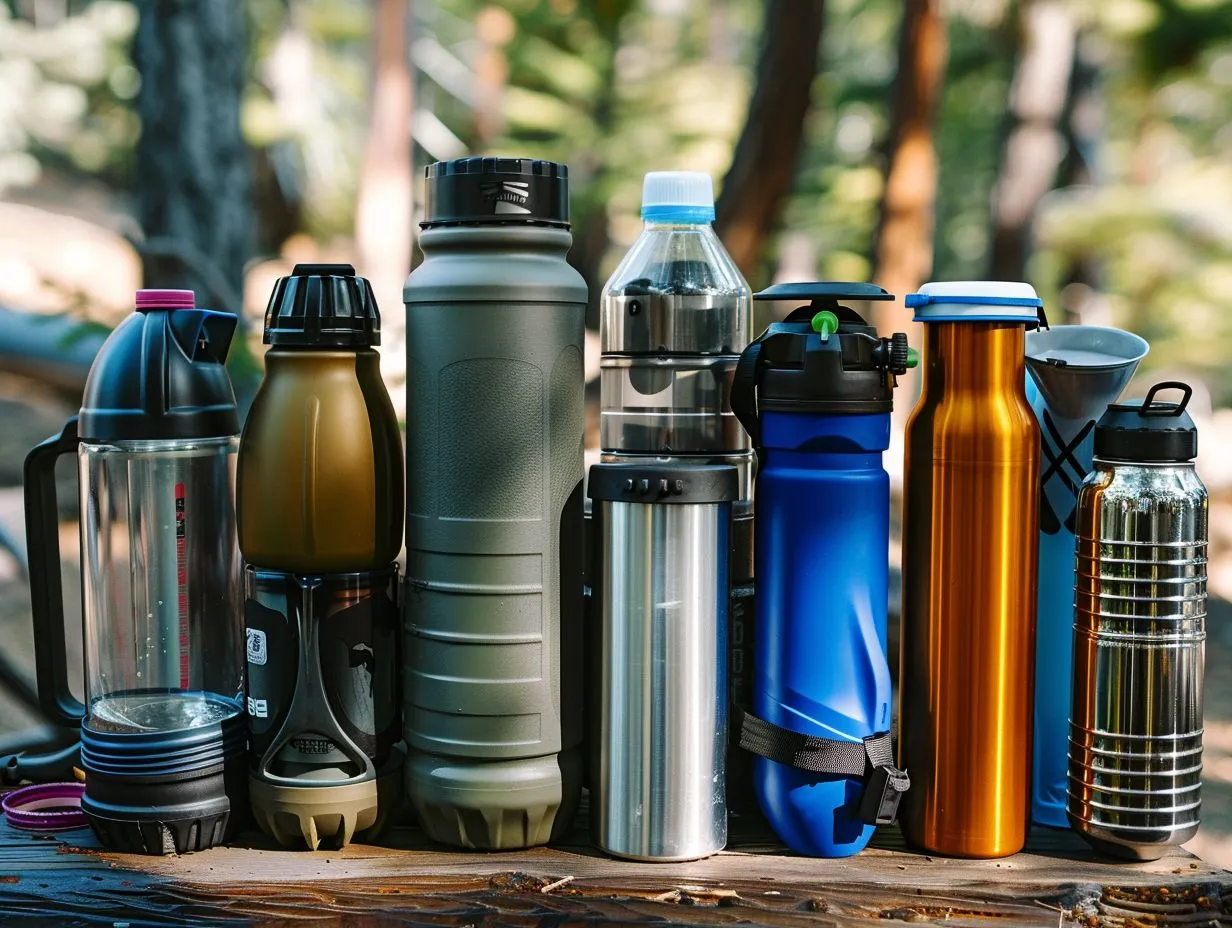
There are five formats worth knowing, plus two treatment methods that handle viruses. Each suits a different kind of trip, so the best one depends on whether you are travelling solo and fast or feeding a group at a basecamp.
Squeeze filters
Squeeze filters are the default choice for solo hikers and lightweight campers. You fill a soft pouch or bottle, screw the filter on, and squeeze the water through a bundle of hollow fibres into your mouth or a clean bottle. The Sawyer Squeeze and smaller Sawyer Mini are the best known, filtering to 0.1 micron and weighing around 60 to 90 grams. They are cheap to run, backflush clean with the syringe supplied, and last for thousands of litres if you look after them.
Straw filters
Straw filters are the simplest and cheapest option, and the LifeStraw Personal is the classic. You put one end in the water and drink directly through it, like a fat straw. There is nothing to set up and nothing to break, which makes it a brilliant emergency backup to keep in a daypack. The catch is that you can only drink at the water source and you cannot easily carry filtered water away or fill a pot for cooking.
Pump filters
Pump filters are faster for groups and let you draw from shallow or awkward sources. You drop an intake hose into the water and work a hand pump to push it through the cartridge into your bottle. The Katadyn Hiker is a long-standing favourite for hill walking, and the MSR TrailShot is a pocket-sized version for solo use. They cost more and add weight and moving parts, but you control exactly how much you produce and can fill several bottles quickly.
Gravity filters
Gravity filters are the best option for a group or a fixed basecamp. You fill a dirty-water bag, hang it from a branch or your car, and let gravity pull the water down through the filter into a clean bag while you get on with camp. The Platypus GravityWorks and the larger LifeStraw Mission can process several litres in a few minutes with no pumping and no effort. They are bulkier than a squeeze filter, so they earn their place once you are treating water for three or four people rather than one.
Bottles with a built-in filter
Filter bottles put the treatment inside a water bottle, so you fill, then drink or press, and go. The Water-to-Go bottle filters as you sip, which is neat for day trips and travel. The Grayl GeoPress works differently and is worth singling out: you fill the outer cup, then press an inner cartridge down through it like a coffee press, and in around ten seconds you have purified water. Crucially the Grayl is a purifier, so it removes viruses as well as bacteria and protozoa, which makes it a strong all-rounder if you travel abroad as well as camp in the UK.
UV purifiers and chemical tablets
UV pens and tablets are treatment methods rather than filters, and both handle viruses. A UV purifier such as the SteriPen stirs ultraviolet light through clear water for around 90 seconds to scramble the DNA of bacteria, protozoa and viruses; it needs batteries and reasonably clear water to work well. Chemical tablets are the lightest option of all: chlorine dioxide tablets treat both viruses and, given enough time, Cryptosporidium, though Crypto can need up to four hours of contact time. Plain chlorine and iodine tablets do not reliably kill Cryptosporidium, so read the packet. Tablets are an ideal lightweight backup to a filter.
Which type suits which trip
Match the format to how you camp rather than chasing the most expensive gadget. This is the quick version.
| Type | Best for | Removes viruses? | Rough weight |
|---|---|---|---|
| Squeeze filter | Solo and lightweight hikers | No | 60 to 90g |
| Straw filter | Emergency backup, drink at source | No | Around 50g |
| Pump filter | Small groups, shallow sources | Usually no | 200 to 400g |
| Gravity filter | Groups and basecamps | No | 300 to 500g |
| Filter or purifier bottle | Day trips and travel | Purifiers yes, filters no | 200 to 450g |
| UV pen or tablets | Virus cover and backup | Yes | Under 100g |
What to look for when choosing
Five things decide whether a filter is right for you, and they matter more than the brand on the label.
- Filter rating (microns). Look for 0.1 to 0.2 micron to be sure of removing bacteria and protozoa. Anything coarser is for sediment only.
- Flow rate. How fast it produces water. A squeeze filter is quick for one; a gravity system is quicker for four. Flow slows as the filter clogs, so factor in cleaning.
- Capacity and lifespan. Some filters last a few thousand litres, others tens of thousands. Cartridge filters need replacing; hollow-fibre ones usually just need cleaning.
- Weight. For hiking this is everything. A 70-gram squeeze filter disappears in a pack; a pump adds real bulk.
- Ease of cleaning and backflushing. A filter you can backflush in the field keeps its flow rate for years. One that cannot be cleaned slows down and gets binned. Never let a hollow-fibre filter freeze, as ice cracks the fibres and lets bugs through unnoticed.
The UK context: hill streams and farmland
In Britain the biggest factor is the source, not the kit. Fast-flowing streams high on the hill, above any grazing and well away from buildings, are usually low risk, and many hill walkers drink from them. Even so, treat the water to be safe, because you rarely know what is upstream. A dead sheep or a livestock field just out of sight is enough to introduce Cryptosporidium, the single most common reason careful people still get ill.
Avoid still or slow water, anything near farmland, downstream of livestock, or below dwellings and paths. Take it from a mini-waterfall or riffle rather than a stagnant pool, and filter it. For the full decision tree on when water is safe, see our guide to safe drinking water methods. If you are heading well off-grid, our advice on staying safe in remote areas covers the wider picture, and our tips on hydration while hiking will keep you drinking enough once your water is sorted.
Ready to plan a trip? Browse pitches across the country in the Camping Sites in Britain directory and find somewhere with good walking on the doorstep.
Frequently asked questions
Do portable water filters remove viruses?
No, standard filters remove bacteria and protozoa but not viruses, which are too small for the pore size. In UK upland streams viruses are a low risk, so a filter is usually enough. For virus protection use a purifier, chemical tablets, a UV pen or boil the water.
Is it safe to drink from a stream in the UK with a filter?
Usually yes, if you pick a fast, clear stream high on the hill, well away from livestock and buildings, and filter it. A 0.1 micron filter removes Giardia and Cryptosporidium. Avoid still water and anything near farmland or below dwellings.
Sawyer Squeeze or LifeStraw: which is better for camping?
The Sawyer Squeeze is more versatile because you can filter water into a bottle, use it as a gravity system and drink at your leisure. The LifeStraw is cheaper and simpler but only lets you drink at the water source. For most campers the Sawyer is the better all-rounder.
How long does a portable water filter last?
It depends on the type. Hollow-fibre squeeze filters can handle thousands of litres and just need backflushing. Cartridge-based pump and bottle filters have a shorter life and need replacement cartridges. Check the maker's figure and never let a filter freeze, as ice damages the fibres.
Do I still need to treat clear-looking mountain water?
Yes. Clear water can still carry Cryptosporidium and Giardia from livestock or wildlife upstream, and you cannot tell by looking. Filtering or boiling costs you seconds and removes the risk, so treat every wild source even when it looks pristine.
What is the lightest way to treat water for hiking?
Chlorine dioxide tablets are the lightest option and weigh next to nothing, making them a great backup. For everyday use a hollow-fibre squeeze filter at around 70 grams is barely heavier and lets you drink immediately, without waiting for the tablets to work.
The short version
For UK camping, a hollow-fibre squeeze filter removes the bacteria and protozoa that matter and weighs almost nothing, so it is the best choice for most people. Scale up to a gravity filter for groups, and carry tablets or a purifier if you want virus cover too. Sort your source first, then treat it, and read our safe drinking water methods guide for the full picture.