The best UK cycling trails and routes to combine with camping
· Updated
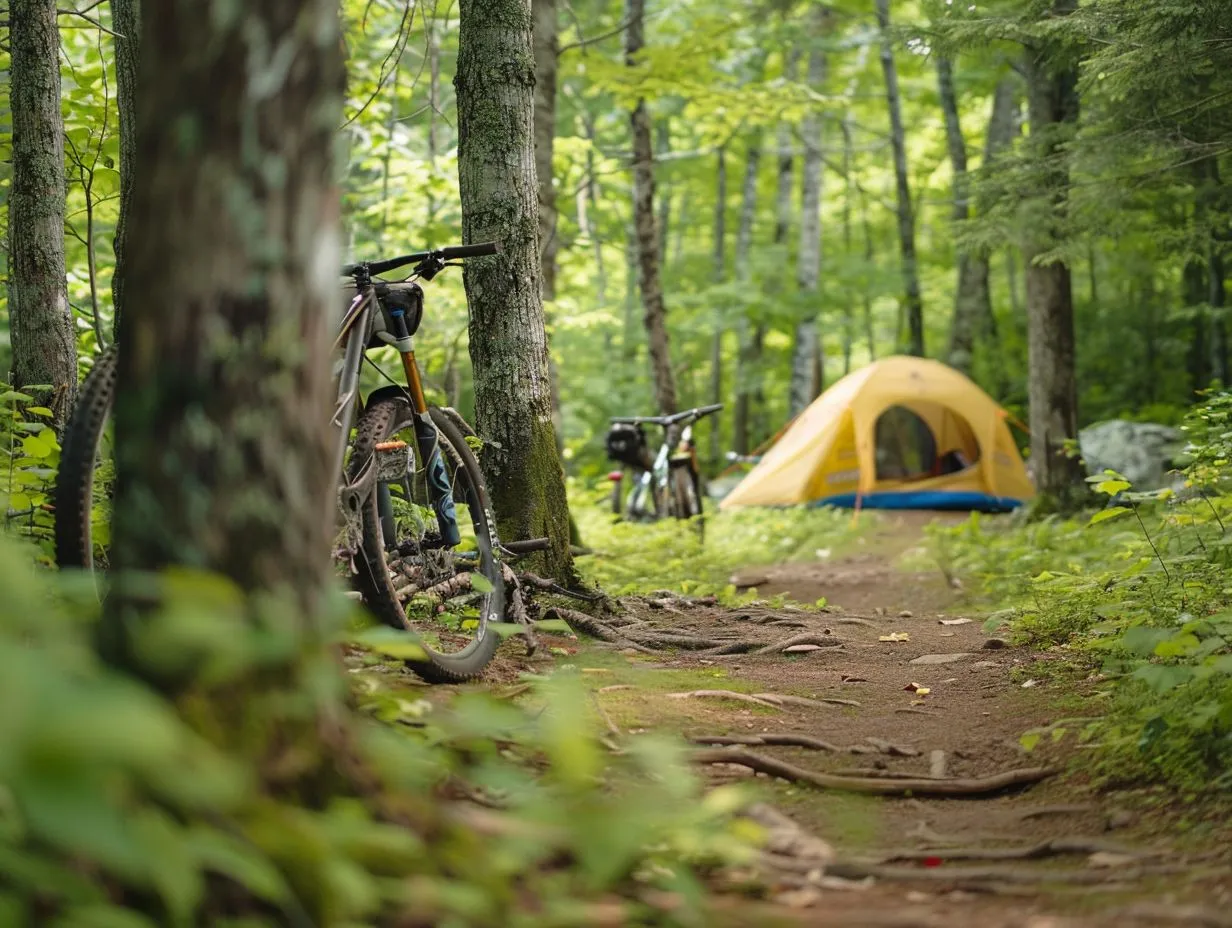
The best cycling near UK campsites falls into two kinds of trip. One is long-distance touring on the National Cycle Network, where you ride point to point and pitch up somewhere new each night. The other is trail-centre mountain biking, where you base yourself at one campsite and session purpose-built runs all weekend. Britain does both brilliantly, and most of the routes below have a campsite within a few miles of the trailhead.
The National Cycle Network alone runs to 12,786 miles of signed routes across the UK, coordinated by the charity Sustrans, with thousands of those miles traffic-free on old railways, towpaths and forest tracks (Sustrans). That is the backbone most camping cyclists ride.
This is part of our guide to cycling and camping in the UK, and it sits alongside the listings on Camping Sites in Britain, where you can find and compare sites near every route on this page.
Long-distance touring routes to ride with camping
For touring, pick a signed route with campsites spaced roughly a day's ride apart so you can carry light kit and refuel each evening. These are the classics that work best for a camping trip.
- The Camel Trail, Cornwall. An 18-mile traffic-free trail on a former railway line from Padstow through Wadebridge to Wenfordbridge. It is flat, hard-surfaced and genuinely family-friendly, which makes it the most popular ride in the county. Pair it with a site near the north Cornwall coast and browse campsites in Cornwall.
- The Tarka Trail, Devon. Around 30 miles of traffic-free path around Barnstaple and Bideford, again on old railway, following the route of Tarka the Otter. Flat, scenic and ideal for a first tour with children.
- The Way of the Roses. A 170-mile coast-to-coast route from Morecambe on the Lancashire coast to Bridlington on the Yorkshire coast. Most riders take three or four days, camping along the way, and it crosses the Yorkshire Dales in the middle.
- The C2C (Sea to Sea). Britain's best-known coast-to-coast, running roughly 140 miles from the Cumbrian coast to the North Sea across the northern Pennines. A proper challenge with plenty of campsites en route.
- The Great Glen. A scenic run alongside Loch Ness and the Caledonian Canal between Fort William and Inverness, mixing towpath, forest track and quiet road across the Highlands.
For road tourers who prefer tarmac, two Scottish routes stand out: the Hebridean Way, which links 10 islands of the Outer Hebrides by road and causeway, and the North Coast 500, the 500-mile loop around the north Highlands that is as popular with cyclists as it is with drivers. Both suit a supported camping tour. Start your planning with campsites in the Highlands.
| Route | Where | Distance | Best for |
|---|---|---|---|
| Camel Trail | Cornwall | 18 miles | Families, first-timers |
| Tarka Trail | Devon | 30 miles | Families, easy touring |
| Way of the Roses | Morecambe to Bridlington | 170 miles | Coast-to-coast tour |
| C2C (Sea to Sea) | Cumbria to North Sea | 140 miles | Challenge tour |
| North Coast 500 | North Highlands | 500 miles | Road touring |
| Hebridean Way | Outer Hebrides | 185 miles | Island road touring |
Many traffic-free sections follow water, so if flat, quiet miles are your thing, our guide to Britain's canal paths covers towpath riding and the campsites along them.
Trail centres for mountain biking with camping nearby
If you would rather ride purpose-built singletrack than tour, a trail centre is the answer, and most have a campsite on the doorstep. These graded trails run from green (easy) to black (severe), so a mixed-ability group can all ride from the same base.
- Coed y Brenin, Eryri (Snowdonia). The original UK trail centre and still one of the best, with a spread of waymarked routes through the forest north of Dolgellau. It sits in the mountain-biking heartland of north Wales, so check campsites in Gwynedd.
- BikePark Wales, Merthyr Tydfil. The UK's biggest uplift-served bike park, with an uplift bus carrying you and your bike to the top so you ride down all day. Trails from flowing blue to steep black.
- The 7stanes, southern Scotland. Seven mountain-biking centres across the south of Scotland. Glentress near Peebles is the busiest and most family-friendly, while Kirroughtree in Galloway has some of the best technical trails in the country.
- Whinlatter and Grizedale, Lake District. Two Forestry England centres with graded trails among the fells. Both are surrounded by sites, so browse campsites in the Lake District and Cumbria.
- Dalby Forest, North York Moors. A well-known centre with world-cup heritage, running easy green loops through to a demanding black route across the forest.
Bikepacking light or a supported tour from campsites
Decide this before you pack, because it changes everything you carry. The two styles suit very different trips.
Bikepacking means carrying minimal kit in frame bags, a seatpack and a bar roll rather than heavy panniers. You take a lightweight tent or bivvy, a compact sleeping bag and little else, which keeps the bike nimble on rougher routes like the Great Glen. It is the way to go if you want to reach remote pitches and cover ground.
A supported tour means booking campsites in advance and riding between them with a fuller load, or using a company that moves your luggage so you ride unladen. This suits families and anyone on the Way of the Roses or a coastal route, where a comfortable pitch and a hot shower each night matter more than shaving grams. Our advice on how to pack light for a camping trip helps either way.
Family traffic-free trails
For riding with children, choose a traffic-free trail with a gentle gradient and a hard surface. The old railway routes are ideal because they were built for trains, so the gradients are gentle and the surface is smooth.
The Camel Trail and the Tarka Trail are the standout family rides in the south west, both flat and car-free for their full length. Elsewhere, look for the traffic-free sections of the National Cycle Network near your campsite, plus the green-graded loops at trail centres like Glentress and Whinlatter, which are built for young or new riders. If some of your group would rather walk, our guide to the UK's national trails covers the walking equivalents.
Taking your bike on the train
You can take a bike on most UK trains, but the rules vary by operator and you should always check before you travel. Space is limited and reservations are the sticking point.
Long-distance and cross-country services usually require a free bike reservation, booked in advance, and often carry only two to six bikes per train. Folding bikes travel free on almost any service at any time. Local and regional trains are more relaxed but can bar bikes during weekday rush hours. Booking your bike space when you book your ticket saves being turned away, especially on the routes that serve popular cycling areas.
Bike security and safety at the campsite
A campsite is a soft target for bike theft, so treat your bike like you would at home. Never rely on the tent to hide it.
Carry a good D-lock, lock the frame and a wheel to something fixed such as a post or the car's roof bars overnight, and note your frame number and register the bike before you leave home. Keeping bikes and kit secure is part of the same job as securing the tent itself, covered in our guide to keeping your tent and bikes secure.
On the safety side, the basics are non-negotiable:
- Wear a helmet that fits, and replace it after any hard knock.
- Carry front and rear lights and use them in poor light, tunnels and dusk, which comes early in forest.
- Pack a repair kit: spare tube, tyre levers, a mini pump, a multi-tool and a quick-link for the chain.
- Take water, food and a waterproof, because trail centres and remote routes have no shops.
- Tell someone your route and rough return time when riding somewhere with no phone signal.
Frequently asked questions
What is the best cycling route in the UK for camping?
For families, the Camel Trail in Cornwall is hard to beat: 18 flat, traffic-free miles with campsites near Padstow and Wadebridge. For a longer tour, the 170-mile Way of the Roses coast-to-coast has campsites spaced a day's ride apart.
How long is the Camel Trail?
The Camel Trail runs 18 miles from Padstow through Wadebridge to Wenfordbridge in Cornwall. It follows a former railway line, so it is flat and hard-surfaced along its whole length, which makes it one of the most family-friendly rides in Britain.
Where can I go mountain biking with camping nearby?
Coed y Brenin in Eryri, BikePark Wales near Merthyr Tydfil, the 7stanes centres in southern Scotland, Whinlatter and Grizedale in the Lake District, and Dalby Forest in the North York Moors all have graded trails and campsites within easy reach of the trailhead.
Can I take my bike on the train?
Usually yes, but check the operator first. Long-distance trains often need a free advance bike reservation and carry only a few bikes, while folding bikes travel free at any time. Some local trains bar bikes during weekday rush hours.
How do I keep my bike safe at a campsite?
Carry a D-lock and lock the frame and a wheel to something fixed overnight, such as a post or your car's roof bars. Record the frame number, register the bike before you travel, and never leave it out of sight or rely on the tent to hide it.
What should I pack for a bikepacking trip?
Carry a lightweight tent or bivvy, a compact sleeping bag and mat, a repair kit with a spare tube and multi-tool, lights, a waterproof, and enough food and water between resupply points. Keep it in frame bags rather than heavy panniers.
The short version
Choose your trip first: a point-to-point tour on a signed route like the Camel Trail or the Way of the Roses, or a weekend at a trail centre such as Coed y Brenin or BikePark Wales. Pack light, lock the bike properly, ride with a helmet, lights and a repair kit, and book a pitch near the trailhead.
Start with our guide to cycling and camping in the UK, then find a base near your chosen route from the campsite listings.