Hammock Camping in the UK: The Benefits, the Drawbacks and When to Pick a Tent
· Updated
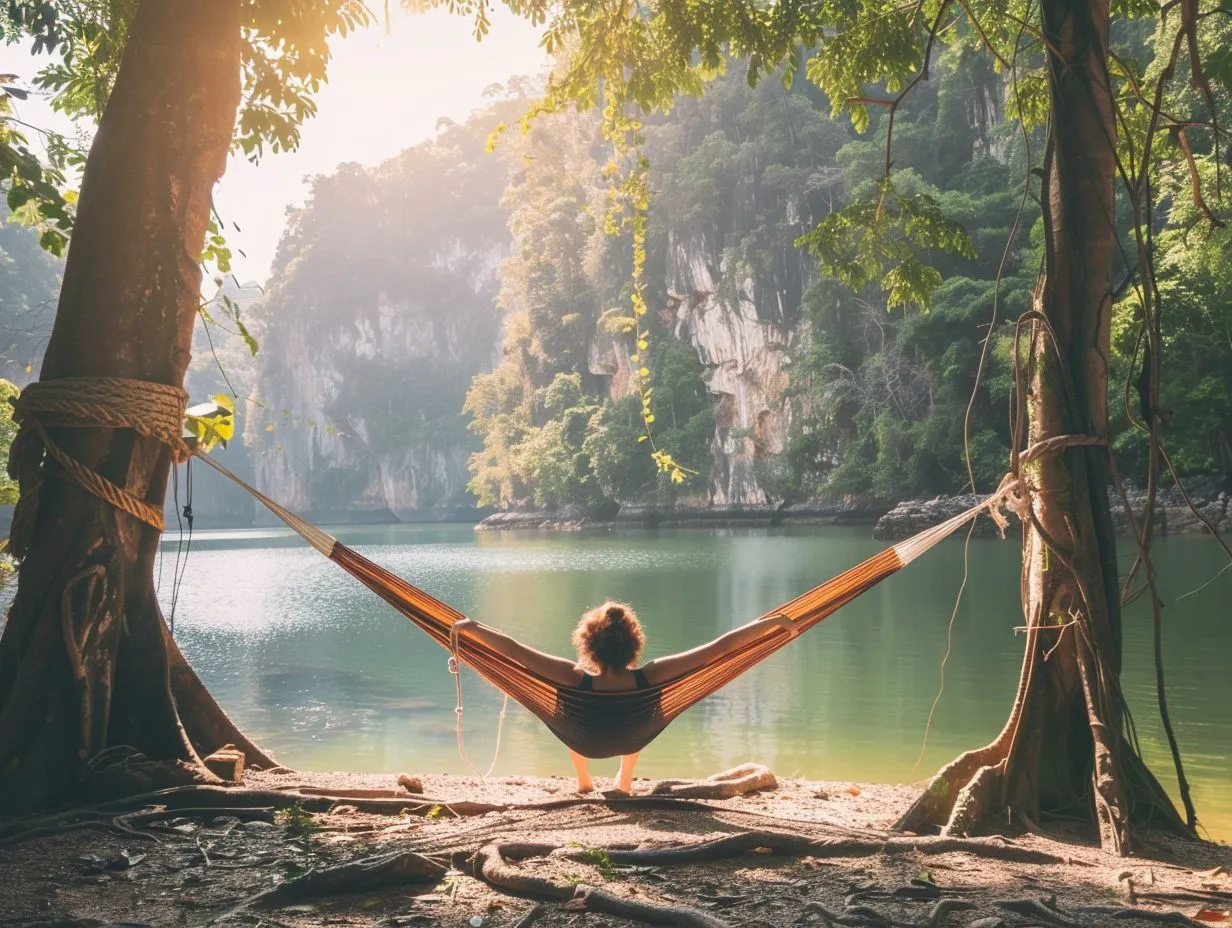
A hammock beats a tent whenever you have trees and the night is not too cold. It needs no flat, dry ground, it packs down smaller and lighter than most one-person tents, and it leaves the ground untouched when you move on. In British woodland, on a lumpy hillside or over bracken and roots, that is a real advantage.
The catch is the cold underside, the need for two well-spaced trees, and a short learning curve on angles and tarps. On open moorland, above the treeline or on a busy coastal pitch, a tent is still the better tool. This guide covers both sides honestly, and it sits inside the complete UK camping gear guide from Camping Sites in Britain, where you can find and compare campsites, caravan parks and glamping across the country.
The benefits of a hammock over a tent
A hammock solves the two problems that ruin a tent pitch: uneven ground and wet ground. In much of upland Britain, where genuinely flat, dry ground is rare, that turns a difficult night into an easy one.
No flat or dry ground needed
You pitch between two trees, not on the earth, so terrain that would defeat a tent is fine. A steep bank in a Welsh valley, a root-covered patch in the New Forest or a soggy Lake District clearing all work as long as the trees are sound. You also stay off the wet, which keeps your kit drier and your sleep warmer.
A comfortable sleep for many people
Plenty of campers sleep better in a hammock than on a mat. Lying slightly diagonally flattens your body out and takes the pressure off your hips and shoulders, which is why side sleepers and anyone with a bad back often prefer it. The gentle sway helps too. It is not for everyone, but the people it suits tend to become firm converts.
Light and packable
A hammock, straps and tarp typically come in lighter and smaller than a comparable one-person tent, which matters on any trip where you carry everything. Pair it with the rest of your lightweight camping gear and a multi-day walk gets noticeably easier on the shoulders. Setup is quick once you have the knack, often under five minutes.
Brilliant in woodland
Trees are the one thing a hammock needs, so any decent wood is prime territory. Britain has plenty, from Scots pine forest in the Highlands to broadleaf woodland across England, and a hammock lets you pitch where a tent would struggle for a level clear patch. Waking up among the canopy is a large part of the appeal.
Leaves no trace on the ground
With no pegs driven in and no groundsheet flattening the vegetation, a hammock leaves almost nothing behind. Use wide tree straps of at least 25mm rather than thin cord or rope, which can cut into and kill the bark, and you protect the trees as well. This low impact sits neatly with the Leave No Trace principles and the Countryside Code.
The drawbacks you need to plan for
Every benefit has a matching catch, and the biggest one is temperature. A hammock exposes your whole underside to the air, so it is colder than a tent unless you insulate underneath. Get that wrong and even a mild British night feels bitter.
A cold underside without an underquilt or mat
The air moving under a hammock strips heat from your back all night, and a sleeping bag alone does not stop it because your body squashes the fill flat. The fix is an underquilt slung beneath the hammock, or a sleeping mat inside it. A closed-cell foam or insulated inflatable mat works; our guide to the best sleeping mats for comfort covers the options. In colder months add proper layers from our notes on the best thermal clothing for cold weather camping.
You need suitable trees
No trees, no hammock. You need two healthy trunks roughly 3.5 to 4.5 metres apart, each at least around 15cm thick, which rules out a lot of ground. Open moorland, high fells above the treeline, sand dunes and most coastal grassland simply will not hang a hammock. Dartmoor, the Cairngorm plateau, Snowdonia's summits and the Yorkshire moors are tent country, not hammock country.
A learning curve
The first few hangs are usually too tight, too high or too flat, and a bad angle gives you a banana-shaped back and a cold, sleepless night. The rule of thumb is straps at roughly head height and a sag that gives about a 30 degree hang, so you lie flatter. It takes a couple of practice nights in the garden to get right, so do not make your first attempt a wild trip in the rain.
Weather exposure without a good tarp
A hammock on its own offers no shelter, so the tarp is not optional in Britain. Without a decent one pitched low and taut you are exposed to rain and wind, and driven rain can track down the straps. A generous tarp with good overhang, and drip lines on the suspension, keep you dry through a proper downpour.
Hammock or tent: a quick comparison
Neither wins outright. The right choice depends on where you are pitching and the time of year.
| Factor | Hammock | Tent |
|---|---|---|
| Uneven or wet ground | No problem, you are above it | Needs flat, dry ground |
| Open moorland or above the treeline | Not possible, no trees | Works anywhere |
| Weight and pack size | Usually lighter and smaller | Heavier and bulkier |
| Warmth in cold weather | Needs an underquilt or mat | Warmer by default |
| Space and sitting out a storm | Cramped, one person | Room to sit, cook, wait it out |
| Woodland pitches | Excellent | Often hard to find a clear level spot |
| Group or family camping | One per hammock | Sleeps two to six together |
Who hammock camping suits, and when to choose a tent
Hammock camping suits solo campers and backpackers who move through wooded country and want to travel light. If you walk between wild spots, camp mostly in woodland, sleep on your side or want to cut pack weight, a hammock is a brilliant choice. The skills carry over well, so our guide to wild camping is worth a read before you go.
Choose a tent when you are above the treeline or on open moor and coast, out in deep winter, or camping as a couple, group or family who want to share a shelter and sit out bad weather. Most family campsites are open grass with few well-spaced trees, so a tent is simply more practical there. Many hammock campers carry both and pick the tool to match the trip.
The kit you need to hammock camp in Britain
Four items make a complete British setup: the hammock, wide tree straps, insulation underneath and a tarp overhead. The hammock and straps are the core, and the choice of hammock does most of the work, so start with our roundup of the best hammocks for tree camping for the models and specifics.
For a UK trip you should also pack an underquilt or insulated mat, a tarp large enough to cover you with overhang, a bug net for the midge season, and guy lines with pegs to pitch the tarp taut. Add a dry bag for anything that must stay dry. Get those four bases covered and you can pitch comfortably in most British woodland in most weather.
Where you can hammock camp in the UK
You can hammock camp wherever camping itself is allowed, which usually means a campsite that permits it or land where you have the owner's permission. Hammocks are not a loophole around access rules. Wild camping without permission is a legal right in England only on Dartmoor, confirmed by the UK Supreme Court on 21 May 2025, and in most of Scotland under the Scottish Outdoor Access Code. Everywhere else in England, Wales and Northern Ireland you need the landowner's agreement first.
Many British campsites have woodland pitches ideal for hanging, so it is worth asking a site whether hammocks are allowed before you book. Browse and compare options through our campsite listings, and for tree-rich wild country the Scottish Highlands are hard to beat.
Frequently asked questions
Is hammock camping warm enough for the UK?
Yes, with insulation underneath. An underquilt or an insulated sleeping mat stops the cold air stripping heat from your back. Without one, even a mild British night feels cold, because your sleeping bag alone cannot insulate your compressed underside.
Do you need special trees for a camping hammock?
You need two healthy trees roughly 3.5 to 4.5 metres apart, each about 15cm thick or more. Always use wide tree straps of at least 25mm to spread the load and protect the bark. Dead or thin trees are unsafe.
Is hammock camping better than a tent?
It depends on the pitch. A hammock wins in woodland and on uneven or wet ground, and it packs lighter. A tent wins on open moorland, above the treeline, in deep winter and for groups. Many campers carry both.
Can you hammock camp on Dartmoor or the open moors?
Rarely, because the open moor has no trees. Dartmoor allows backpack wild camping, but you need trees to hang a hammock, so most of the moor suits a tent instead. Pitch in the wooded valleys if you want to hang.
Is hammock camping legal in the UK?
It is legal wherever camping is allowed. That means a campsite that permits hammocks, or land where you have the owner's permission. Wild camping without permission is only a right on Dartmoor and across most of Scotland; everywhere else needs consent.
The short version
Pick a hammock for woodland, uneven ground and light, solo trips, and always pack an underquilt and a proper tarp. Pick a tent for open ground, cold winters and camping as a group. Get the kit right in the complete UK camping gear guide, then find a spot to hang through our campsite listings.